
eBay Return Policy: Match Settings to Return Reasons
Set an eBay return policy that matches buyer-remorse and seller-fault reasons, then use the live request to decide who pays and what to do next.
Discover hands-on guides, case studies, and expert tips to grow your online business.
Set an eBay return policy that matches buyer-remorse and seller-fault reasons, then use the live request to decide who pays and what to do next.

Check item readiness, working days, carrier scans, and cutoff risks before setting one-business-day handling on an eBay listing.
Learn how eBay’s out-of-stock option works and use a SKU-level check before increasing a Good ‘Til Canceled listing’s quantity.

Set up eBay personalization, write usable buyer instructions, and verify the exact text for each purchased unit before production.
Find the right check for a missing variation control, rejected attribute or absent size/color option, with a stock worksheet and support-note template.
Check eBay condition IDs against the actual leaf category before a bulk upload. Use a four-gate worksheet to avoid invalid codes and misleading condition claims.

Use impressions, page views and sales to find the first weak stage in an eBay listing, then run one controlled seven-day test.

Compare eBay Store subscription prices, listing allowances and category fee savings with a reusable break-even worksheet.

Choose between eBay Buy It Now and auction using comparable-sale evidence, bidder depth, timing and a reusable format decision record.
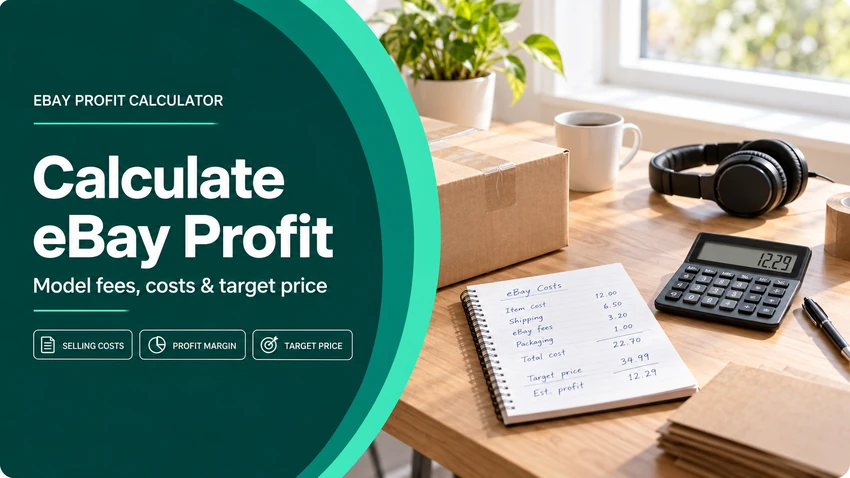
Estimate eBay profit, compare Store and no-Store scenarios, and work backward from a target margin with a platform-specific cost checklist.