eBay Buy It Now vs Auction: Which Format Fits?

Use eBay Buy It Now when you can support a specific price and want a buyer to purchase immediately. Use an auction when the item has credible bidding demand but its market-clearing price is uncertain. Do not choose either format from habit. Compare truly similar sold items, the spread of sale prices, how quickly you need a result, available quantity, and what would happen if only one bidder appeared.
This guide gives US eBay sellers a repeatable format decision. It does not promise that one format will sell faster or for more money. Category rules, account eligibility, fees, buyer demand and the condition of the actual item still matter.
Buy It Now and auction solve different pricing problems

eBay’s Buy It Now guidance separates two uses. A fixed-price listing lets a buyer purchase immediately at a known price, with no bidding. A seller can also add a Buy It Now option to an auction, subject to eBay’s current rules.
eBay’s Seller Center listing guide describes auctions as suitable for rare, limited-edition or high-demand items, while fixed price is suited to immediate purchase, multiple units and variations. Treat those as starting conditions, not guaranteed outcomes.
| Observed situation | Format to test first | Why | Main risk to check |
|---|---|---|---|
| Several close same-condition sales at similar prices | Fixed-price Buy It Now | You have a defensible price range and can offer an immediate purchase. | Your exact item may differ in condition, completeness or shipping cost. |
| Rare item with several recent competing sales or bids | Auction | There is evidence that multiple buyers may compete. | A low starting price is exposed if only one qualified bidder appears. |
| Rare item but almost no comparable demand evidence | Research or cautious fixed price | Rarity alone does not prove active bidder depth. | An auction can discover a low price rather than a high one. |
| Multiple identical units or selectable variations | Fixed-price Buy It Now | eBay identifies fixed price as the format for multi-quantity and variation listings. | Quantity and variation details must still match inventory. |
| You need a result by a defined date | Auction may provide a timed end | The listing has a scheduled closing point. | A timed end does not guarantee enough bidders or an acceptable price. |
Collect comparable evidence before choosing
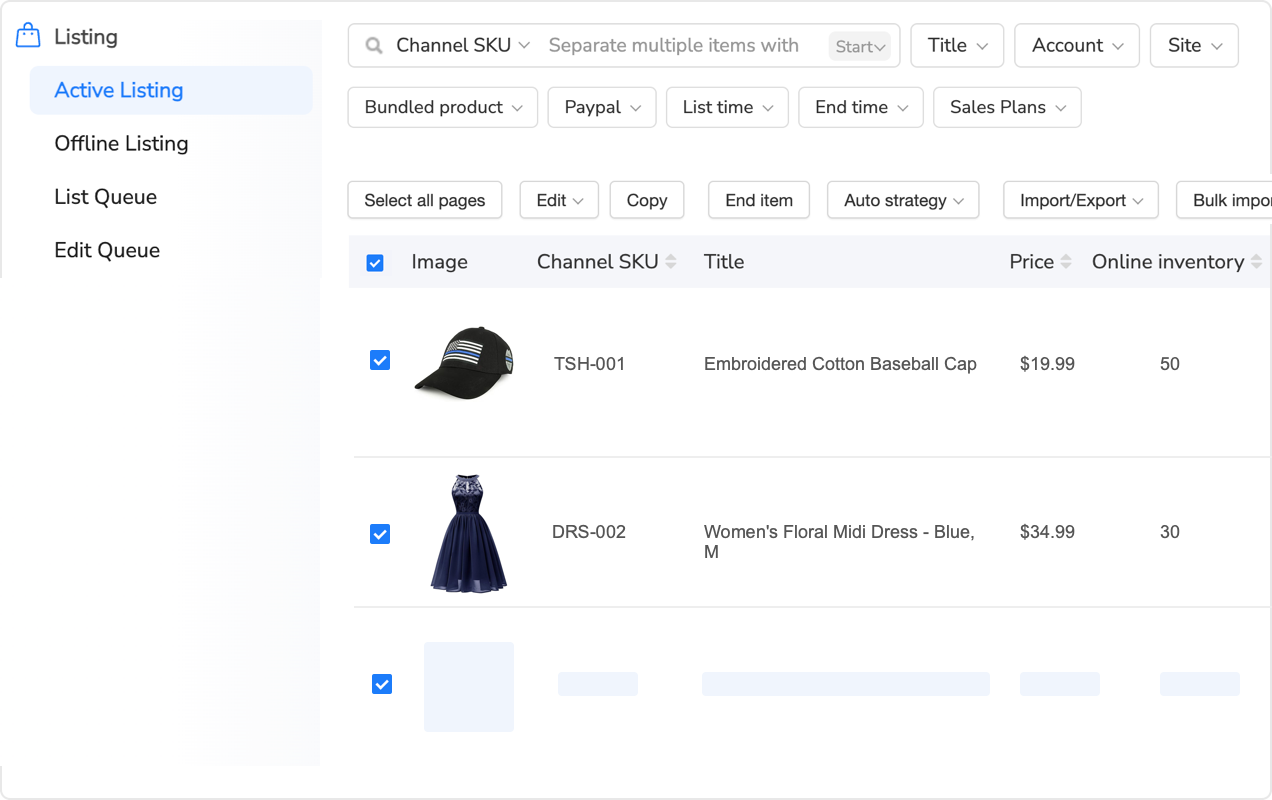
A format decision is only as good as the comparison set. Search current and completed results for the same product identity, model, condition, included parts and sale unit. Do not treat an asking price as a completed sale, or a bundle as evidence for one item.
- Define the offer. Write the exact item, quantity, condition, included parts and important defects.
- Find close comparables. Prefer the same model and similar condition. Record what makes each comparison weaker.
- Separate transaction types. Note fixed-price sales, auctions, accepted-offer cases and unsold listings separately when the interface exposes them.
- Record price spread and recency. A cluster of close prices supports a fixed-price estimate better than one old outlier.
- Look for bidder depth. Auction evidence is stronger when several comparable listings attracted genuine competition, not merely one high final price.
If the listing category is uncertain, use the eBay category checklist before comparing results. A camera strap, a camera body and a bundle may share words while representing different buyer decisions.
Use this evidence-to-format record

Copy this table for the item you are preparing. The example is fictional and does not represent a real eBay result.
| Record | What was observed | Decision effect |
|---|---|---|
| Offer identity | One working desk lamp; visible finish wear; no original box. | Exclude boxed or restored examples. |
| Close sold comparables | Four same-style used lamps in similar condition. | Enough to inspect a price range; not proof of identical value. |
| Price spread | Three close results and one much higher result with a shade not included here. | Do not let the better accessory set the price for this offer. |
| Auction evidence | Only one close auction showed more than one bid. | Bidder-depth evidence is weak. |
| Time constraint | No fixed liquidation date. | No operational reason to accept auction downside. |
| Initial decision | Test a fixed price inside the supported comparable range. | Review watchers, offers and elapsed time after a defined interval. |
The record forces the conclusion to follow the evidence. Another lamp with documented maker identity, scarce supply and several competitive auctions could justify a different test.
Set the price without confusing certainty and ambition
A fixed price should be supported by the closest available evidence, your costs and the item’s actual condition. A high unsold asking price is not evidence that buyers will pay it. Use eBay’s Product Research or other current price evidence, then check the unit economics before publishing.
An auction start price is a commitment to the downside if the auction attracts only one qualifying bidder. Set it only at a level you are genuinely prepared to accept under the applicable listing rules and fees. Do not use a very low start merely because a popular item once produced a bidding contest.
The eBay title guide helps you describe the item accurately within the title limit. Better wording can make the offer clearer; it cannot manufacture demand that the evidence does not show.
Know how the hybrid auction option behaves
An auction can include a Buy It Now option. According to eBay, buyers may purchase immediately or place a bid; in most categories the Buy It Now price must be at least 30% above the auction price. The option usually disappears after a bid, with reserve-price and some category exceptions described in eBay’s current guidance.
That means the hybrid is not simply “fixed price plus bidding forever.” Decide whether the immediate-purchase price is credible and whether you accept the listing continuing as an auction once the option disappears. Check the live listing form for the exact category before relying on the feature.
For payment timing, eBay’s immediate-payment guidance says the requirement can be used with fixed-price listings and auction listings that have a Buy It Now option, but it applies differently once bidding begins.
Do not assume you can freely switch later
Format is an early decision because revisions become constrained. eBay’s revision rules say duration and format usually cannot simply be changed in place. Seller Hub may let a fixed-price item be sent to auction, but the original listing behavior, watcher information and quantity handling can change.
Save the evidence record with the listing. If the initial test does not work, evaluate the result before changing format: elapsed time, views, watchers, offers, comparable sales that appeared during the test and any changes to the item or shipping terms.
Prepare the listing after the format decision
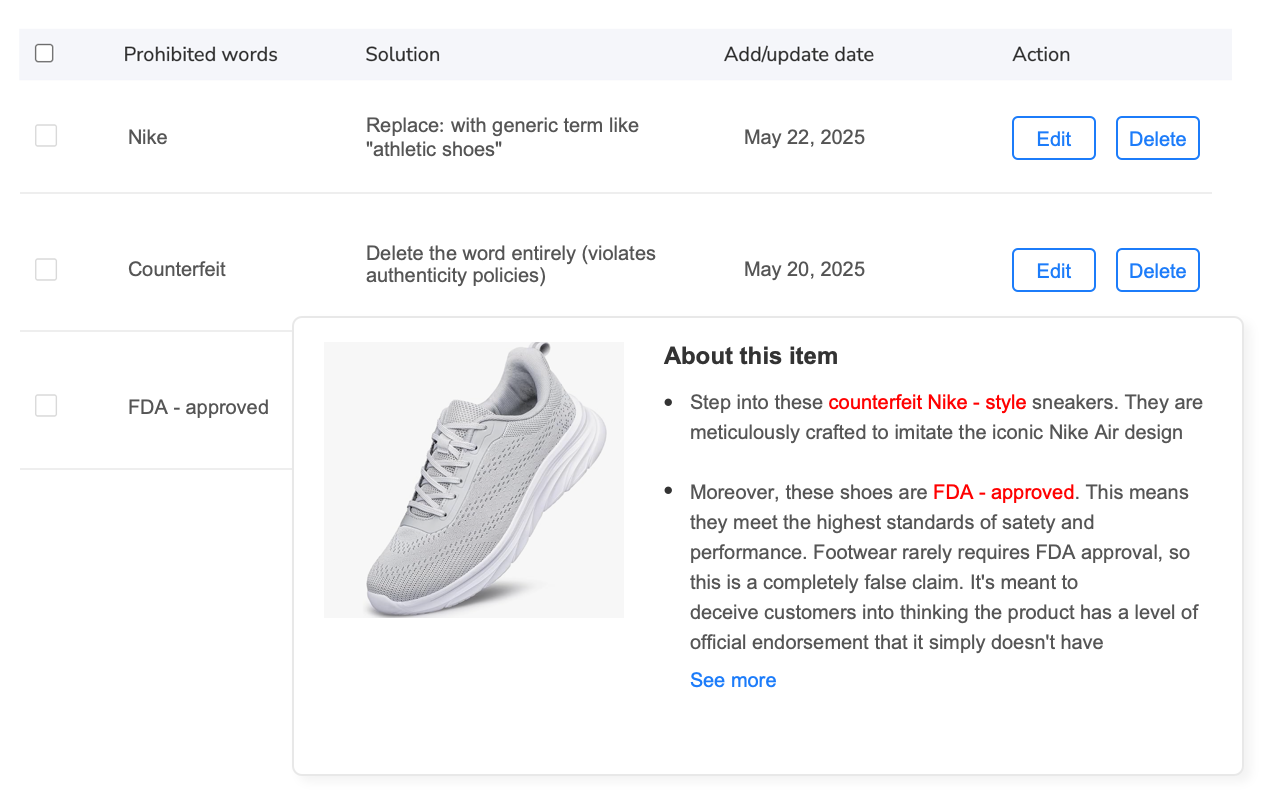
Once you have chosen the format and price strategy, the Maxmerce eBay AI Listing Tool can generate an editable title, description, category and item specifics from product photos or a supported product link. This reduces blank-field drafting, while you review the facts before publishing. It does not choose the listing format, set the final price, prove bidder demand or guarantee acceptance.
Before generating the draft, prepare clear item evidence. The eBay photo requirements checklist covers size, background and the views needed to describe condition consistently.
FAQ
Is Buy It Now better than auction on eBay?
Neither is universally better. Buy It Now fits a supported price and immediate-purchase goal. An auction is a stronger test when multiple buyers are likely to compete and you accept the starting-price downside.
Does Buy It Now disappear after someone bids?
It usually disappears after a bid on an auction-style listing. eBay documents exceptions for reserve-price listings and some categories, so verify the current rule for your listing.
Can I use Buy It Now for multiple quantities or variations?
Fixed-price Buy It Now listings are the format eBay identifies for multiple identical items and variation listings. Confirm category eligibility and keep each quantity and variation accurate.
Should a rare item always be auctioned?
No. Rarity describes supply, not bidder depth. Look for comparable competitive sales. With weak demand evidence and no deadline, a cautious fixed-price test may protect against a one-bid outcome.
Can Maxmerce choose auction or Buy It Now for me?
No. Maxmerce can prepare editable listing content and a category for review. The seller still chooses the format, price, payment options and publication decision from current eBay rules and item evidence.
Official eBay sources and public Maxmerce product information reviewed September 17, 2026. The decision table and lamp example are original editorial teaching aids. AI assisted with the draft and illustrative cover; no eBay or Maxmerce interface is shown.