Walmart Review Accelerator: Check Before Enrolling

Walmart Review Accelerator has two different paths: Post-Purchase Reviews offers incentives after purchases, while Recognized Reviewer supplies product samples to selected reviewers. Check the criteria for the specific path before enrolling an item. Having few reviews alone does not establish eligibility, and meeting the listed criteria does not guarantee inclusion.
For a US Marketplace seller, the decision is more specific than “we need reviews.” Which items qualify, what will the team approve spending on, and how will it verify that enrollment has ended? Use the comparison and release record below before committing products.

Compare the two programs before checking an item
These criteria come from Walmart’s Review Accelerator overview, updated September 25, 2026 and reviewed October 21. Confirm the current Seller Center eligibility record when acting.
| Check | Post-Purchase Reviews | Recognized Reviewer |
|---|---|---|
| How feedback is obtained | Digital incentives after customers purchase | Free samples to a selected group of trusted reviewers |
| Review history | Fewer than 15 reviews OR no reviews in the last 90 days | Fewer than 15 reviews |
| Sales or demand | At least one sale in the last 90 days; sufficient expected demand, reassessed regularly | Do not substitute Post-Purchase sales criteria for this program; use the live eligibility list |
| Item availability | Published, transactable and in stock | Published, transactable and in stock |
| Additional item criteria | Not in a restricted category | New condition; content quality score at least 70%; sold online; not in a restricted category |
| Final eligibility | Walmart determines item and seller eligibility at its discretion | Walmart determines item and seller eligibility at its discretion |
The review-history wording matters. Post-Purchase Reviews uses an or: fewer than 15 reviews, or no reviews within the last 90 days. Recognized Reviewer lists fewer than 15 reviews without that alternative in the overview. Do not transfer one program’s exception to the other.
The table also does not turn an unlisted requirement into a promise of eligibility. Walmart can reassess inclusion. Use the program’s live eligible-item list rather than approving an item solely from a spreadsheet calculation.
Investigate an item missing from the enrollment list
First confirm which program you opened. Then verify the item’s identity, review history, publication state, stock and the additional criteria for that path. For Post-Purchase Reviews, check the actual recent-sale and expected-demand conditions as well.
Walmart’s Post-Purchase Reviews enrollment guide says only one seller can enroll an item at a time. An absent item may already be enrolled by another seller or may not meet the criteria. The eligible-item list refreshes by Wednesday each week.
Record “not currently offered for enrollment” separately from “we proved which rule failed.” The missing row alone does not tell you the cause. Recheck after the relevant list refresh or use Seller Support when the evidence remains inconsistent. Do not invent a workaround that bypasses Walmart’s eligibility decision.

Enroll in Post-Purchase Reviews only after reviewing the terms
- In Seller Center, open Growth → Review Accelerator, select Enroll items, then choose Post-Purchase Reviews.
- Select individual eligible items, or use the available spreadsheet upload. Verify the item identifiers before adding a group.
- Set the target reviews and incentive amount. Walmart lists targets from five to 30 in increments of five.
- Review the selected items and terms on Review & Submit. Submit enrollment only when the team has approved the actual settings.
The current guide lists a minimum incentive of $5 and a maximum equal to the lesser of 25% of the item price or $25. It also states that the cost per review includes a $5 service fee. Preserve the actual incentive, service-fee treatment and charge terms shown in Seller Center; do not treat the customer incentive as the entire cost.
This article does not infer a universal total-charge formula from that wording. If the account’s displayed terms leave the total unclear, resolve the billing question before enrollment. Likewise, an allowed incentive range is not proof that every item price supports an eligible choice.
Keep a per-item enrollment and exit record
Seller best practice: use the following record as a release check. It is an original editorial operating aid, not a Walmart-required form. Complete it for the actual item rather than copying another SKU’s settings.
| Record | Evidence to capture | Release check |
|---|---|---|
| Item and program | Exact item identifier and chosen program | Same product, condition and program in every step |
| Eligibility observation | Dated live eligible-item result plus relevant review, stock and sales evidence | No guessed cause or assumed inclusion |
| Incentive and charges | Displayed customer incentive, service-fee treatment and actual billing terms | Responsible person understands the expected charge basis |
| Review target | Selected target from the allowed options | Target is approved; not a promise of delivery or positive sentiment |
| Stock and ownership | Available stock and person monitoring the item | Someone can investigate eligibility or supply changes |
| Exit evidence | Target completion or unenrollment record and its time | Do not confuse clicking a control with a verified final state |
| Post-exit reconciliation | Check for additional reviews during the stated tail period and reconcile actual charges | Leave room for the 48-hour review tail rather than assuming an exact stop at the target |
Walmart says participating Post-Purchase items are automatically removed when they reach the selected number of incentivized reviews. Customers may still submit additional reviews up to 48 hours after unenrollment. A target is therefore not a guarantee that the visible count will stop at exactly that number.
The 48-hour statement describes review submission after exit. It does not establish a billing settlement deadline. Reconcile the account’s actual charges under its applicable terms rather than assuming all financial effects finish at the same instant.
A fictional readiness decision
Consider a newly published, in-stock item with no reviews, no sales in the last 90 days and a content quality score of 65%. The seller wants to begin collecting feedback immediately.
Few reviews alone does not clear Post-Purchase eligibility: the recent-sale condition is not met. Switching to Recognized Reviewer is not an automatic solution either, because the current overview requires a content quality score of at least 70%, along with its other criteria.
The useful next action is to identify the unmet prerequisite and verify the live program result after resolving it. It is not to assume an incentive can replace demand, content readiness or Walmart’s inclusion decision. This is a teaching example, not a real account result or a claim that improving one field guarantees entry.
Prepare the content without promising program acceptance
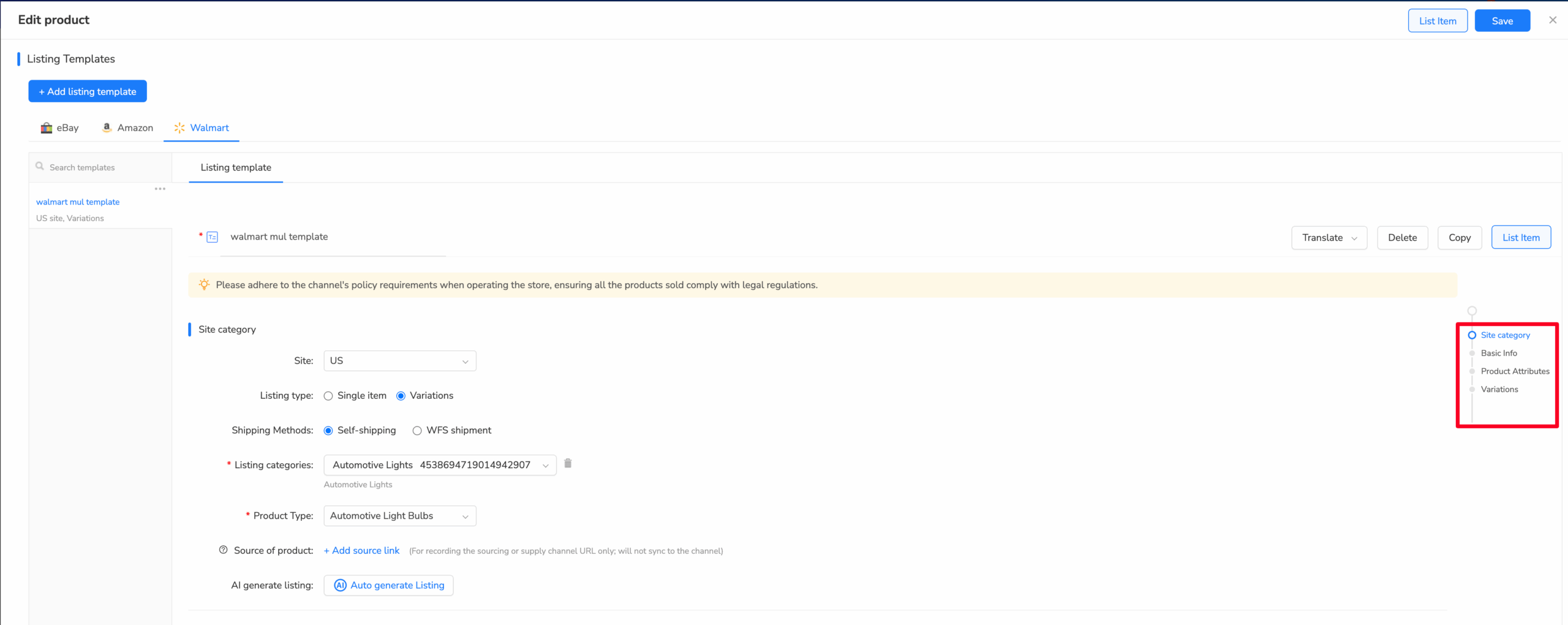
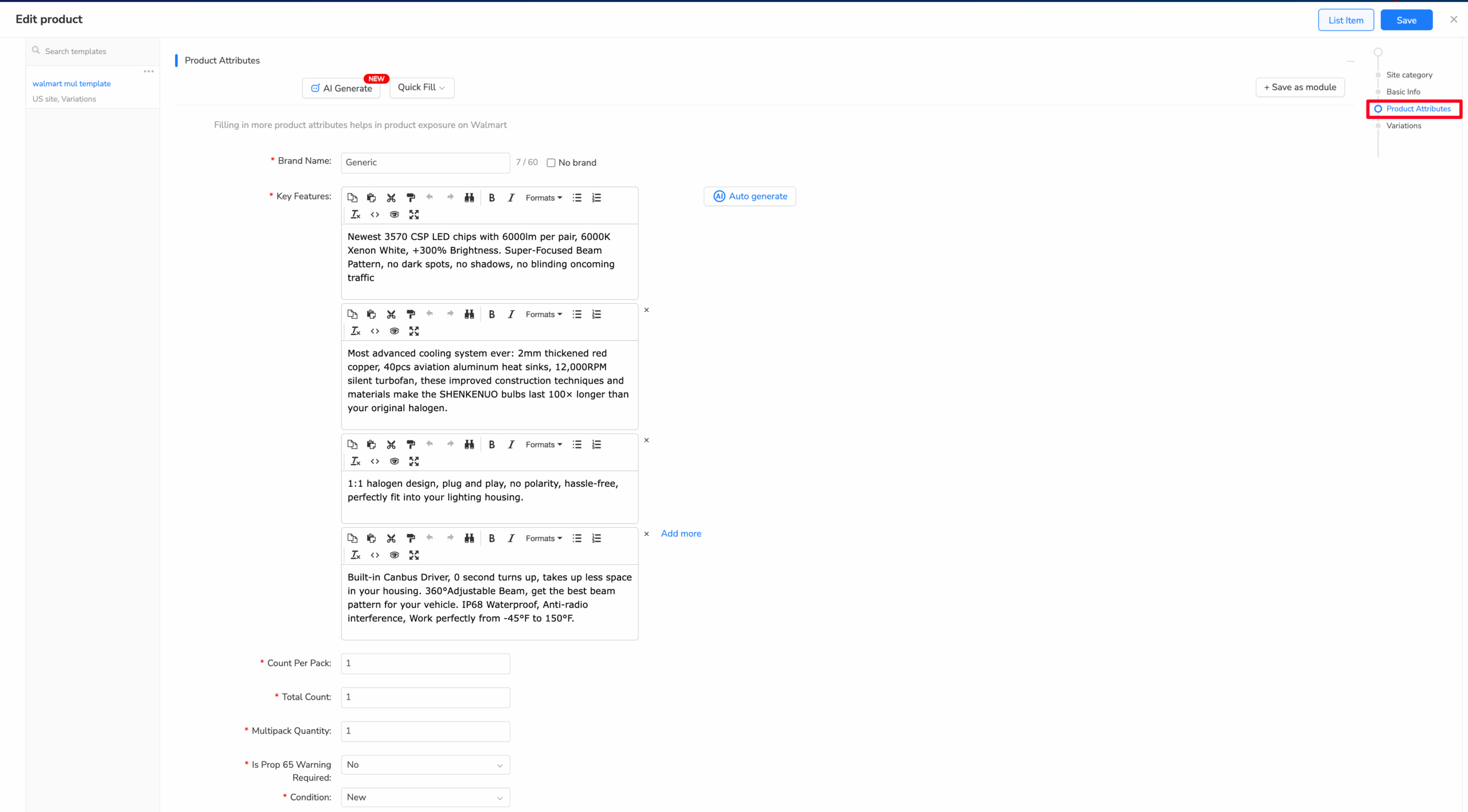
If the specific repair task is product content preparation, Maxmerce can generate editable Walmart listing drafts with titles, key features, descriptions and attributes from the product information provided. That gives the team a starting point instead of repeatedly entering copy for each item. Verify the generated details against the actual product before submission.
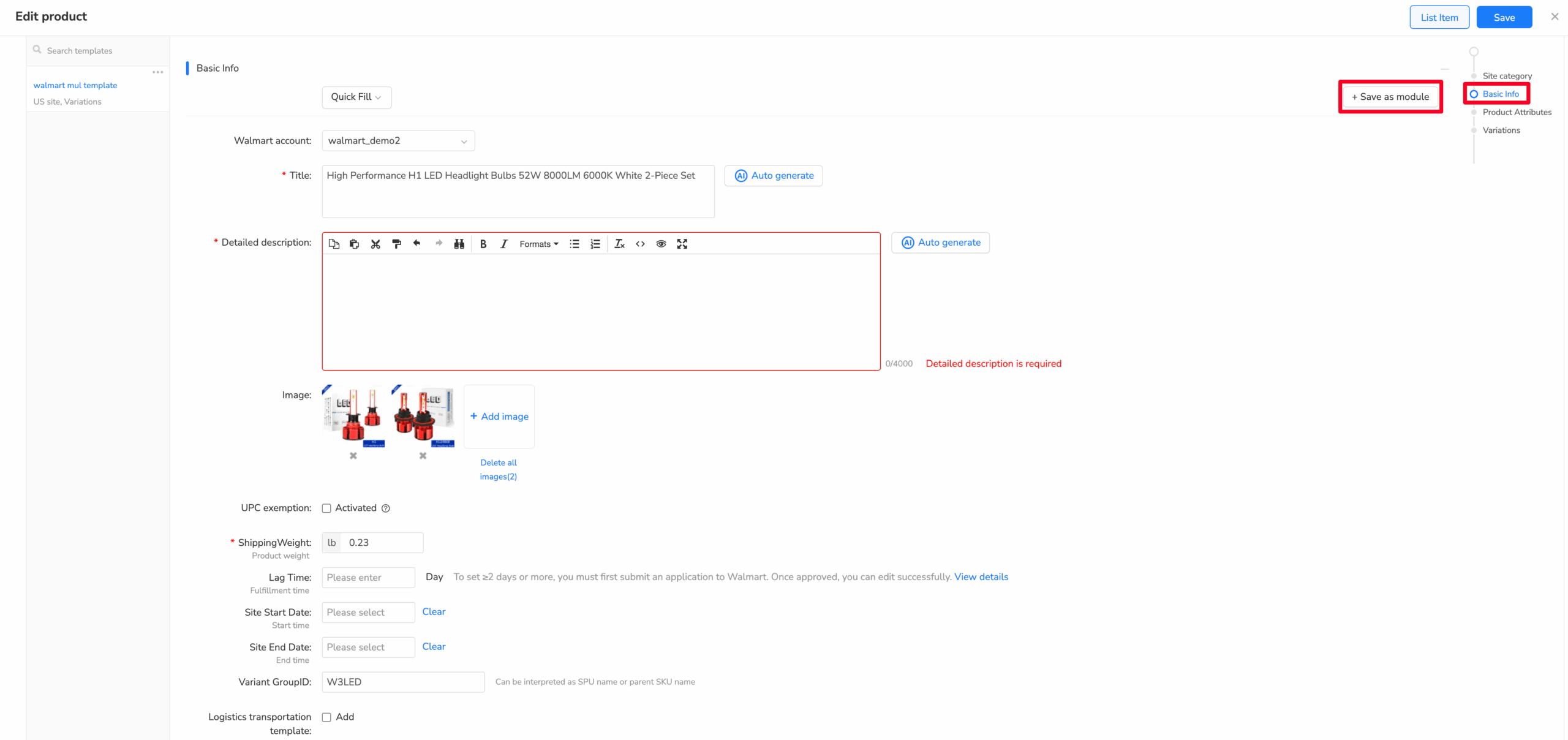
This Maxmerce Listing workflow does not enroll products, obtain reviews, award a content score or guarantee eligibility. Use Walmart’s program controls for enrollment and its measured results for readiness.
Protect the integrity of the feedback
Walmart’s overview requires reviews to comply with FTC consumer-review rules and Marketplace guidelines. It also says sellers may not directly solicit reviews outside Walmart’s Review Accelerator programs. Keep the process inside the authorized program rather than creating a separate incentive or off-platform review request.
Set the team objective as obtaining legitimate feedback under the program rules. Do not condition participation or a benefit on a positive rating, promise five-star reviews, or present enrollment as a guaranteed ranking or sales outcome.
Frequently asked questions
Can an item with more than 15 reviews use Post-Purchase Reviews?
The current overview permits fewer than 15 reviews or no reviews in the last 90 days. Other criteria, including sales and demand, still apply, and Walmart determines inclusion. Do not apply this alternative to Recognized Reviewer, which lists fewer than 15 reviews.
Why is an item absent even though it appears to qualify?
Walmart says the item may already be enrolled by another seller or may not meet the criteria. The Post-Purchase eligible-item list refreshes by Wednesday weekly. Meeting the published criteria does not guarantee inclusion, so keep the live result and investigate rather than claiming a definite cause from the missing row.
Is the customer incentive the complete cost?
Do not assume so. The current guide says the cost per review includes a $5 service fee. Check and retain the actual incentive, fee treatment and charge terms before approving enrollment.
Will reviews stop exactly when the target is reached?
No exact-count promise follows from the target. Walmart describes automatic removal at the selected target but allows additional review submissions up to 48 hours after unenrollment.
Does joining guarantee positive reviews or higher rankings?
No. Enrollment criteria and review targets do not guarantee sentiment, sales or search placement. Follow the authorized program and evaluate the actual results without turning a feedback process into a performance promise.
Official Walmart guides and FTC guidance reviewed October 21, 2026. The comparison, release record and fictional case are original editorial teaching aids.