Walmart Restocking Fees: Check the Return Exemption

Walmart restocking fees are generally prohibited on US Marketplace seller-fulfilled returns. The exception is narrower than “the item came back damaged”: Walmart’s seller-fulfilled returns policy allows an additional fee of up to 20% of the item price for eligible items set up with return exemptions when they are returned in a condition that is not original or sellable. You need to establish both the item’s approved exemption and the returned condition before treating that exception as applicable.
A missing accessory or a scuffed housing can create a real cost. It does not, by itself, authorize a deduction from the buyer’s refund. Start with the particular item and its approved return treatment, rather than a store-wide fee percentage.

What must be true before the exception applies?
Required: Walmart’s US policy prohibits passing return shipping charges to customers and generally prohibits restocking fees. Its stated restocking-fee exception combines an eligible item set up with a return exemption with a return that is not in original or sellable condition. The fee is capped at 20% of the item price; that ceiling is not a default charge for every return.
Seller best practice: Keep a short item-specific decision record linking the approved exemption to the actual returned item and the condition you observed. This is an editorial control for avoiding mistakes, not a Walmart-mandated form or a substitute for the policy.
| Returned item | Exemption and condition | Decision |
|---|---|---|
| Ordinary seller-fulfilled household item | No approved item-specific return exemption; item arrives scratched. | The condition alone does not meet the stated exception. Do not invent a restocking deduction. |
| Item with an approved return exemption | Item comes back in original, sellable condition. | Approval alone does not establish the condition requirement. Do not treat exemption status as an automatic fee. |
| Eligible item set up with a return exemption | Returned item is not in original or sellable condition, supported by the actual inspection. | Evaluate the narrow policy exception and applicable refund workflow. The stated ceiling is 20% of the item price, not permission to charge an arbitrary flat fee. |
Check the approved exemption, not just the product category
Walmart’s return-policy exemption guide identifies items such as freight, luxury and multi-box items as potentially eligible for an exemption. Approval is discretionary and can be revoked. A product fitting one of those descriptions is not proof that Walmart approved its return treatment.

Match the record to the exact item you sold. If you have only submitted a request, cannot find its outcome or cannot establish which item it covers, the approval gate is unresolved. Do not retroactively assume an exemption because this return is expensive.
This article covers the US seller-fulfilled policy. It does not establish the return or fee rules for Walmart Fulfillment Services, another country or a different return program. Verify the governing program before using the decision table.
Keep a fee-eligibility record for the individual return
Seller best practice: Use the following record before confirming a refund action. Keep order identifiers and buyer information in your permitted internal system; you do not need to copy them into a public document or send them to a calculator.
- Route and item: Confirm that this is the US seller-fulfilled return and identify the exact ordered and returned item.
- Approved return treatment: Locate the item’s approved exemption and its applicable terms. Record where you verified it and when; distinguish a submitted request from an approval.
- Condition observed: Describe what you actually received, including missing components or damage where relevant. Keep permitted photographs with the return record. Avoid conclusions based only on the buyer’s selected return reason.
- Policy basis: Record whether both exception conditions are established. If they are, note the item-price basis and the applicable ceiling. The policy’s “up to” language does not make the maximum mandatory.
- Action and result: Follow the available Walmart refund process and record the amount and resulting status. If the permitted action is unclear, resolve it through Walmart’s support process rather than creating a separate off-platform charge.
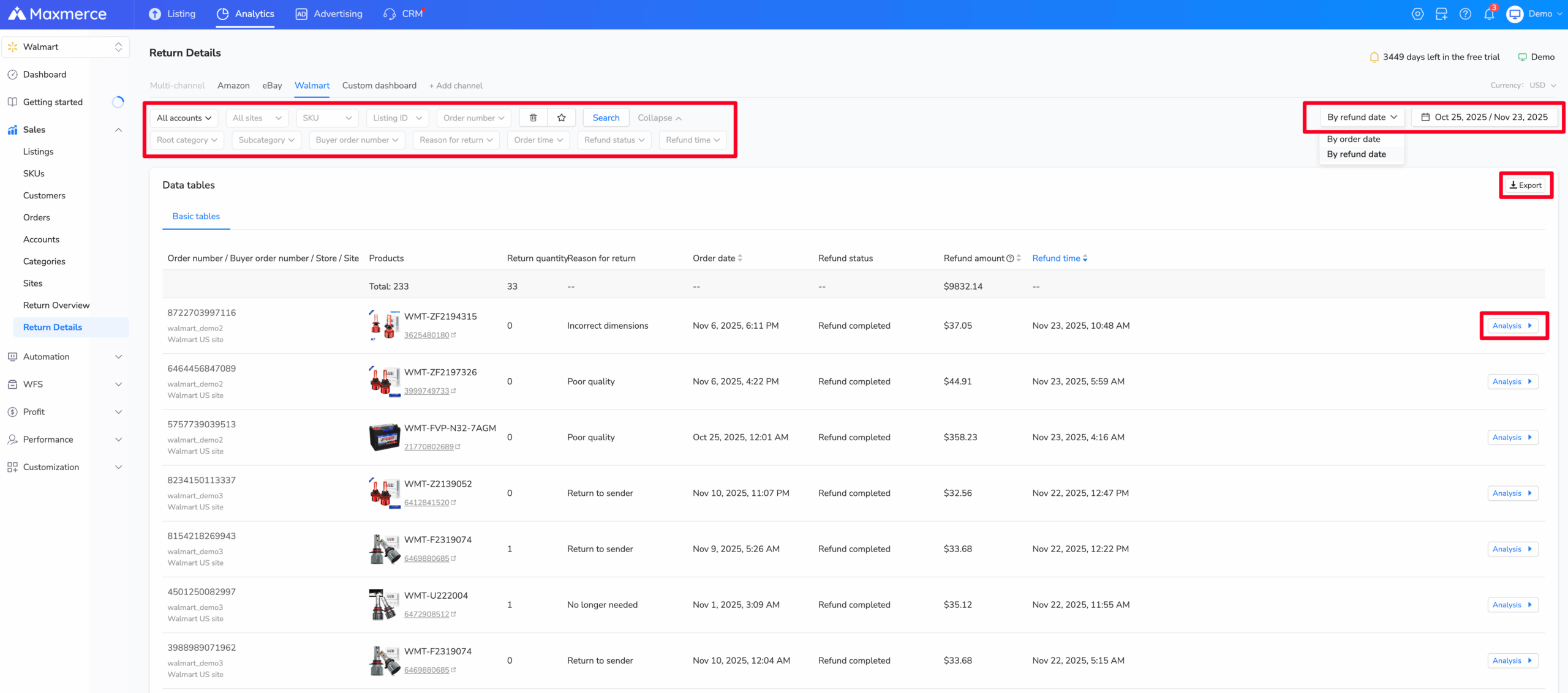
A return-details view can help your team locate the relevant Walmart order, SKU, return reason, refund status and amount. Use those fields to retrieve the record and confirm the saved result. They do not replace the approved exemption or your inspection evidence, and a buyer-selected reason alone does not establish fee eligibility.
For example, suppose an exempt item priced at $200 returns with a condition issue. Twenty percent of the item price is $40. That arithmetic illustrates the ceiling only: it does not prove the exemption is valid, the condition qualifies, a $40 charge is appropriate or the refund action has been accepted.
Do not turn a fee dispute into a delayed return
The return decision still has to follow Walmart’s policy. Do not use a proposed fee to discourage an eligible return, negotiate around the return rights or delay processing while you try to persuade the customer. Walmart may issue a refund on the seller’s behalf under its returns rules.
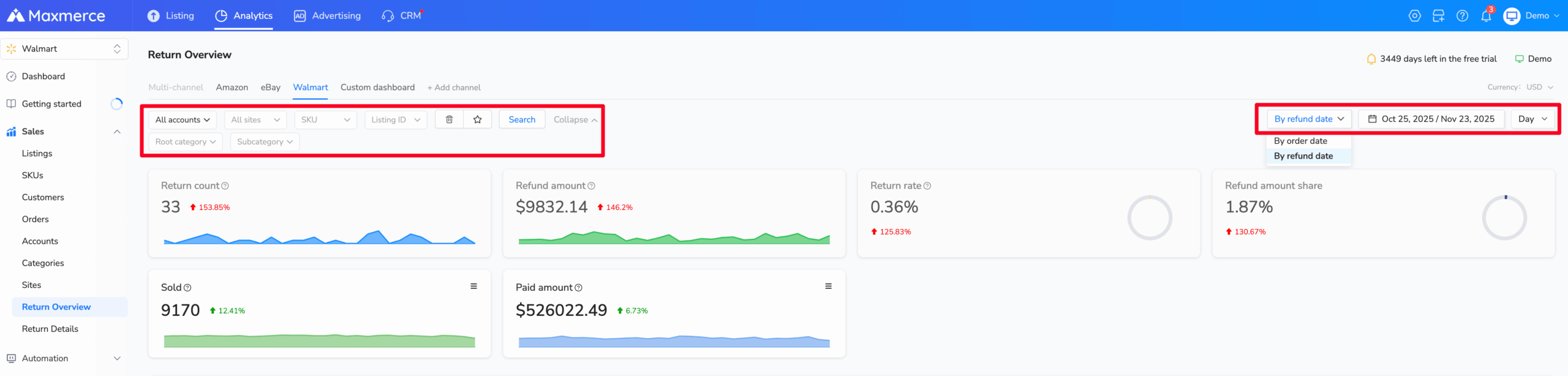
After the individual return is processed, a Walmart Return Overview can help separate a one-off condition issue from a broader pattern by refund date, account, site, SKU or listing. Treat return count, refund amount and return rate as operational monitoring metrics—not as authorization to charge a customer.
After taking an allowed refund action, read the order or return record again. Check that the intended item, amount and resulting status were saved. A note in your own worksheet proves only what you planned to do, not what the marketplace accepted. If the result is uncertain, check the existing record before attempting the action again.
Separate today’s refund from future pricing
A seller-borne inspection or handling cost may affect the economics of future offers even when it cannot be charged to this buyer. You can explore those assumptions with the Walmart profit calculator, which provides cost inputs including Other costs. Choose the appropriate fulfillment assumptions and treat the result as an estimate.
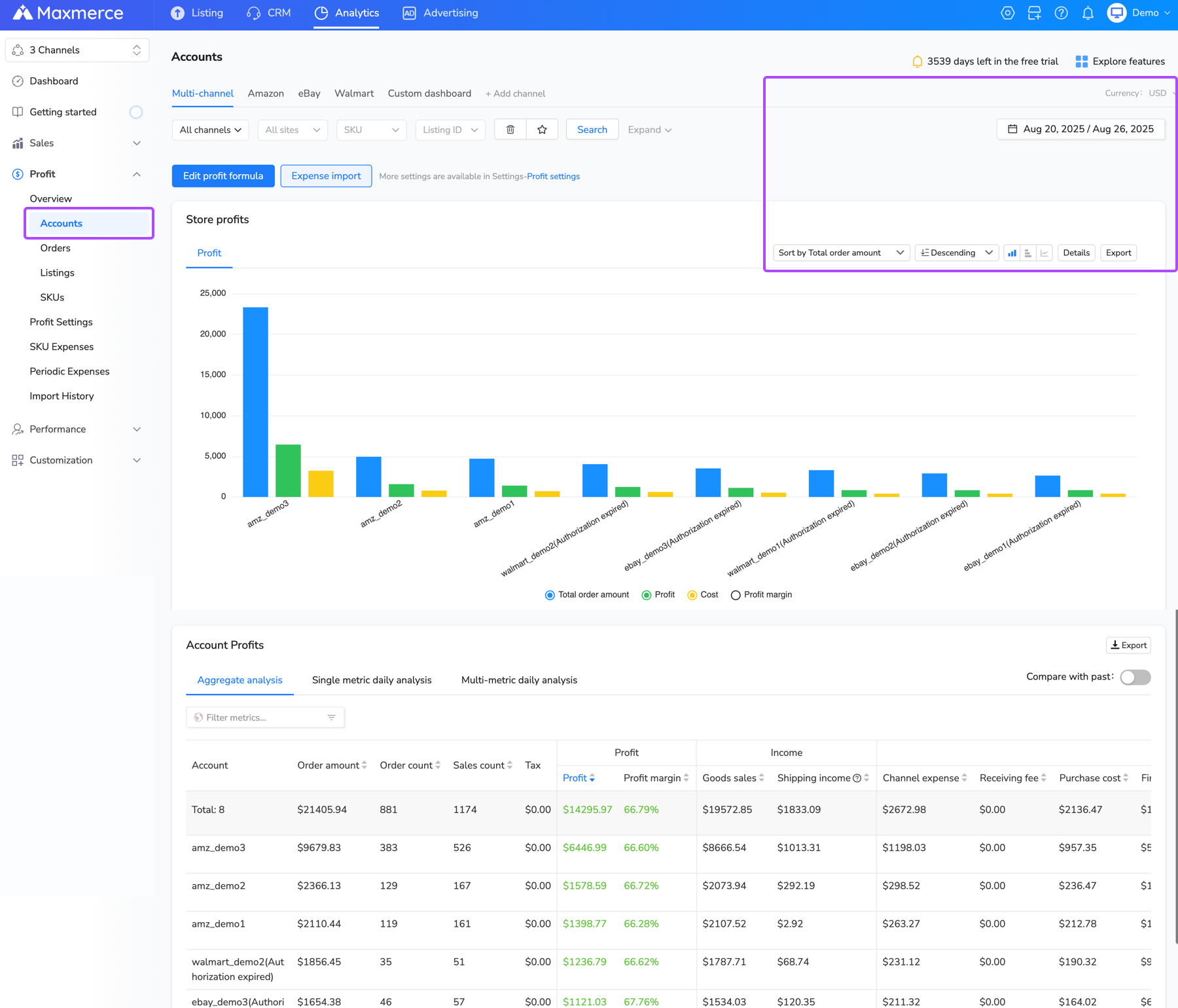
If you use Maxmerce Analytics, keep the configured expense basis and channel filters with any account-profit comparison. A profit report can help your team review seller-borne return costs over time, but it cannot decide whether Walmart permits a restocking fee on a particular order.
The calculator does not determine whether a return exemption applies, authorize a deduction or process a refund. Keep the actual refund decision in Walmart’s policy and workflow; use cost scenarios to review future prices separately.
Frequently asked questions
Can I charge 20% on every Walmart return?
No. The US seller-fulfilled policy generally prohibits restocking fees. Its narrow exception requires an eligible item set up with a return exemption and a return that is not in original or sellable condition. Twenty percent of the item price is the stated maximum for that exception, not a standard return fee.
Does an approved exemption make every return chargeable?
No. Exemption status is only one part of the rule. A return in original, sellable condition does not satisfy the additional condition requirement described in the policy. Check both facts for the individual item.
Can I deduct the return shipping cost instead?
No. Walmart’s return-fee FAQ says sellers cannot pass return shipping charges to customers. Do not rename that cost as a handling or restocking charge to bypass the restriction.
Does this rule apply to WFS returns?
This guide does not establish WFS fee eligibility. Its governing source is Walmart’s US seller-fulfilled returns policy. For a WFS order, check the current WFS return rules and the specific order’s workflow rather than applying this exception by analogy.
Can I model the cost even if I cannot charge the buyer?
Yes, as a future pricing exercise. Record seller-borne cost assumptions separately from the refund and use a calculator to estimate offer economics. An estimated cost does not create permission to deduct it from a customer’s refund.
Walmart Marketplace US official sources reviewed October 23, 2026. The decision table, fee-eligibility record and fictional examples are original editorial aids.