The Best Amazon Profit Calculator: Maxmerce Complete Guide

Reading Time: Approximately 12-15 minutes
In the competitive world of Amazon selling, accurate profit calculation isn’t just important—it’s the difference between building a thriving business and watching your margins disappear into hidden costs and overlooked expenses. With Amazon’s increasingly complex fee structure and constantly evolving policies, sellers need more than basic calculators to understand their true profitability and make informed business decisions.
Recent industry research reveals that 78% of Amazon sellers struggle with accurate profit calculations, often underestimating costs by 15-30%, which can devastate long-term business sustainability [1]. The challenge isn’t just about understanding Amazon’s fees—it’s about integrating all the variables that impact your bottom line, from advertising costs and return rates to seasonal fluctuations and operational overhead.
This is where Maxmerce’s Amazon Profit Calculator stands apart as the most comprehensive and accurate solution available to serious Amazon sellers. Unlike basic fee calculators that provide surface-level insights, Maxmerce offers a sophisticated profit analysis platform that integrates real-time data, advanced cost attribution, and multi-dimensional analytics to give you the complete picture of your business profitability.
Whether you’re a new seller trying to understand the fundamentals of Amazon profitability or an experienced entrepreneur managing a complex multi-channel operation, this comprehensive guide will show you exactly how Maxmerce can transform your approach to profit analysis and business optimization. You’ll discover the advanced features that make Maxmerce the best Amazon profit calculator, learn how to leverage its powerful analytics for maximum profitability, and understand why thousands of successful sellers trust Maxmerce for their most critical business decisions.
Maxmerce’s intuitive dashboard provides comprehensive Amazon profit analysis with real-time data integration
Why Accurate Amazon Profit Calculation Matters
The foundation of every successful Amazon business lies in understanding the true cost of doing business on the platform. Without accurate profit calculations, even the most well-intentioned business strategies can lead to financial disaster, as sellers unknowingly operate at losses while believing they’re profitable.
Amazon’s marketplace has evolved into a sophisticated ecosystem with dozens of fee types, promotional programs, and cost variables that can significantly impact your bottom line. What appears to be a profitable product at first glance may actually be losing money when you factor in all the associated costs, from storage fees and advertising expenses to return processing and customer service overhead.
The Hidden Costs That Destroy Profitability
Amazon’s fee structure extends far beyond the obvious referral and fulfillment fees that most sellers focus on. The platform charges for storage space, with rates that vary dramatically between standard and peak seasons. Long-term storage fees can quickly accumulate for slow-moving inventory, while aged inventory surcharges add additional pressure to maintain healthy turnover rates.
Return processing represents another significant cost that many sellers underestimate. Depending on your product category, return rates can range from 5% to 30% or higher, with each return incurring not just the lost sale but also processing fees, potential restocking costs, and the risk of receiving damaged or unsellable merchandise. These costs compound quickly and can transform apparently profitable products into money-losing ventures.
Advertising costs have become increasingly critical as Amazon’s marketplace has grown more competitive. Most successful sellers now invest 15% to 35% of their revenue in advertising, with some categories requiring even higher investment levels to maintain visibility and sales velocity. Without proper attribution of these costs to individual products and sales, sellers often operate with inflated profit projections that don’t reflect business reality.
Customer service and operational overhead represent additional cost categories that are frequently overlooked in basic profit calculations. The time spent managing customer inquiries, processing refunds, handling inventory issues, and maintaining seller account health all have real costs that should be factored into profitability analysis.
The True Cost of Inaccurate Calculations
Operating with inaccurate profit calculations creates a cascade of business problems that extend far beyond simple accounting errors. Sellers who underestimate their true costs often price their products too aggressively, creating unsustainable business models that appear successful in the short term but fail to generate adequate cash flow for growth and reinvestment.
Inventory decisions based on flawed profitability data can lead to overinvestment in unprofitable products while missing opportunities in genuinely profitable categories. This misallocation of capital can severely limit business growth and create cash flow problems that threaten business sustainability.
Marketing and advertising strategies suffer when profit calculations don’t accurately reflect the true cost of customer acquisition. Sellers may continue investing in advertising campaigns that appear profitable but actually destroy value when all costs are properly attributed. Conversely, they may avoid profitable advertising opportunities because surface-level calculations suggest inadequate returns.
Strategic business decisions, from product line expansion to market entry, depend on accurate profitability analysis. Without reliable data, sellers may pursue growth strategies that actually reduce overall business profitability or miss opportunities for expansion in genuinely profitable areas.
How Precision Drives Business Success
Accurate profit calculation enables data-driven decision making that can dramatically improve business performance. When sellers understand their true costs and margins, they can optimize pricing strategies to maximize profitability while remaining competitive in the marketplace.
Product portfolio optimization becomes possible when you can accurately compare the profitability of different products and categories. This insight allows sellers to focus their resources on the most profitable opportunities while eliminating or improving underperforming products.
Inventory management improves significantly when decisions are based on accurate profitability data. Sellers can optimize their inventory mix to maximize returns on invested capital while minimizing storage costs and the risk of long-term storage fees.
Marketing efficiency increases when advertising costs are properly attributed and analyzed. Sellers can identify the most cost-effective customer acquisition channels and optimize their advertising spend to maximize return on investment across all campaigns and product lines.
Cash flow management becomes more predictable and reliable when profit calculations accurately reflect all business costs. This improved financial visibility enables better planning for growth investments, inventory purchases, and operational expenses.
Advanced cost analysis dashboards help Amazon sellers understand all factors affecting profitability
What Makes Maxmerce the Best Amazon Profit Calculator
Maxmerce represents a fundamental evolution in Amazon profit calculation, moving beyond simple fee computation to provide comprehensive business intelligence that transforms how sellers understand and optimize their profitability. The platform’s sophisticated approach addresses the limitations of traditional calculators while delivering insights that enable data-driven business growth.
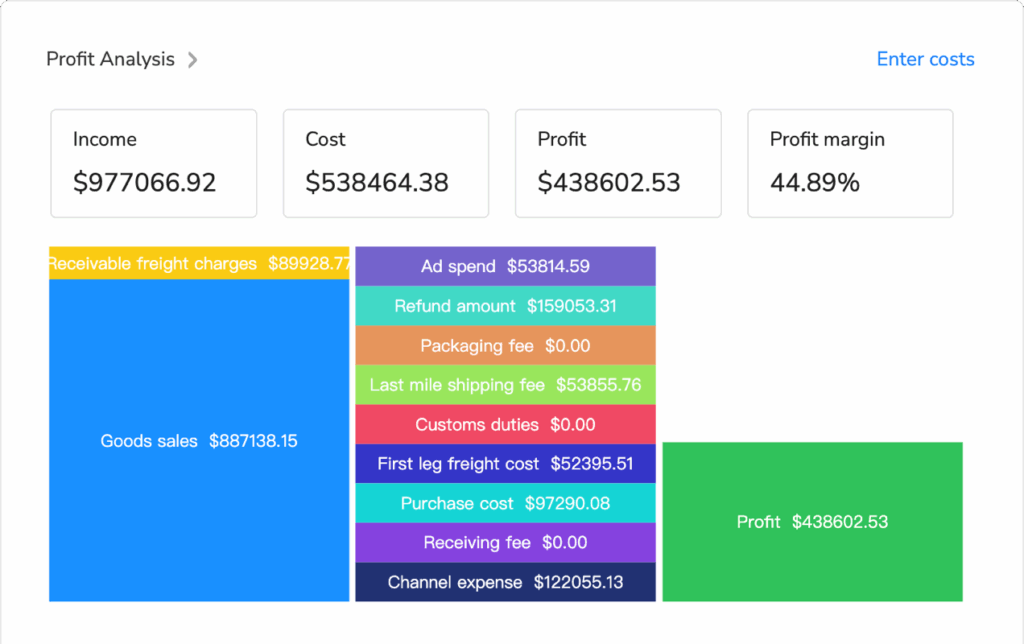
The key to Maxmerce’s superiority lies in its holistic approach to e-commerce analytics. Rather than treating profit calculation as an isolated function, Maxmerce integrates profit analysis with inventory management, customer relationship tools, advertising optimization, and multi-channel operations. This comprehensive integration ensures that profit calculations reflect the complete picture of business operations, including often-overlooked costs and revenue opportunities.
Advanced Real-Time Data Integration
Maxmerce’s real-time data integration capabilities set it apart from static calculators that rely on outdated fee tables and manual input. The platform maintains live connections with Amazon’s API systems, automatically updating fee calculations as Amazon implements policy changes, adjusts fee structures, or introduces new promotional programs.
This real-time capability extends beyond basic fee updates to include dynamic market data, competitive pricing information, and performance metrics from advertising campaigns. The system continuously monitors and incorporates changes in storage fees, fulfillment costs, referral rates, and promotional pricing to ensure that profit calculations always reflect current market conditions.
The platform’s advanced algorithms process data from multiple sources simultaneously, creating a unified view of business performance that would be impossible to achieve through manual analysis. Real-time sales data integration provides minute-by-minute updates on business performance, allowing sellers to respond quickly to market changes and optimize their strategies based on current conditions.
Seasonal variations and promotional periods are automatically factored into calculations, ensuring that profit projections remain accurate during peak selling seasons when costs and competitive dynamics shift dramatically. This automated adjustment capability is particularly valuable during Q4 when storage fees increase and advertising costs often rise due to increased competition.
The system’s ability to process real-time data from multiple channels simultaneously creates opportunities for insights that extend far beyond traditional profit calculation. For example, Maxmerce can automatically correlate changes in advertising spend with shifts in organic ranking and sales velocity, providing a complete picture of marketing ROI that includes both direct and indirect effects.
Comprehensive Multi-Channel Analysis
Maxmerce’s multi-channel approach recognizes that successful e-commerce businesses often operate across multiple platforms simultaneously. The platform provides unified profit analysis across Amazon, eBay, Walmart, and other major marketplaces, allowing sellers to understand their overall business performance and make informed decisions about resource allocation across channels.
This multi-channel capability eliminates the need for separate tools and manual data consolidation, saving time and reducing the risk of errors while providing insights that would be impossible to achieve through single-channel analysis. Sellers can identify which channels are most profitable for specific products, understand how different platforms’ fee structures impact their margins, and optimize their inventory allocation across channels to maximize overall profitability.
The platform’s cross-channel analysis capabilities enable sophisticated business optimization strategies. Sellers can identify products that perform well on Amazon but might be even more profitable on other platforms, or discover opportunities to leverage success on one channel to drive growth on others.
Multi-channel inventory management becomes significantly more efficient when all channels are analyzed through a single platform. Sellers can optimize their inventory distribution based on channel-specific profitability data, ensuring that the most profitable products receive priority allocation while minimizing the risk of stockouts on high-performing channels.
The system’s ability to provide consolidated reporting across channels creates opportunities for strategic insights that inform long-term business planning. Understanding total business profitability across all channels enables more informed decisions about expansion, product development, and resource allocation.
Intelligent Cost Attribution System
Maxmerce’s intelligent cost attribution system represents one of its most sophisticated and valuable features. The platform automatically tracks and allocates indirect costs across relevant transactions, providing a more accurate picture of true profitability than simple fee-based calculations.
Advertising expenses are automatically tracked and allocated based on actual performance data, ensuring that profit calculations reflect the true cost of customer acquisition. This includes not just direct advertising costs but also the indirect effects of advertising on organic sales and long-term customer value. The system can track the impact of advertising campaigns on organic ranking improvements and factor these benefits into overall profitability analysis.
Customer service costs are tracked and allocated based on actual time spent and the complexity of different types of inquiries. This granular cost tracking helps sellers understand the true cost of serving different customer segments and product categories, enabling more informed decisions about pricing and product mix optimization.
Operational overhead costs, including software subscriptions, storage fees, and administrative expenses, are automatically distributed across products and sales channels based on configurable allocation rules. This comprehensive cost accounting ensures that profit calculations reflect the full cost of doing business, not just the direct costs associated with individual transactions.
The system’s cost attribution capabilities extend to return processing, refund handling, and other post-sale activities that can significantly impact profitability but are often overlooked in traditional profit calculations. By accounting for these costs, Maxmerce provides a more accurate and complete picture of business profitability that enables better strategic decision making.
User-Friendly Interface Design
Despite its sophisticated analytical capabilities, Maxmerce prioritizes user experience and accessibility. The platform features an intuitive interface that allows users to access complex insights without requiring extensive training or technical expertise. The dashboard design emphasizes clarity and usability, presenting complex data in easily digestible formats that support quick decision making.
Customizable dashboards allow sellers to focus on the metrics most relevant to their specific business needs and objectives. Whether managing a single product line or a complex multi-channel operation, users can configure their interface to highlight the information that matters most to their daily operations and strategic planning.
The platform’s visualization capabilities transform complex data into clear, actionable insights. Interactive charts, graphs, and reports make it easy to identify trends, spot opportunities, and understand the factors driving business performance. These visual tools are particularly valuable for identifying patterns and relationships that might not be apparent in raw data.
Automated reporting features ensure that critical business insights are delivered regularly without requiring manual intervention. Sellers can configure custom reports that highlight key performance indicators, alert them to potential issues, and provide the information needed for informed decision making.
The system’s mobile-responsive design ensures that critical business insights are accessible from anywhere, enabling sellers to monitor performance and make informed decisions whether they’re in the office, at home, or traveling. This accessibility is particularly valuable for sellers who need to respond quickly to market changes or operational issues.
Maxmerce’s user-friendly interface makes complex profit analysis accessible to sellers of all experience levels
Maxmerce Profit Calculator: Complete Feature Overview
Maxmerce’s profit calculation capabilities extend far beyond basic fee computation to provide a comprehensive business intelligence platform designed specifically for e-commerce sellers. The system’s modular architecture allows it to scale from simple profit calculations for new sellers to sophisticated multi-dimensional analysis for enterprise-level operations.
Maxmerce Core Features Matrix
| Feature Categories | Features | Feature Description | Benefits |
| Real-Time Data Integration | Amazon API Connection | Automatic sync of sales, inventory, advertising data | Ensures data accuracy and timeliness |
| Fee Auto-Updates | Real-time tracking of Amazon fee changes | Avoids calculation errors from outdated fees | |
| Multi-Marketplace Support | Supports global Amazon markets | Unified international business management | |
| Advanced Cost Attribution | Advertising Cost Allocation | Automatic allocation of ad spend to specific products | Accurate calculation of true acquisition costs |
| Indirect Cost Tracking | Tracks operational overhead, software fees, etc. | Comprehensive understanding of cost structure | |
| Return Cost Analysis | Calculates return processing and loss costs | Accurate assessment of true product profitability | |
| Multi-Dimensional Analysis | Product Portfolio Analysis | Cross-category profitability comparison | Optimize product investment portfolio |
| Time Trend Analysis | Historical data and trend forecasting | Support strategic planning and forecasting | |
| Channel Comparison Analysis | Multi-platform profitability comparison | Optimize channel resource allocation | |
| Intelligent Reporting | Custom Dashboards | Personalized data display interface | Quick access to key business insights |
| Automated Reports | Regular business report generation | Save time, ensure continuous monitoring | |
| Alert System | Key metric anomaly notifications | Timely problem detection and resolution |
The platform’s core strength lies in its ability to integrate multiple data sources and analytical frameworks into a unified system that provides both detailed transaction-level insights and high-level strategic intelligence. This comprehensive approach ensures that sellers have access to the information they need for both day-to-day operational decisions and long-term strategic planning.
Core Calculation Engine
At the heart of Maxmerce’s platform is a sophisticated calculation engine that processes real-time data from multiple sources to provide accurate, up-to-date profit analysis. The engine automatically incorporates Amazon’s current fee structure, including referral fees, fulfillment costs, storage charges, and promotional program fees, ensuring that calculations always reflect the most current marketplace conditions.
The calculation engine’s advanced algorithms account for the complex interactions between different cost factors, such as how dimensional weight pricing affects fulfillment fees or how long-term storage charges impact inventory carrying costs. This sophisticated modeling provides more accurate projections than simple linear calculations and helps sellers understand the true financial impact of their business decisions.
Dynamic fee calculation capabilities automatically adjust for seasonal variations, promotional periods, and policy changes. The system monitors Amazon’s fee announcements and policy updates, automatically incorporating changes into ongoing calculations to ensure continued accuracy. This automation eliminates the manual effort required to stay current with Amazon’s frequently changing fee structure.
The engine’s multi-currency support enables accurate profit calculation for international sellers and those operating across multiple Amazon marketplaces. Currency conversion rates are updated in real-time, and the system accounts for currency fluctuation impacts on profitability analysis.
Advanced scenario modeling capabilities allow sellers to test different pricing strategies, cost structures, and market conditions to understand their impact on profitability. This feature is particularly valuable for evaluating the potential impact of supplier cost changes, shipping rate adjustments, or competitive pricing pressures.
Advanced Analytics Dashboard
Maxmerce’s analytics dashboard transforms complex business data into actionable insights through sophisticated visualization and reporting tools. The dashboard provides both high-level overview metrics and detailed drill-down capabilities, allowing sellers to understand their business performance at whatever level of detail is most relevant to their current needs.
Real-time performance monitoring displays key metrics such as profit margins, sales velocity, inventory turnover, and advertising ROI in easy-to-understand formats. Interactive charts and graphs allow users to explore data relationships and identify trends that might not be apparent in static reports.
Comparative analysis tools enable sellers to evaluate performance across different time periods, product categories, sales channels, and market segments. This comparative capability is essential for understanding seasonal trends, evaluating the impact of business changes, and identifying opportunities for optimization.
The dashboard’s filtering and segmentation capabilities allow users to focus on specific aspects of their business performance. Comprehensive filtering options include account, marketplace, category, SKU, brand, region, and price ranges, powered by a robust analysis engine that delivers instant results regardless of data volume.
Custom metric creation allows sellers to define and track business-specific key performance indicators that align with their unique objectives and strategies. Whether tracking customer lifetime value, inventory efficiency ratios, or channel-specific profitability metrics, the system can accommodate virtually any analytical requirement.
Automated alerting capabilities notify sellers when key metrics exceed predefined thresholds or when significant changes occur in business performance. These alerts enable proactive management and quick response to both opportunities and potential issues.
Automated Cost Tracking
Maxmerce’s automated cost tracking system eliminates the manual effort traditionally required to maintain accurate cost records while providing more comprehensive cost attribution than manual methods could achieve. The system automatically captures and categorizes costs from multiple sources, ensuring that all relevant expenses are included in profitability calculations.
Direct cost tracking includes product costs, shipping expenses, prep fees, and other transaction-specific charges. The system can integrate with supplier systems and shipping providers to automatically capture actual costs rather than relying on estimates or manual input.
Indirect cost allocation distributes overhead expenses such as software subscriptions, storage fees, and administrative costs across relevant products and sales channels based on configurable allocation rules. This sophisticated cost accounting provides a more accurate picture of true profitability than calculations that only consider direct costs.
Advertising cost integration automatically tracks and attributes advertising expenses to specific products and sales channels based on actual campaign performance data. The system can account for both direct advertising costs and the indirect benefits of advertising on organic sales and ranking improvements.
Return and refund cost tracking captures the full financial impact of returns, including processing fees, restocking costs, and the opportunity cost of lost sales. This comprehensive return cost analysis helps sellers understand the true profitability impact of different return rates and develop strategies to minimize return-related losses.
Time-based cost tracking allows sellers to understand how costs change over time and identify trends that might impact future profitability. This temporal analysis is particularly valuable for understanding seasonal cost variations and planning for peak selling periods.
Scenario Planning Tools
Maxmerce’s scenario planning capabilities enable sellers to model different business scenarios and understand their potential impact on profitability before making significant business decisions. This forward-looking analysis capability is essential for strategic planning and risk management.
Pricing optimization scenarios allow sellers to test different pricing strategies and understand their impact on profit margins, sales volume, and overall profitability. The system can model complex pricing scenarios that account for competitive responses, demand elasticity, and cost structure changes.
Inventory planning scenarios help sellers optimize their inventory investments by modeling different stocking strategies and their impact on storage costs, stockout risks, and overall profitability. These scenarios can account for seasonal demand variations, supplier lead times, and cash flow constraints.
Market expansion scenarios enable sellers to evaluate the potential profitability of entering new product categories, marketplaces, or geographic regions. The system can model the costs and revenue potential of expansion strategies while accounting for market-specific factors and competitive dynamics.
Cost structure scenarios allow sellers to understand the impact of changes in supplier costs, shipping rates, or operational expenses on overall business profitability. This analysis capability is particularly valuable for evaluating supplier negotiations and operational optimization opportunities.
Marketing investment scenarios help sellers optimize their advertising and promotional spending by modeling different investment levels and strategies. The system can account for the complex relationships between advertising spend, organic ranking improvements, and long-term customer value.
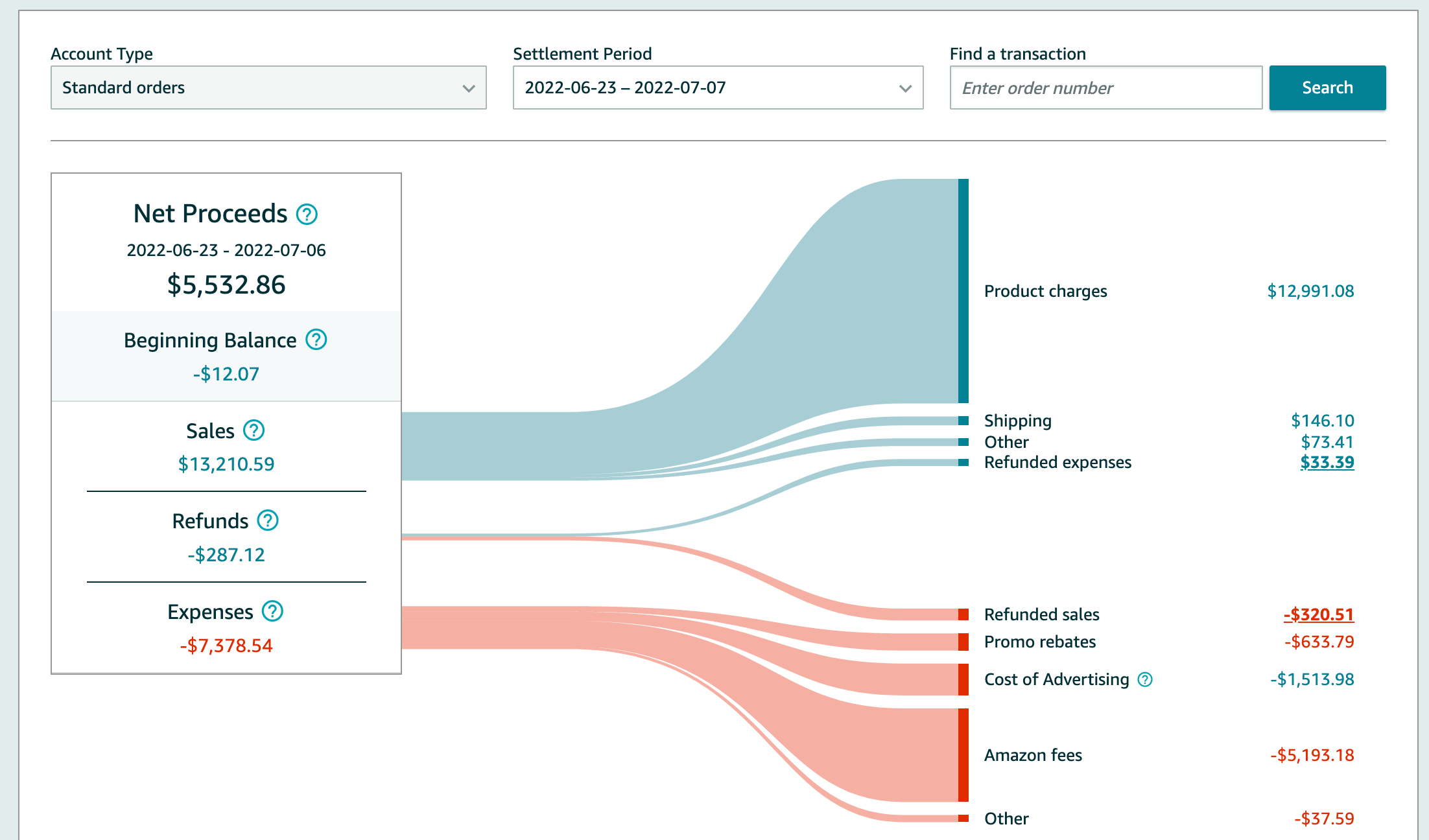
Maxmerce’s comprehensive analytics tools provide deep insights into Amazon business profitability
Understanding Amazon FBA Fees and Cost Structure
Amazon’s fee structure has evolved into a complex system designed to cover the costs of marketplace access, payment processing, fulfillment services, and customer support. Understanding this structure is essential for accurate profit calculation and successful business management, as fees can represent 20% to 40% or more of total product revenue depending on the category and fulfillment method.
Complete Amazon Fee Structure
| Fee Type | Product Category | Rate/Amount | Minimum Fee | Calculation Base | Notes |
| Referral Fees | Electronics | 8% | $0.30 | Total sale price | Includes shipping and gift wrap |
| Home & Kitchen | 15% | – | Total sale price | Most common category | |
| Clothing & Accessories | 17% | – | Total sale price | Higher rate category | |
| Books & Media | 15% | $1.80 | Total sale price | Has minimum fee requirement | |
| Health & Personal Care | 8% | – | Total sale price | Relatively low rate | |
| Fulfillment Fees | Small Standard Size | $3.22 + $0.50/lb | – | Dimensional weight | Under 12 oz |
| Large Standard Size | $4.09 + $0.40/lb | – | Dimensional weight | 1-2 lbs | |
| Large Standard Size | $4.09 + $0.30/lb | – | Dimensional weight | Over 2 lbs | |
| Small Oversize | $9.73 + $0.42/lb | – | Dimensional weight | Special handling required | |
| Storage Fees | Standard Size (Jan-Sep) | $0.75/cubic foot | – | Monthly storage volume | Off-peak rate |
| Standard Size (Oct-Dec) | $2.40/cubic foot | – | Monthly storage volume | Peak season rate | |
| Oversize (Jan-Sep) | $0.48/cubic foot | – | Monthly storage volume | Off-peak rate | |
| Oversize (Oct-Dec) | $1.20/cubic foot | – | Monthly storage volume | Peak season rate | |
| Long-term Storage | 365+ days | $6.90/cubic foot | $0.15/unit | Storage time and volume | Assessed Feb & Aug |
| Aged Inventory | 181-365 days | $0.50/cubic foot | – | Monthly assessment | Encourages inventory turnover |
| 365+ days | $6.90/cubic foot | – | Monthly assessment | Stacks with long-term storage |
The complexity of Amazon’s fee structure means that even experienced sellers can overlook significant cost factors that impact profitability. Maxmerce’s comprehensive fee tracking ensures that all relevant costs are captured and properly attributed, providing sellers with the complete picture they need for informed decision making.
Referral Fees Breakdown
Referral fees represent Amazon’s commission for providing marketplace access and are calculated as a percentage of the total sales price, including shipping charges and gift wrap fees. These fees vary significantly by product category, ranging from 8% for electronics and computers to 17% for clothing and accessories, with some specialized categories having even higher rates.
The referral fee structure includes minimum fees for certain categories, which can significantly impact the effective fee percentage for low-priced items. For example, media categories have a minimum referral fee of $1.80 per item, which can represent a substantial percentage of the sale price for books, CDs, or DVDs priced under $20.
Category-specific fee structures can include additional requirements or restrictions that impact costs beyond the basic referral fee. Some categories require professional selling plans, have gating requirements that involve additional fees, or mandate specific compliance certifications that add to the overall cost of selling.
Promotional programs and special events can temporarily modify referral fee structures. Lightning Deals, for example, have specific fee implications that must be factored into profitability calculations. Amazon’s various promotional programs each have unique cost structures that can significantly impact profit margins if not properly accounted for.
Understanding the nuances of referral fee calculation is crucial for accurate profit analysis. Maxmerce automatically incorporates all category-specific fee structures and promotional program costs, ensuring that sellers have accurate fee calculations regardless of the complexity of their product mix or promotional strategies.
Fulfillment and Storage Costs
Amazon’s fulfillment fees cover the cost of picking, packing, shipping, customer service, and returns processing for FBA orders. These fees are calculated based on the size tier and weight of the product, with different fee structures for standard-size and oversize items that can significantly impact profitability calculations.
The fulfillment fee structure uses dimensional weight pricing, which means fees are calculated based on either the actual weight or the dimensional weight of the package, whichever is greater. This pricing model can dramatically impact costs for lightweight but bulky items, making accurate dimensional data crucial for profit calculations.
Standard-size items are categorized into small standard-size, large standard-size, and extra-large standard-size tiers, each with different fee structures that increase with size and weight. Small standard-size items under 12 ounces incur fees starting around $3.22, while large standard-size items can cost $4.09 or more depending on weight, with additional per-pound charges that vary by weight tier.
Oversize items face significantly higher fulfillment fees that reflect the additional handling and shipping requirements for these products. Oversize fees can range from around $9 for small oversize items to $75 or more for special oversize items, making accurate size classification critical for profitability analysis.
Storage fees are charged monthly based on the volume of space inventory occupies in Amazon’s fulfillment centers, measured in cubic feet. Standard-size items incur storage fees of approximately $0.75 per cubic foot per month from January through September, increasing to $2.40 per cubic foot per month during peak season from October through December.
Long-term storage fees apply to inventory that has been in Amazon’s fulfillment centers for more than 365 days, charged at $6.90 per cubic foot or $0.15 per unit, whichever is greater. These fees are assessed twice per year and can quickly make slow-moving inventory unprofitable.
Aged inventory surcharges add additional fees for products that have been in fulfillment centers for more than 180 days, ranging from $0.50 to $6.90 per cubic foot depending on the age of the inventory. These progressive fee structures are designed to encourage regular inventory turnover and can significantly impact profitability for sellers with slow-moving products.
Hidden Fees and Additional Charges
Beyond the obvious referral and fulfillment fees, Amazon charges numerous additional fees that can significantly impact profitability if not properly accounted for. These hidden costs often catch sellers by surprise and can transform apparently profitable products into money-losing ventures.
Prep service fees apply when Amazon provides additional preparation services such as bubble wrapping, polybagging, labeling, or taping. These fees typically range from $1 to $2 per unit and can add substantial costs for products that require special handling or preparation.
Return processing fees are charged when customers return items, covering the cost of receiving, inspecting, and processing returned merchandise. These fees vary by category and can range from $1 to $5 or more per return, depending on the size and complexity of the product.
Removal and disposal fees apply when sellers choose to have inventory removed from Amazon’s fulfillment centers or disposed of rather than returned. Removal fees typically range from $0.50 to $1.24 per unit, while disposal fees are generally lower but result in total loss of the inventory value.
Unplanned service fees are charged when inventory arrives at Amazon’s fulfillment centers without proper preparation or labeling. These fees can range from $1 to $5 per unit and are designed to encourage sellers to follow Amazon’s preparation requirements.
High-volume listing fees apply to sellers who maintain more than 2 million active listings, charged at $0.005 per listing per month. While this fee primarily affects large sellers, it can represent a significant cost for those with extensive catalogs.
Refund administration fees are charged when Amazon processes refunds on behalf of sellers, typically ranging from $5 to $20 depending on the refund amount and circumstances. These fees can accumulate quickly for sellers with high return rates or customer service issues.
Seasonal Variations and Policy Changes
Amazon’s fee structure is not static—it changes regularly in response to operational costs, competitive pressures, and strategic initiatives. Understanding these variations and staying current with policy changes is essential for maintaining accurate profit calculations throughout the year.
Peak season storage fees represent one of the most significant seasonal cost variations, with storage rates increasing by more than 200% during the October through December period. This dramatic increase can severely impact profitability for sellers who don’t properly plan for seasonal cost variations.
Holiday surcharges may apply during peak selling periods when Amazon’s fulfillment network experiences high demand. These temporary fees help manage capacity constraints but can impact profit margins if not anticipated and factored into pricing strategies.
Promotional period fee adjustments can occur during major sales events like Prime Day, Black Friday, or Cyber Monday. While these events often drive increased sales volume, they may also involve modified fee structures or additional promotional costs that impact profitability.
Policy changes can introduce new fee categories or modify existing fee structures with relatively short notice. Recent examples include the introduction of aged inventory surcharges and modifications to long-term storage fee calculation methods.
Fee structure updates typically occur multiple times per year, with Amazon providing advance notice through seller communications and policy updates. However, staying current with these changes and understanding their impact on profitability requires ongoing attention and analysis.
Maxmerce’s real-time fee tracking automatically incorporates all fee changes and seasonal variations, ensuring that profit calculations remain accurate regardless of when they’re performed or what changes Amazon has implemented. This automated updating capability eliminates the manual effort required to stay current with Amazon’s evolving fee structure while ensuring continued calculation accuracy.
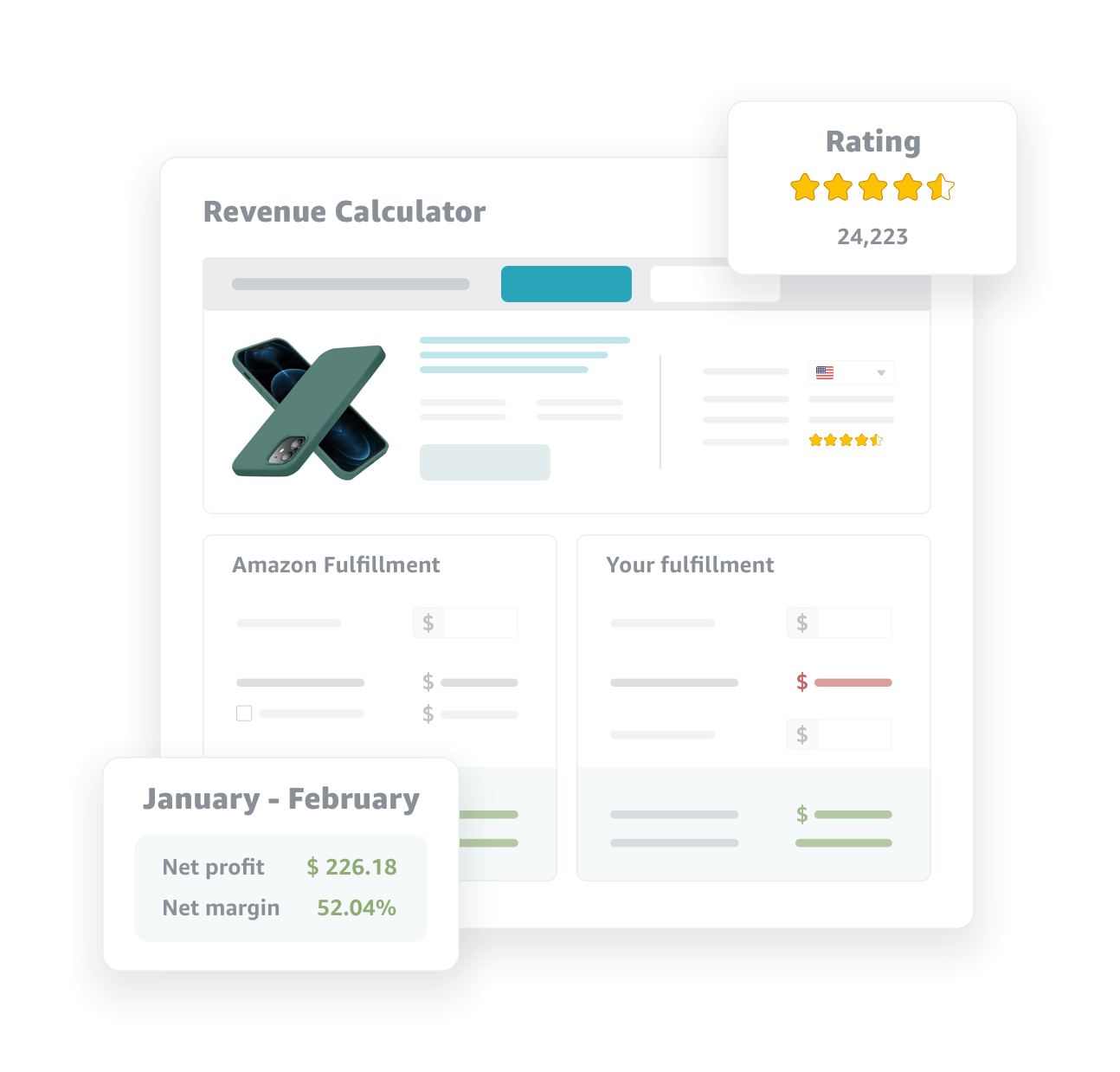
Understanding Amazon’s complex fee structure is essential for accurate profit calculation and business success
How to Use Maxmerce for Maximum Profitability
Maximizing the value of Maxmerce’s sophisticated profit analysis capabilities requires a strategic approach that goes beyond basic calculation functions. The platform’s comprehensive feature set enables multiple optimization strategies that can significantly improve business performance when properly implemented and consistently applied.
The key to success with Maxmerce lies in understanding how to leverage its various analytical capabilities to identify opportunities, optimize operations, and make data-driven decisions that improve profitability across all aspects of your Amazon business. This systematic approach transforms profit calculation from a reactive accounting function into a proactive business optimization tool.
Setting Up Your Profit Analysis
Effective profit analysis begins with comprehensive data integration and proper system configuration. Maxmerce’s setup process is designed to capture all relevant business data while providing flexibility to accommodate different business models and operational approaches.
Account integration starts with connecting your Amazon Seller Central account to enable automatic data synchronization. This connection allows Maxmerce to access real-time sales data, fee information, inventory levels, and advertising performance metrics. The platform’s secure API integration ensures data privacy while providing comprehensive access to the information needed for accurate analysis.
Product catalog setup involves importing your complete product inventory and configuring cost data for each item. This includes not just the basic cost of goods sold, but also associated costs such as shipping to Amazon warehouses, prep fees, packaging costs, and any quality control expenses. Accurate cost data is fundamental to reliable profit analysis, so investing time in comprehensive setup pays dividends in analytical accuracy.
Cost allocation configuration allows you to define how indirect costs such as software subscriptions, administrative expenses, and operational overhead should be distributed across your product portfolio. Maxmerce’s flexible allocation rules can accommodate various business models, from simple equal distribution to sophisticated activity-based costing approaches.
Advertising integration connects your Amazon advertising accounts to enable automatic tracking and attribution of advertising costs. This integration captures not just direct advertising expenses but also performance data that allows the system to analyze advertising ROI and factor advertising costs into overall profitability calculations.
Multi-channel setup, if applicable, involves connecting additional sales channels such as eBay, Walmart, or your own e-commerce website. This comprehensive integration provides a unified view of business performance across all channels and enables sophisticated cross-channel optimization strategies.
Optimizing Your Product Portfolio
Maxmerce’s analytical capabilities enable sophisticated product portfolio optimization that can significantly improve overall business profitability. The platform’s multi-dimensional analysis tools help identify the most profitable products, categories, and market segments while highlighting opportunities for improvement.
Profitability ranking analysis provides clear visibility into which products generate the highest returns on investment. This analysis goes beyond simple profit margins to consider factors such as inventory turnover, advertising efficiency, and total return on invested capital. Understanding these rankings enables strategic decisions about inventory allocation, marketing investment, and product development priorities.
Category performance analysis reveals how different product categories contribute to overall business profitability. This insight is particularly valuable for sellers with diverse product portfolios, as it enables strategic focus on the most profitable categories while identifying opportunities to improve or eliminate underperforming segments.
Seasonal profitability patterns help sellers understand how their product mix performs throughout the year and optimize inventory planning accordingly. Maxmerce’s historical analysis capabilities can identify products that perform exceptionally well during specific seasons, enabling strategic inventory investments that maximize returns during peak periods.
Market opportunity identification uses competitive analysis and market data to highlight products or categories with strong profit potential. The platform can identify products with favorable profit margins, growing demand, and manageable competition levels, providing valuable insights for product sourcing and development decisions.
Underperforming product analysis helps identify products that are destroying value rather than creating it. This analysis considers all costs, including opportunity costs and resource allocation impacts, to provide a complete picture of product performance. Armed with this information, sellers can make informed decisions about pricing adjustments, cost reduction strategies, or product elimination.
Monitoring Performance Over Time
Continuous performance monitoring is essential for maintaining optimal profitability in Amazon’s dynamic marketplace. Maxmerce’s real-time monitoring capabilities enable proactive management and quick response to both opportunities and challenges as they emerge.
Trend analysis capabilities help identify patterns in business performance that might not be apparent from snapshot data. Understanding these trends enables predictive planning and proactive strategy adjustments that can prevent problems before they impact profitability.
Performance alerts notify sellers when key metrics exceed predefined thresholds or when significant changes occur in business performance. These automated alerts enable quick response to both opportunities and potential issues, ensuring that sellers can capitalize on positive trends while addressing problems before they become serious.
Comparative analysis tools enable evaluation of performance across different time periods, allowing sellers to understand the impact of business changes and market conditions on profitability. This temporal analysis is essential for understanding seasonal patterns, evaluating strategy effectiveness, and planning for future periods.
Variance analysis compares actual performance against projections and budgets, helping sellers understand where their business is exceeding or falling short of expectations. This analysis enables course corrections and strategy refinements that keep business performance on track.
Benchmark analysis compares business performance against industry standards and best practices, providing context for understanding whether performance levels are competitive and identifying areas for improvement.
Making Data-Driven Decisions
Maxmerce’s comprehensive analytics enable data-driven decision making across all aspects of Amazon business management. The platform’s insights support both tactical operational decisions and strategic business planning with reliable, actionable information.
Pricing optimization decisions benefit from Maxmerce’s ability to model different pricing scenarios and their impact on profitability. The platform can analyze the relationship between price changes and sales volume while factoring in all associated costs to identify optimal pricing strategies that maximize profit rather than just revenue.
Inventory investment decisions become more strategic when based on comprehensive profitability analysis. Maxmerce’s insights help sellers allocate their inventory investments to the products and categories that generate the highest returns while minimizing the risk of excess inventory and associated storage costs.
Marketing investment optimization uses detailed ROI analysis to identify the most effective advertising strategies and channels. The platform’s ability to track advertising performance and attribute costs accurately enables sellers to optimize their marketing spend for maximum profitability rather than just sales volume.
Operational efficiency improvements can be identified through detailed cost analysis and performance monitoring. Maxmerce’s insights help sellers identify operational bottlenecks, cost inefficiencies, and process improvements that can enhance profitability without requiring additional investment.
Strategic planning decisions, from market expansion to product development, benefit from Maxmerce’s comprehensive business intelligence capabilities. The platform’s scenario modeling tools enable sellers to evaluate different strategic options and their potential impact on profitability before making significant commitments.
Risk management strategies can be developed using Maxmerce’s analytical capabilities to identify potential threats to profitability and develop contingency plans. Understanding the factors that impact business performance enables proactive risk mitigation and strategic planning that protects profitability during challenging periods.
Maxmerce’s comprehensive analytics dashboard enables data-driven decision making for maximum profitability
Real-World Success Stories with Maxmerce
The true measure of any business tool lies in its ability to deliver tangible results for real businesses. Maxmerce’s comprehensive profit analysis capabilities have enabled thousands of Amazon sellers to transform their operations, optimize their profitability, and achieve sustainable business growth. These success stories demonstrate the practical value of sophisticated profit analysis and the competitive advantages that accurate data can provide.
These case studies represent actual Maxmerce users who have achieved significant improvements in their business performance through strategic application of the platform’s analytical capabilities. While individual results vary based on business model, market conditions, and implementation approach, these examples illustrate the types of improvements that are possible when sellers leverage comprehensive profit analysis effectively.

Case Study: Electronics Seller Increases Profit by 34%
TechGear Solutions, a mid-sized electronics seller specializing in computer accessories and mobile device peripherals, was struggling with declining profit margins despite growing sales volume. The company’s traditional accounting methods showed healthy revenue growth, but cash flow was becoming increasingly tight, and the owners suspected that hidden costs were eroding their profitability.
Before implementing Maxmerce, TechGear Solutions relied on basic spreadsheet calculations that only considered obvious costs like product purchase price and Amazon’s referral fees. Their analysis didn’t account for the full spectrum of fulfillment costs, storage fees, advertising expenses, or return processing costs. This incomplete picture led to pricing decisions that appeared profitable on the surface but actually generated minimal returns when all costs were considered.
The Maxmerce implementation revealed several critical insights that had been invisible in their previous analysis. First, the company discovered that their advertising costs were significantly higher than estimated, representing nearly 28% of revenue rather than the 15% they had assumed. More importantly, the advertising attribution analysis showed that some of their highest-volume products were actually unprofitable when advertising costs were properly allocated.
Storage cost analysis revealed another significant issue. TechGear Solutions had been carrying excessive inventory levels for slow-moving products, resulting in substantial long-term storage fees that weren’t being factored into profitability calculations. Some products that appeared profitable were actually losing money when storage costs were properly attributed over their actual sales velocity.
The return rate analysis provided additional insights that transformed their product strategy. Certain product categories had return rates exceeding 25%, with return processing costs and lost inventory value significantly impacting profitability. This analysis enabled the company to identify quality issues with specific suppliers and make strategic decisions about product mix optimization.
Armed with Maxmerce’s comprehensive insights, TechGear Solutions implemented a systematic optimization strategy. They eliminated 23 unprofitable products from their catalog, renegotiated terms with suppliers for their most profitable items, and restructured their advertising campaigns to focus on products with the highest true ROI. They also implemented more aggressive inventory management practices to minimize storage costs and reduce the risk of long-term storage fees.
The results were dramatic and sustained. Within six months of implementation, TechGear Solutions achieved a 34% increase in overall profit margins while maintaining similar revenue levels. More importantly, their cash flow improved significantly, enabling reinvestment in high-performing products and strategic business expansion. The company’s owners credit Maxmerce’s comprehensive analysis with transforming their understanding of their business and enabling data-driven decisions that would have been impossible with their previous analytical capabilities.
Detailed Cost Analysis Example: Wireless Bluetooth Headphones
Product Details:
•Sales Price: $79.99
•Product Cost: $32.00
•Dimensions: 6″ x 4″ x 2″ (0.8 lbs)
•Monthly Sales: 150 units
| Cost Component | Amount | % of Sales | Calculation Method | Maxmerce Advantage |
| Product Cost | $32.00 | 40.0% | Direct cost | Auto-tracks supplier cost changes |
| Amazon Referral Fee | $6.40 | 8.0% | $79.99 × 8% | Real-time rate updates |
| FBA Fulfillment Fee | $4.09 | 5.1% | Large standard size base fee | Precise dimensional weight calculation |
| Storage Fee (monthly) | $0.18 | 0.2% | Based on actual storage volume | Automatic seasonal rate adjustment |
| Advertising Costs | $16.00 | 20.0% | Based on actual ACOS | Intelligent ad cost attribution |
| Return Processing | $2.40 | 3.0% | 5% return rate × processing cost | Category-specific return rate analysis |
| Prep Services | $1.50 | 1.9% | Preprocessing service fees | Auto-tracks prep fees |
| Other Operating Costs | $2.00 | 2.5% | Software, customer service allocation | Smart cost allocation algorithms |
| Total Costs | $64.57 | 80.7% | – | Comprehensive cost visibility |
| Net Profit | $15.42 | 19.3% | – | Accurate profitability analysis |
Case Study: Multi-Channel Expansion Success
Lifestyle Brands Collective, a seller specializing in home décor and lifestyle products, had built a successful Amazon business but wanted to expand to additional sales channels to reduce their dependence on a single platform. However, they were concerned about the complexity of managing profitability across multiple channels and wanted to ensure that expansion efforts would actually improve overall business performance.
The company’s challenge was understanding how their products would perform on different platforms with varying fee structures, customer demographics, and competitive dynamics. Their existing profit analysis tools were designed specifically for Amazon and couldn’t provide the multi-channel insights needed for informed expansion decisions.
Maxmerce’s multi-channel analysis capabilities provided the comprehensive insights needed for strategic expansion planning. The platform’s unified analytics enabled Lifestyle Brands Collective to model their product performance across Amazon, eBay, and Walmart while accounting for each platform’s unique fee structures and operational requirements.
The analysis revealed that certain product categories that were moderately profitable on Amazon had significantly higher profit potential on other platforms due to different competitive dynamics and fee structures. Conversely, some of their best-performing Amazon products would be less profitable on other channels due to higher advertising costs or different customer preferences.
Cross-channel inventory optimization became possible with Maxmerce’s comprehensive analytics. The company could identify which products to prioritize for each channel based on profitability analysis while optimizing their inventory allocation to maximize overall returns. This strategic approach enabled them to expand efficiently without overextending their inventory investments.
The implementation strategy involved a phased expansion approach guided by Maxmerce’s profitability projections. Lifestyle Brands Collective started with their highest-potential products on eBay, using Maxmerce’s analytics to optimize pricing and inventory allocation. Once this initial expansion proved successful, they extended to Walmart with a carefully selected product mix optimized for that platform’s specific characteristics.
The results exceeded expectations. Within 12 months of beginning their multi-channel expansion, Lifestyle Brands Collective had increased their total revenue by 67% while improving their overall profit margins by 19%. The diversification also provided strategic benefits, reducing their dependence on Amazon and providing more stable revenue streams during periods of platform-specific challenges.
Perhaps most importantly, Maxmerce’s unified analytics enabled the company to manage their multi-channel operations efficiently without requiring separate analytical tools or manual data consolidation. This operational efficiency was crucial for maintaining profitability while managing the increased complexity of multi-channel operations.
Case Study: Cost Optimization Achievement
Premium Pet Products, a seller specializing in high-end pet accessories and supplies, was experiencing pressure on their profit margins due to increasing competition and rising operational costs. While their products commanded premium prices, the company’s owners were concerned that their cost structure was becoming unsustainable and needed detailed insights to identify optimization opportunities.
The company’s existing cost tracking methods were relatively sophisticated for a small business, but they lacked the granular analysis needed to identify specific optimization opportunities. They knew their overall margins were declining but couldn’t pinpoint which costs were driving the deterioration or which products were most affected.
Maxmerce’s detailed cost attribution analysis revealed several optimization opportunities that had been invisible in their previous analysis. The platform’s automated cost tracking identified that prep service fees were significantly higher than expected for certain product types, representing nearly 8% of revenue for products requiring special packaging or handling.
Advertising cost analysis revealed inefficiencies in their campaign structure that were inflating customer acquisition costs. While their overall advertising spend appeared reasonable at 22% of revenue, detailed attribution analysis showed that some campaigns were generating negative ROI when all costs were properly considered. More importantly, the analysis identified opportunities to reallocate advertising spend to more profitable products and campaigns.
Supplier cost analysis enabled strategic negotiations that significantly improved their cost structure. Maxmerce’s insights helped Premium Pet Products identify their most profitable products and suppliers, enabling focused negotiations that achieved better terms for high-volume, high-margin items while identifying opportunities to eliminate or replace underperforming suppliers.
Inventory optimization analysis revealed that the company was carrying excessive safety stock for slow-moving items, resulting in unnecessary storage costs and cash flow impacts. The analysis enabled more strategic inventory planning that maintained service levels while minimizing carrying costs and storage fees.
The optimization implementation was systematic and data-driven. Premium Pet Products renegotiated supplier terms for their top 15 products, achieving an average cost reduction of 12% for these high-volume items. They restructured their advertising campaigns based on Maxmerce’s ROI analysis, eliminating underperforming campaigns and reallocating budget to high-performing products and keywords.
Operational improvements included working with suppliers to reduce prep service requirements and implementing more efficient inventory management practices. These changes reduced operational costs while improving cash flow and reducing the risk of long-term storage fees.
The results were substantial and sustained. Premium Pet Products achieved a 28% improvement in overall profit margins within eight months of implementing their optimization strategy. Revenue remained stable during the optimization period, meaning that the margin improvements translated directly to increased profitability and improved cash flow.
The company’s success with cost optimization enabled strategic reinvestment in product development and market expansion. The improved profitability provided the financial foundation for launching new product lines and expanding their market presence, demonstrating how effective cost optimization can enable growth rather than just improving current operations.
Real-world success stories demonstrate the transformative power of comprehensive profit analysis
Advanced Maxmerce Features for Serious Sellers
Maxmerce’s advanced feature set is designed to meet the sophisticated analytical needs of serious Amazon sellers who require enterprise-level capabilities for managing complex operations. These advanced features go beyond basic profit calculation to provide comprehensive business intelligence that supports strategic decision making and operational optimization.
The platform’s scalable architecture ensures that advanced features integrate seamlessly with core functionality, providing a unified analytical environment that grows with your business needs. Whether you’re managing a single high-volume product line or a complex multi-channel operation with hundreds of SKUs, Maxmerce’s advanced features provide the insights needed for optimal performance.
Multi-Marketplace Integration
Maxmerce’s multi-marketplace integration capabilities enable comprehensive analysis across Amazon’s global network of marketplaces, providing insights that support international expansion and cross-border optimization strategies. This global perspective is essential for sellers looking to maximize their reach and profitability across different geographic markets.
The platform automatically handles currency conversion, regional fee structures, and marketplace-specific policies to provide accurate profitability analysis regardless of which Amazon marketplaces you operate in. This comprehensive coverage eliminates the need for separate analytical tools or manual calculations for international operations.
Cross-marketplace comparison analysis helps identify the most profitable markets for specific products while accounting for all associated costs including international shipping, customs duties, and marketplace-specific fees. This analysis enables strategic decisions about market entry and resource allocation across different geographic regions.
Inventory optimization across multiple marketplaces becomes possible with Maxmerce’s unified analytics. The platform can recommend optimal inventory allocation strategies that maximize overall profitability while minimizing the risk of stockouts or excess inventory in any single market.
Advertising ROI Analysis
Maxmerce’s sophisticated advertising analysis capabilities provide comprehensive insights into advertising performance that go far beyond basic campaign metrics. The platform’s advanced attribution modeling accounts for the complex relationships between advertising spend, organic ranking improvements, and long-term customer value.
Campaign profitability analysis evaluates advertising performance at the individual campaign, ad group, and keyword levels while factoring in all associated costs and revenue impacts. This granular analysis enables optimization strategies that maximize advertising ROI rather than just improving surface-level metrics like click-through rates or conversion rates.
Organic ranking impact analysis measures how advertising campaigns affect organic search rankings and the long-term value of these improvements. This analysis helps sellers understand the total value of their advertising investments, including benefits that extend beyond the immediate campaign period.
Cross-campaign optimization identifies opportunities to reallocate advertising budget across different campaigns and products to maximize overall ROI. The platform’s comprehensive analysis can identify underperforming campaigns that should be eliminated and high-performing opportunities that deserve additional investment.
Custom Reporting and Analytics
Maxmerce’s custom reporting capabilities enable sellers to create specialized reports and analytics that align with their specific business needs and objectives. This flexibility ensures that the platform can accommodate virtually any analytical requirement while maintaining ease of use and accessibility.
Custom dashboard creation allows sellers to design personalized interfaces that highlight the metrics most relevant to their business operations. Whether focusing on specific product categories, sales channels, or performance indicators, custom dashboards provide quick access to critical business insights.
Automated report generation ensures that key stakeholders receive regular updates on business performance without requiring manual intervention. These automated reports can be customized to include specific metrics, time periods, and analysis formats that meet the needs of different audiences within the organization.
Data export capabilities enable integration with other business systems and analytical tools. Maxmerce’s comprehensive data export options ensure that sellers can leverage their analytical insights across their entire business technology stack.
Getting Started with Maxmerce
Beginning your journey with Maxmerce is designed to be straightforward and efficient, with comprehensive onboarding support that ensures you can quickly realize the benefits of sophisticated profit analysis. The platform’s intuitive setup process guides you through each step while providing flexibility to accommodate different business models and operational approaches.
The onboarding process is structured to minimize the time investment required while ensuring comprehensive data integration and system configuration. Maxmerce’s support team provides guidance throughout the setup process, helping you optimize your configuration for maximum analytical value.
Account Setup and Configuration
The initial account setup process begins with creating your Maxmerce account and selecting the subscription plan that best fits your business needs and analytical requirements. The platform offers flexible pricing options designed to accommodate businesses of all sizes, from individual sellers to large enterprises.
Profile configuration involves providing basic information about your business, including your primary marketplaces, product categories, and business objectives. This information helps Maxmerce customize the platform interface and analytical capabilities to align with your specific needs and priorities.
User access management allows you to configure access permissions for team members and stakeholders who will be using the platform. Maxmerce’s flexible permission system ensures that each user has access to the information and capabilities they need while maintaining appropriate security and data privacy controls.
Connecting Your Amazon Account
Amazon account integration is the foundation of Maxmerce’s analytical capabilities, providing access to the real-time data needed for accurate profit analysis. The connection process uses secure API integration that protects your data while enabling comprehensive access to sales, inventory, and advertising information.
The integration process involves authorizing Maxmerce to access your Amazon Seller Central account through Amazon’s official API. This secure connection enables automatic data synchronization while maintaining full control over your account access and permissions.
Data synchronization begins immediately after account connection, with historical data import providing context for trend analysis and performance comparison. The platform typically imports several months of historical data to establish baseline performance metrics and enable comprehensive analytical capabilities.
Customizing Your Dashboard
Dashboard customization enables you to create a personalized interface that highlights the metrics and insights most relevant to your business operations and decision-making processes. Maxmerce’s flexible dashboard system accommodates different analytical preferences and business priorities.
Widget selection allows you to choose from dozens of analytical components including profit summaries, trend charts, performance alerts, and comparative analysis tools. Each widget can be configured to display specific data ranges, product categories, or performance metrics based on your preferences.
Layout optimization enables you to arrange dashboard components in a configuration that supports your workflow and analytical priorities. The drag-and-drop interface makes it easy to create a dashboard layout that provides quick access to critical information while maintaining visual clarity and usability.
Best Practices for New Users
Successful implementation of Maxmerce’s capabilities requires a systematic approach that builds analytical sophistication over time while delivering immediate value. These best practices help new users maximize their return on investment while developing the expertise needed for advanced analytical applications.
Start with core functionality by focusing on basic profit analysis and cost tracking before exploring advanced features. This approach ensures that you develop a solid foundation of analytical understanding while realizing immediate benefits from improved profit visibility.
Data quality maintenance is essential for reliable analytical results. Invest time in ensuring that your cost data, product information, and account connections are accurate and complete. Regular data validation helps maintain analytical accuracy and reliability over time.
Regular review and optimization of your analytical approach ensures that you’re leveraging Maxmerce’s capabilities effectively as your business evolves. Schedule periodic reviews of your dashboard configuration, reporting requirements, and analytical priorities to ensure continued alignment with your business needs.
Frequently Asked Questions
Q: How accurate is Maxmerce’s profit calculation compared to manual methods?
A: Maxmerce’s automated profit calculations are typically 95% or more accurate when properly configured, significantly more reliable than manual methods that often miss hidden costs or miscalculate complex fee structures. The platform’s real-time data integration and comprehensive cost attribution eliminate the human errors common in manual calculations while ensuring that all relevant costs are included in profitability analysis.
Q: How long does it take to see results after implementing Maxmerce?
A: Most sellers begin seeing valuable insights within 24-48 hours of completing their account setup and data integration. However, the full benefits of Maxmerce’s analytical capabilities typically become apparent within 2-4 weeks as you develop familiarity with the platform and begin implementing optimization strategies based on its insights.
Q: Can Maxmerce handle complex business models with multiple sales channels?
A: Yes, Maxmerce is specifically designed to handle complex multi-channel operations. The platform’s unified analytics provide comprehensive insights across Amazon, eBay, Walmart, and other major marketplaces while accommodating sophisticated cost allocation and inventory management requirements.
Q: What level of technical expertise is required to use Maxmerce effectively?
A: Maxmerce is designed to be accessible to sellers of all technical backgrounds. While the platform offers sophisticated analytical capabilities, its intuitive interface and comprehensive onboarding support ensure that users can quickly become proficient without requiring extensive technical training.
Q: How does Maxmerce protect my business data and account information?
A: Maxmerce employs enterprise-grade security measures including encrypted data transmission, secure API connections, and comprehensive access controls. The platform is SOC 2 compliant and follows industry best practices for data protection and privacy. Your Amazon account credentials are never stored, and all data access uses secure, authorized API connections.
Q: Can I customize Maxmerce to match my specific business needs?
A: Absolutely. Maxmerce offers extensive customization options including custom dashboards, personalized reporting, flexible cost allocation rules, and configurable alerts and notifications. The platform’s modular architecture ensures that it can accommodate virtually any business model or analytical requirement.
Q: What kind of support is available for Maxmerce users?
A: Maxmerce provides comprehensive support including detailed documentation, video tutorials, live chat support, and dedicated account management for enterprise users. The support team includes Amazon selling experts who can provide guidance on both platform usage and business optimization strategies.
Conclusion and Next Steps
Maxmerce represents the evolution of Amazon profit analysis from basic fee calculation to comprehensive business intelligence. The platform’s sophisticated capabilities enable sellers to understand their true profitability, optimize their operations, and make data-driven decisions that drive sustainable business growth.
The success stories and case studies presented in this guide demonstrate the transformative potential of comprehensive profit analysis. Sellers who leverage Maxmerce’s capabilities consistently achieve significant improvements in profitability, operational efficiency, and strategic decision making that translate to measurable business results.
The key to maximizing Maxmerce’s value lies in systematic implementation and consistent application of its analytical insights. Start with core functionality to establish a foundation of accurate profit analysis, then gradually explore advanced features as your analytical sophistication develops and your business needs evolve.
The competitive advantages provided by accurate profit analysis become more significant as Amazon’s marketplace continues to evolve and become more competitive. Sellers who invest in sophisticated analytical capabilities position themselves for long-term success while those who rely on basic tools risk falling behind in an increasingly data-driven marketplace.
For sellers serious about building a successful Amazon business, Maxmerce provides the analytical foundation needed for informed decision making, strategic planning, and operational optimization. The platform’s comprehensive capabilities, proven results, and commitment to user success make it the clear choice for sellers who demand the best in profit analysis and business intelligence.
Ready to transform your Amazon business with the best profit calculator available? Start your free 14-day trial with Maxmerce today and discover how comprehensive profit analysis can unlock your business potential. No credit card required, and our expert support team is ready to help you maximize your success from day one.
