eBay Return Policy: Match Settings to Return Reasons

Quick answer: Save the return policy that fits the listing, but make the operational decision from the actual request. On eBay, a seller normally pays return shipping when the item is damaged, faulty, or not as described. For a change-of-mind return, the saved listing policy determines whether the buyer or seller pays. A “no returns” setting does not remove a buyer’s protection when an item does not match the listing.
That distinction prevents two common errors: treating every return as buyer remorse, or promising a refund path before checking what the buyer selected. It also gives support, warehouse, and catalog teams one record to reconcile.

Start with two separate facts
A listing policy and a return reason answer different questions. The listing policy states the normal window and who pays for eligible buyer-remorse returns. The live request records what the buyer says happened. Do not overwrite one with the other.
| Situation in the live request | Return-shipping responsibility | First verification |
|---|---|---|
| Changed mind, ordered by mistake, or no longer wanted | Follow the payer choice saved in the listing policy | Confirm the policy attached to this order, not the seller’s current default |
| Damaged, faulty, wrong item, or not as described | Seller normally pays, even if the listing said no returns | Compare the claim with the listing, photos, serial or SKU data, and fulfillment record |
| The reason appears inconsistent with the evidence | Do not guess or edit the reason outside the permitted workflow | Document the discrepancy and use the options shown in the request |
eBay’s current US return-policy options include no returns, 30-day buyer-paid or free returns, and 60-day buyer-paid or free returns. A 14-day option is limited to specified categories, including camera drones, camera lenses, digital cameras, collectibles and art, jewelry, and medical and mobility items. Check the live category before selecting it. See eBay’s official return policy guidance for the current choices.
Use the live request as the operating record
Open the request before messaging the buyer or approving a label. Record the order, SKU, request reason, deadline, return address, shipping responsibility, and any evidence that affects the response. eBay generally gives sellers three business days to respond to a return request, but the date shown in the live request should be treated as the working deadline.
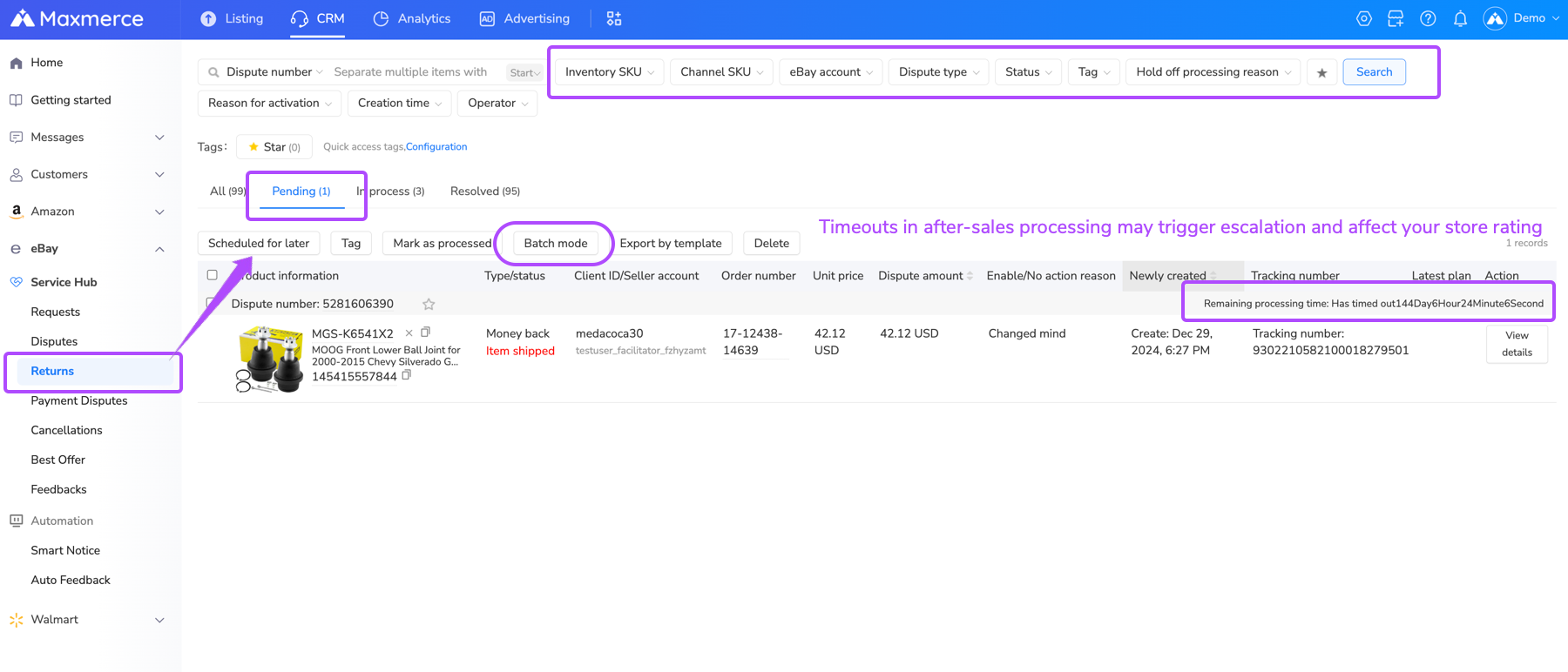
In Maxmerce, the path is CRM > eBay > Service Hub > Returns. The workspace groups requests by status so a support team can open the relevant record instead of rebuilding the case from chat messages. It does not replace eBay’s policy or decide who is right; the marketplace request remains the source of truth.
| Record before acting | Where to verify it | Why it matters |
|---|---|---|
| Return reason and buyer comments | Live eBay request | Separates buyer remorse from an item-not-as-described claim |
| Listing photos and item specifics | The sold listing and internal catalog snapshot | Shows what the buyer was promised at purchase time |
| Serial, SKU, components, and package condition | Warehouse inspection record | Helps confirm that the returned unit and included parts match the shipment |
| Response and refund deadlines | Dates displayed in the request | Prevents a valid operational review from becoming a late response |
Choose the action only after the reason is clear
The available actions depend on the request. They may include accepting the return, issuing a refund, offering a partial refund, or communicating through the case. Use only the choices eBay presents for that order. If a label is required, confirm the return address and package details before sending it.
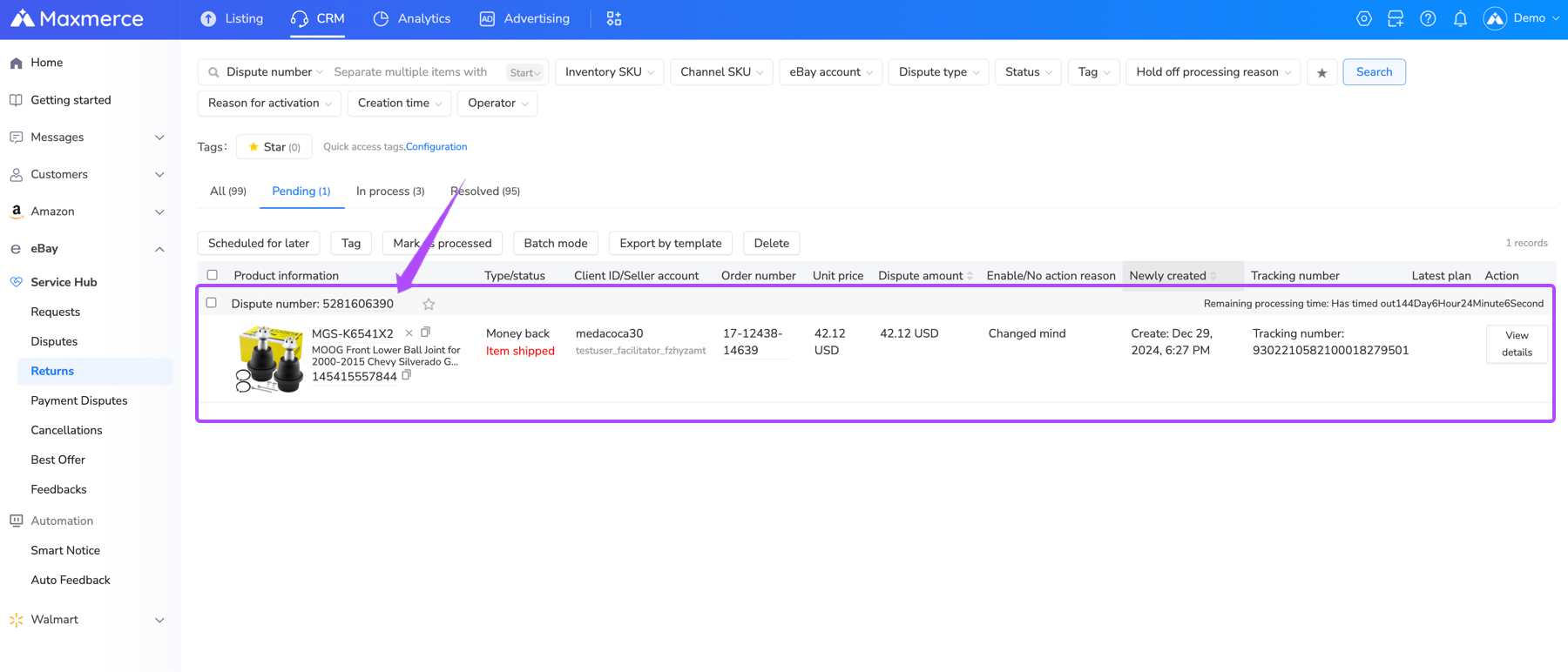
For seller-paid returns, eBay may provide a label workflow. If you use your own carrier, upload tracking to the request so delivery can be confirmed. eBay’s return-shipping guidance recommends tracked service, and a return valued at $750 or more requires signature confirmation when you provide your own label. Always verify the live instructions because carrier and country options can differ.
Inspect the physical return against the sold record
Do not reduce the warehouse step to “box arrived.” Match the unit, variation, serial number where applicable, accessories, and packaging against the sold listing and outbound record. Photograph discrepancies consistently. The purpose is not to search for a reason to deny the buyer; it is to create a defensible record that support can use within the marketplace workflow.

A short reconciliation routine helps: one person checks the request and sold listing, a second checks the physical unit, and the owner of the case records the outcome. Small teams can do the same steps sequentially. What matters is that the notes refer to the same SKU and request.
Close the loop instead of losing the case in messages
After the return is received, eBay generally gives the seller two business days to inspect the item and issue a refund or ask eBay for help. Use the deadline displayed in the actual request. Mark internal work complete only after the marketplace status reflects the final action.
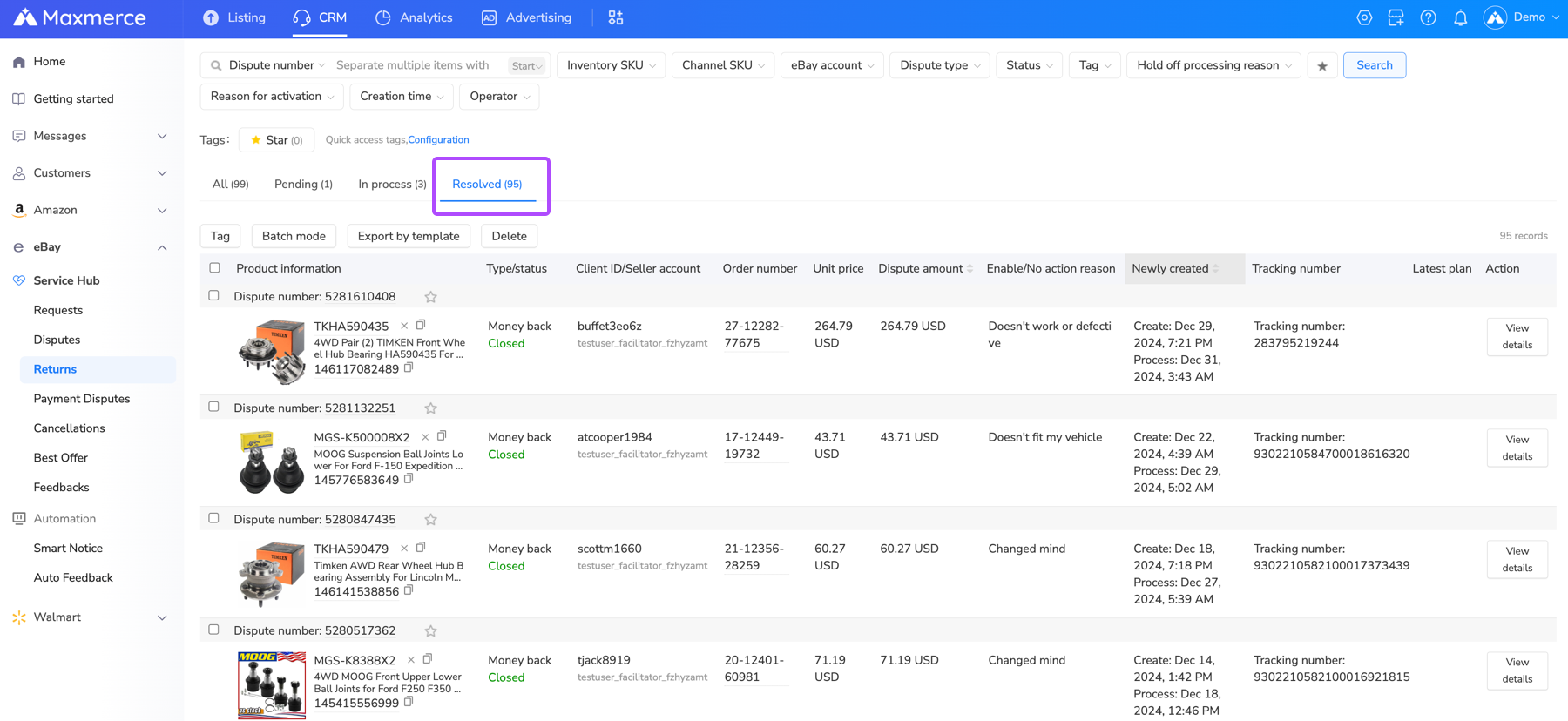
The Maxmerce Returns workspace separates pending, in-process, and resolved records, which can help a team see which cases still require attention. Sellers evaluating a centralized support workflow can review Maxmerce CRM, the broader eBay seller tools, and current CRM pricing. Use product tools to organize work, not to bypass eBay’s deadlines or protections.
A practical policy-review routine
- Review business policies when categories, fulfillment locations, or return addresses change.
- Check that the policy attached to each listing matches the item’s economics and category rules.
- When a request arrives, read the selected reason before deciding who pays.
- Compare the live claim with the sold listing and fulfillment record.
- Respond within the deadline displayed by eBay and keep tracking in the case.
- Inspect the returned item promptly and record the final marketplace status.
Changing a return-policy automation affects future requests, not cases that are already open. Treat existing cases under their current request terms and verify any policy change before applying it broadly.
Frequently asked questions
Does “no returns” stop every eBay return?
No. A buyer may still be protected when an item is damaged, faulty, or does not match the listing. Review the live request and eBay Money Back Guarantee rules rather than relying only on the listing label.
Who pays return shipping when the buyer changes their mind?
The saved listing policy controls that situation. Depending on the policy, the buyer may pay or the seller may provide free return shipping.
How long does a seller have to respond?
eBay’s current guidance generally gives sellers three business days to respond to a return request. Use the exact deadline shown in the request because timing can vary by case and marketplace.
Can a seller change the reason selected by the buyer?
Do not silently recategorize the case. Document any mismatch between the claim and the evidence, communicate through the request, and use the actions eBay makes available.
Bottom line
A reliable eBay return process connects four records: the policy attached to the sold listing, the buyer’s live request, the warehouse inspection, and the final marketplace status. Match those records before deciding who pays or which action to take. That discipline protects both the buyer experience and the seller’s operational record.
{
“@context”: “https://schema.org”,
“@type”: “BlogPosting”,
“headline”: “eBay Return Policy: Match Settings to Return Reasons”,
“description”: “Set an eBay return policy that matches buyer-remorse and seller-fault reasons, then use the live request to decide who pays and what to do next.”,
“image”: “https://cdn.maxmerce.com/blog/wp-content/uploads/2026/10/cover-850-16.webp”,
“mainEntityOfPage”: “https://www.maxmerce.com/blog/ebay-return-policy/”,
“dateModified”: “2026-10-13”
}
{
“@context”: “https://schema.org”,
“@type”: “FAQPage”,
“mainEntity”: [
{“@type”:”Question”,”name”:”Does no returns stop every eBay return?”,”acceptedAnswer”:{“@type”:”Answer”,”text”:”No. A buyer may still be protected when an item is damaged, faulty, or does not match the listing.”}},
{“@type”:”Question”,”name”:”Who pays return shipping when the buyer changes their mind?”,”acceptedAnswer”:{“@type”:”Answer”,”text”:”The saved listing policy controls whether the buyer pays or the seller provides free return shipping.”}},
{“@type”:”Question”,”name”:”How long does a seller have to respond?”,”acceptedAnswer”:{“@type”:”Answer”,”text”:”eBay currently generally gives sellers three business days, but the exact deadline in the live request controls.”}},
{“@type”:”Question”,”name”:”Can a seller change the reason selected by the buyer?”,”acceptedAnswer”:{“@type”:”Answer”,”text”:”Do not silently recategorize the case. Document any mismatch and use the actions eBay makes available.”}}
]
}