Amazon Listing Optimization 2025: Complete SEO Guide for Amazon, eBay & Walmart

Amazon’s backend keywords just expanded from 249 to 2,500 characters, eBay’s item specifics now directly influence Google Shopping visibility, and Walmart’s quality score algorithm underwent a major update in 2025. If you’re still optimizing listings the same way you did last year, you’re already falling behind competitors who understand these critical platform changes. This comprehensive guide reveals the latest Amazon listing optimization strategies for 2025, plus proven techniques for eBay and Walmart that can increase your conversion rates by up to 30% across all marketplaces.
Quick Answer:
Amazon listing optimization in 2025 requires titles under 200 characters, utilizing all 2,500 backend keyword characters, and focusing on mobile-first content. eBay demands complete item specifics with 7% keyword density limits, while Walmart prioritizes content quality (60% of score) with 50-75 character titles. Multi-platform sellers must adapt strategies for each marketplace’s unique algorithm while maintaining consistent brand messaging.
Key Takeaways:
- Amazon backend keywords expanded to 2,500 characters across 5 fields in 2025 (Amazon Seller Update, January 2025)
- Amazon title limit reduced to 200 characters effective January 21, 2025 (Amazon Policy Change)
- Walmart content quality drives 60% of listing score directly impacting Buy Box eligibility (Walmart Marketplace, 2025)
- eBay item specifics boost visibility by 30% when fully completed (eBay Seller Research, 2025)
- Mobile traffic represents 73% of views but desktop converts 1.7x higher (E-commerce Analytics, 2025)
The 2025 Marketplace Landscape: Critical Updates You Must Know
The e-commerce marketplace landscape has undergone seismic shifts in 2025, with each platform implementing algorithm changes that fundamentally alter listing optimization strategies. Amazon’s focus has shifted toward seller authority and external traffic generation, eBay integrates more deeply with Google Shopping, and Walmart emphasizes content quality over keyword density. Understanding these changes is no longer optional—it’s essential for survival.
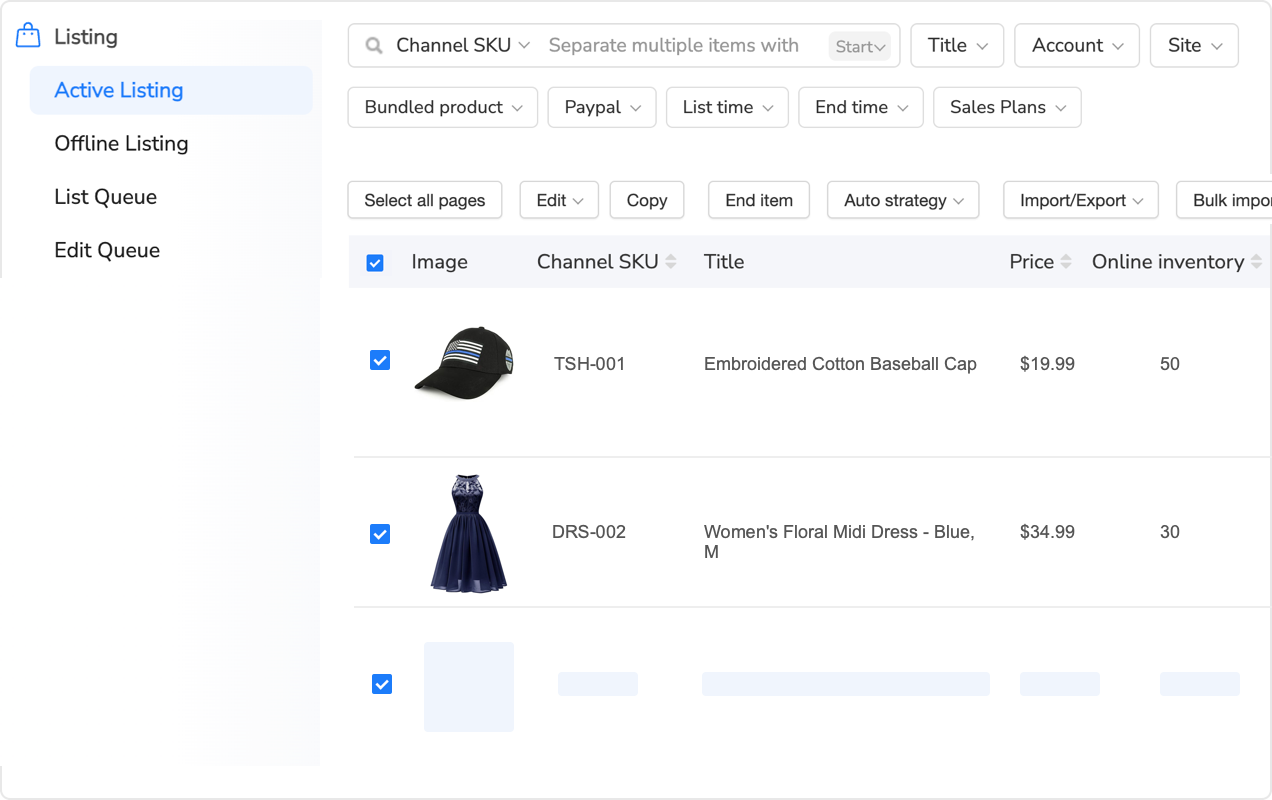
The convergence of AI shopping assistants like Amazon’s Rufus, enhanced visual search capabilities, and voice commerce has created a new optimization paradigm. Listings must now be optimized not just for traditional search algorithms but also for AI interpretation, image recognition, and conversational queries. This multi-dimensional approach requires sophisticated strategies that balance technical SEO with natural language optimization.
📦 Amazon 2025 Changes
Title Limit: 200 characters
Backend Keywords: 2,500 chars
Focus: External traffic + authority
AI Impact: Rufus assistant integration
🛍️ eBay 2025 Updates
Item Specifics: Critical for visibility
Keyword Density: 7% maximum
Focus: Google Shopping feed
Mobile: 60%+ of traffic
🏪 Walmart 2025 Evolution
Title Length: 50-75 characters
Quality Score: 60% content-based
Focus: Content quality over keywords
Reviews: Accelerator program launch
Amazon Listing Optimization 2025: Mastering the New Algorithm
Amazon’s 2025 algorithm update represents the most significant change since the A9 to A10 transition. The platform now prioritizes listings that demonstrate authority through external traffic, social proof, and comprehensive content that serves both human shoppers and AI assistants. Success requires mastering both traditional optimization techniques and emerging best practices.
The 200-Character Title Revolution
Amazon’s decision to limit titles to 200 characters forces sellers to prioritize clarity over keyword stuffing. This change, effective January 21, 2025, requires strategic keyword placement within the first 80 characters for mobile visibility while maintaining readability. The new format follows: Brand + Key Feature + Product Type + Material/Key Ingredient + Size/Count + Color/Flavor.
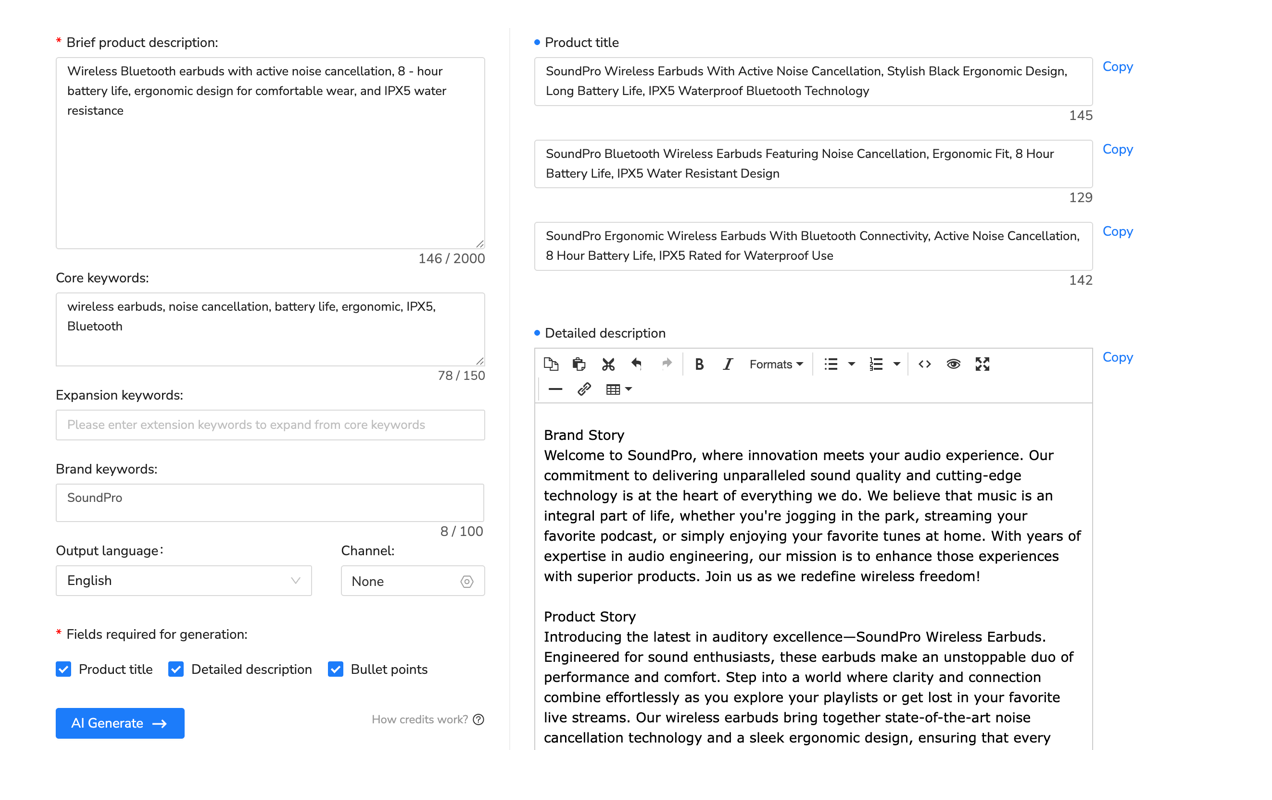
Successful title optimization in 2025 requires A/B testing different keyword combinations while monitoring both click-through rates and conversion metrics. Tools like Maxmerce’s AI Listing Generator analyze competitor titles, search volume data, and conversion patterns to suggest optimal title structures that balance algorithm requirements with shopper psychology.
Backend Keywords: Maximizing 2,500 Characters
The expansion of backend search terms from 249 to 2,500 characters across five 500-character fields creates unprecedented opportunity for comprehensive keyword coverage. However, this expansion requires strategic implementation to avoid dilution and maintain relevance signals.
| Backend Field | Optimization Focus | Character Limit | Best Practices |
|---|---|---|---|
| Search Terms 1 | Primary keywords + variations | 500 | No punctuation, spaces only |
| Search Terms 2 | Long-tail keywords | 500 | Include misspellings |
| Search Terms 3 | Synonyms + related terms | 500 | Foreign language terms |
| Search Terms 4 | Use cases + occasions | 500 | Seasonal keywords |
| Search Terms 5 | Complementary products | 500 | Bundle keywords |
A+ Content and Enhanced Brand Content Strategies
A+ Content now directly influences organic rankings, with Amazon’s algorithm analyzing enhanced content for relevance signals and engagement metrics. Brands utilizing all seven A+ modules see average conversion increases of 15-20%, with comparison charts and enhanced images driving the highest engagement.
eBay Listing Optimization: Winning the Cassini Algorithm
eBay’s Cassini search engine prioritizes listings with complete, accurate data that enhances both platform search and external visibility through Google Shopping integration. The 2025 updates emphasize structured data, mobile optimization, and competitive pricing intelligence.
Item Specifics: The Hidden Ranking Factor
Complete item specifics increase listing visibility by 30% and improve Best Match rankings significantly. eBay’s algorithm analyzes specifics completion rates, rewarding listings that provide comprehensive product attributes. Required specifics vary by category, but universal high-impact fields include Brand, Model, Condition, Color, Size, and Material.
The integration with Google Shopping makes item specifics even more critical, as incomplete data prevents listings from appearing in Google’s shopping results. Sellers who complete all recommended item specifics see average sales increases of 15-25%, with some categories experiencing even higher improvements.
Title Optimization: The 80-Character Sweet Spot
eBay titles require different optimization strategies than Amazon, with the 80-character limit demanding precise keyword selection. The platform’s 7% keyword density limit prevents stuffing while the algorithm favors natural, descriptive titles that match buyer search queries.
eBay Title Optimization Checklist:
- ✓ Lead with brand name for branded products
- ✓ Include model numbers and specifications
- ✓ Use natural language, avoid ALL CAPS
- ✓ Include condition (New, Used, Refurbished)
- ✓ Add size, color, quantity where relevant
- ✓ Maintain under 7% keyword density
- ✓ Test mobile display (first 40 characters)
Walmart Marketplace Optimization: Quality Score Mastery
Walmart’s listing quality score directly determines Buy Box eligibility and search visibility, with content quality comprising 60% of the overall score. The platform’s 2025 algorithm updates prioritize comprehensive product information, competitive pricing, and stellar performance metrics.
Content Quality Score: The 60% Factor
Walmart’s content quality score evaluates multiple elements: product title (50-75 characters optimal), detailed descriptions (minimum 150 words), high-resolution images (minimum 4), and complete attributes. The algorithm particularly rewards listings with rich media content, including videos and 360-degree views.
The Walmart Review Accelerator Program, launched in 2025, provides additional visibility to products with strong review generation strategies. Products enrolled in the program see average conversion increases of 23% and improved organic rankings within 30-60 days.
Walmart SEO: Beyond Keywords
Unlike Amazon’s keyword-focused approach, Walmart’s algorithm emphasizes semantic understanding and content comprehensiveness. Successful optimization requires natural language that addresses customer pain points, use cases, and benefits rather than keyword repetition.
| Walmart Ranking Factor | Weight | Optimization Strategy | Impact on Visibility |
|---|---|---|---|
| Content Quality | 60% | Comprehensive descriptions, attributes | High |
| Price Competitiveness | 20% | Dynamic pricing, competitor monitoring | High |
| Seller Performance | 15% | Fast shipping, low defect rates | Medium |
| Customer Reviews | 5% | Review Accelerator Program | Growing |
Cross-Platform Listing Management: Unified Strategies
Managing listings across multiple marketplaces requires sophisticated strategies that maintain consistency while adapting to platform-specific requirements. Successful multi-channel sellers develop modular content systems that can be customized for each platform while maintaining brand voice and accuracy.
Content Syndication Strategies
Develop a master product information database that serves as the single source of truth for all channels. This centralized approach ensures consistency while allowing platform-specific optimizations through modular content blocks. Use automation tools to adapt content for each platform’s requirements while maintaining version control and update tracking.
Performance Monitoring Across Channels
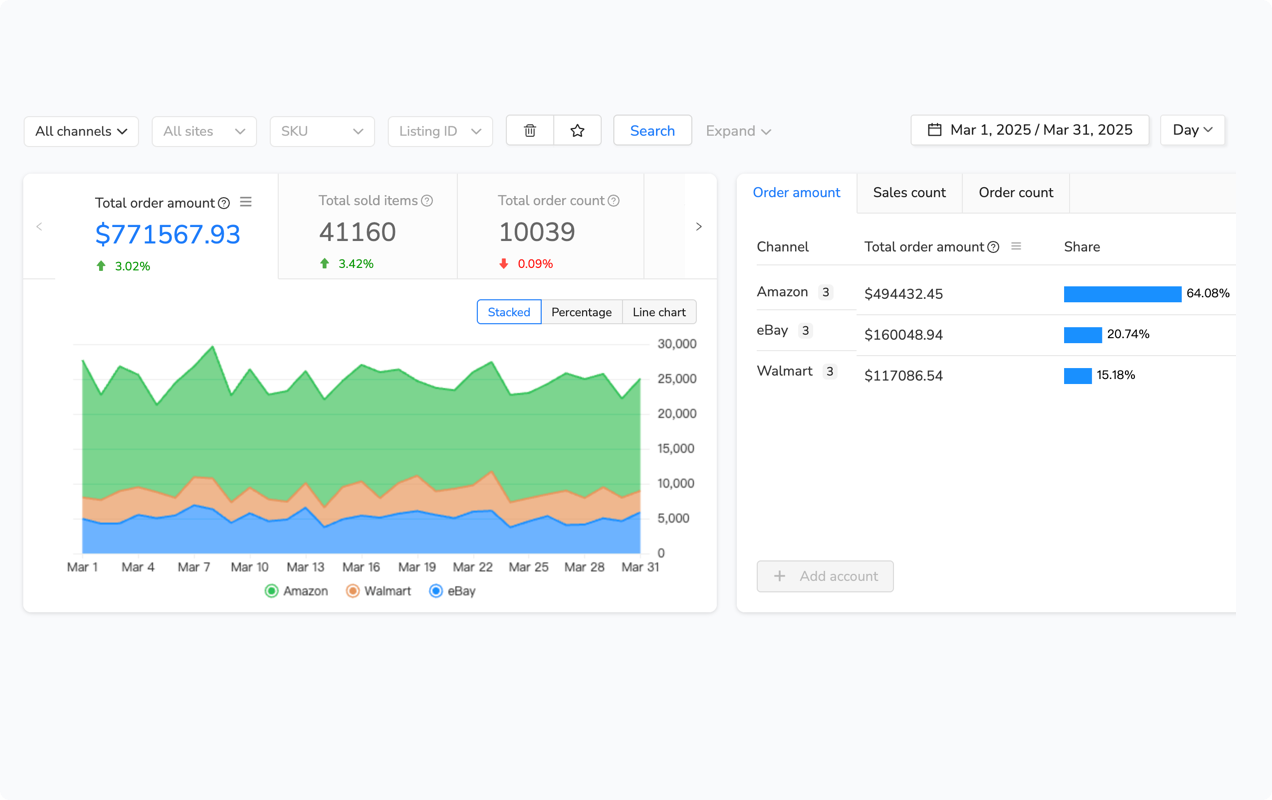
Track platform-specific metrics while maintaining holistic performance views. Amazon’s conversion rates typically range 10-15%, eBay averages 6-8%, and Walmart sees 4-6%. Understanding these benchmarks enables appropriate optimization strategies and resource allocation based on platform potential.
Conversion Rate Optimization: Platform-Specific Tactics
Conversion optimization extends beyond traditional listing elements, encompassing pricing strategies, social proof, and psychological triggers unique to each platform’s audience. Understanding buyer behavior patterns and platform-specific conversion drivers enables targeted optimization that maximizes ROI.
Amazon Conversion Drivers
Amazon shoppers prioritize reviews (93% influenced), Prime eligibility (67% filter), and detailed product information. Optimize for these factors through review generation campaigns, FBA enrollment, and comprehensive bullet points that address common questions. A+ Content increases conversion rates by 5.6% on average, with comparison charts showing the highest impact.
eBay Conversion Optimization
eBay buyers respond to urgency (limited quantity), social proof (watchers count), and seller credibility (feedback score). Leverage these psychological triggers through strategic inventory management, promoting watcher counts, and maintaining exemplary seller metrics. Fast & Free shipping increases conversion rates by 11% on average.
Walmart Conversion Strategies
Walmart customers prioritize value, seeking the best combination of price, quality, and convenience. Optimize conversions through competitive pricing, highlighting value propositions, and emphasizing fast delivery options. Products with 2-day delivery see 28% higher conversion rates than standard shipping options.
Optimize Your Listings Across All Platforms
Stop managing separate optimization strategies. Maxmerce’s AI-powered listing tools create perfectly optimized content for Amazon, eBay, and Walmart simultaneously, increasing visibility and conversions by up to 40%.
Advanced SEO Techniques for 2025
Modern marketplace SEO extends beyond keywords to encompass entity recognition, semantic search, and AI interpretation. Advanced techniques that leverage these capabilities can provide significant competitive advantages in increasingly saturated markets.
Semantic SEO and Entity Optimization
Search algorithms now understand context and relationships between concepts. Optimize for semantic search by including related entities, use cases, and contextual keywords that help algorithms understand product purpose and relevance. This approach improves visibility for long-tail and voice searches.
Mobile-First Optimization
With 73% of e-commerce traffic coming from mobile devices, mobile optimization is no longer optional. Optimize for mobile by front-loading critical information, using shorter paragraphs, and ensuring images display correctly on small screens. Test all content on actual mobile devices, not just responsive design previews.
AI Shopping Assistant Optimization
Amazon’s Rufus and similar AI assistants extract information from listings to answer customer queries. Structure content with clear headers, use natural language that answers common questions, and include comprehensive product specifications that AI can easily parse and present to shoppers.
Frequently Asked Questions
Your 2025 Listing Optimization Action Plan
Week 1: Audit Current Listings
- ✓ Check title compliance with new character limits
- ✓ Audit backend keywords utilization
- ✓ Review image quality and quantity
- ✓ Assess mobile display and readability
- ✓ Benchmark current conversion rates
Week 2: Implement Platform-Specific Updates
- ✓ Optimize Amazon titles to 200 characters
- ✓ Expand backend keywords to 2,500 characters
- ✓ Complete all eBay item specifics
- ✓ Enhance Walmart content quality scores
- ✓ Add A+ Content or Enhanced Brand Content
Week 3-4: Monitor and Optimize
- ✓ Track ranking changes and conversion metrics
- ✓ A/B test different title variations
- ✓ Adjust pricing based on competitive analysis
- ✓ Generate and respond to customer reviews
- ✓ Refine based on performance data
Master Multi-Platform Listing Optimization for Sustained Success
Success in 2025’s competitive marketplace landscape requires sophisticated, platform-specific optimization strategies that adapt to continuous algorithm changes. Amazon’s expanded backend keywords, reduced title limits, and AI integration create new opportunities and challenges. eBay’s emphasis on structured data and Google integration demands complete, accurate listings. Walmart’s quality-focused approach rewards comprehensive, customer-centric content.
The key to sustained success lies not in mastering one platform but in developing flexible, scalable systems that optimize across all channels while maintaining brand consistency. By understanding each platform’s unique requirements and leveraging advanced tools and strategies, sellers can achieve the visibility and conversion improvements necessary for profitable growth.
Start with the fundamentals—compliance with platform requirements and mobile optimization. Then layer in advanced techniques like semantic SEO, AI optimization, and cross-platform synergies. The sellers who thrive in 2025 will be those who view listing optimization not as a one-time task but as an ongoing process of testing, refinement, and adaptation.
Transform Your Marketplace Performance Today
Join thousands of successful sellers using Maxmerce’s comprehensive listing optimization platform. Get AI-powered content generation, automated syndication, and real-time performance tracking across all major marketplaces.