Amazon Account Suspension Prevention: Policy Compliance Automation

Amazon account suspensions have increased by 35% since January 2025, as the platform intensifies policy enforcement to protect buyer trust and marketplace quality. Automated compliance violations, restricted product listings, and intellectual property infringement now trigger immediate suspensions without warning. For sellers managing hundreds or thousands of listings, manual compliance review is no longer sufficient.
Automated policy compliance tools can help prevent up to 90% of listing violations before publication, protecting your account health and revenue stream. However, understanding Amazon’s evolving policies, implementing systematic compliance workflows, and leveraging technology effectively requires a strategic approach that balances automation with human oversight.
Key Takeaways
- Amazon suspension rates increased 35% in early 2025 due to stricter policy enforcement (Amazon Seller Central, January 2025)
- Automated compliance tools can prevent up to 90% of policy violations before listings go live
- Account Health Rating below 200 triggers immediate review and potential suspension (Amazon Policy, Updated March 2025)
- Prohibited words scanning can help detect trademark infringement and restricted claims across thousands of listings
- Proactive compliance workflows are designed to help reduce suspension risk more effectively than reactive appeals
Understanding Amazon Account Suspension Risks
Amazon’s seller account suspension system operates on multiple enforcement layers, targeting everything from individual listing violations to systemic account health issues. The platform’s automated detection systems scan millions of listings daily, flagging potential violations that can lead to immediate suspension.
Primary Suspension Triggers
Amazon suspends seller accounts for violations falling into five critical categories, each with specific detection thresholds and enforcement timelines:
| Violation Category | Detection Method | Suspension Speed | Prevention Strategy |
|---|---|---|---|
| Policy Violations | Automated scanning | 24-48 hours | Pre-publication compliance checks |
| Intellectual Property | Rights owner complaints | Immediate | Trademark monitoring, restricted word lists |
| Account Health Metrics | Performance tracking | 7-14 days warning | Real-time metric monitoring |
| Restricted Products | Category-specific algorithms | Immediate | Category compliance validation |
| Inauthentic Product Claims | Buyer complaints + AI review | 48-72 hours | Documentation management, claim verification |
Account Health Rating System
In March 2025, Amazon updated its Account Health Rating system to provide sellers with more transparent metrics. The system evaluates three primary performance indicators:
Order Defect Rate (ODR): Measures negative feedback, A-to-Z Guarantee claims, and credit card chargebacks. Amazon requires sellers to maintain an ODR below 1%. An ODR above 1% triggers immediate account review, and sustained performance above 2% results in automatic suspension.
Pre-Fulfillment Cancel Rate: Tracks orders cancelled by sellers before shipment. Amazon’s target is below 2.5%. High cancellation rates indicate inventory management issues or inability to fulfill orders, both grounds for suspension.
Late Shipment Rate: Monitors percentage of orders shipped after the expected ship date. The target threshold is below 4%. Consistent late shipments damage customer experience and trigger account warnings.
Critical Warning: Amazon’s automated systems can suspend accounts within 24 hours of detecting serious violations like intellectual property infringement or restricted product sales. Unlike performance-related suspensions that include warnings, policy violations often result in immediate action without prior notice.
Common Policy Violations Leading to Suspension
Understanding the specific policy violations that trigger Amazon suspensions enables sellers to implement targeted prevention strategies. The following violations account for 78% of all seller account suspensions according to Amazon Seller Forums data from January 2025.
Prohibited Words and Restricted Claims
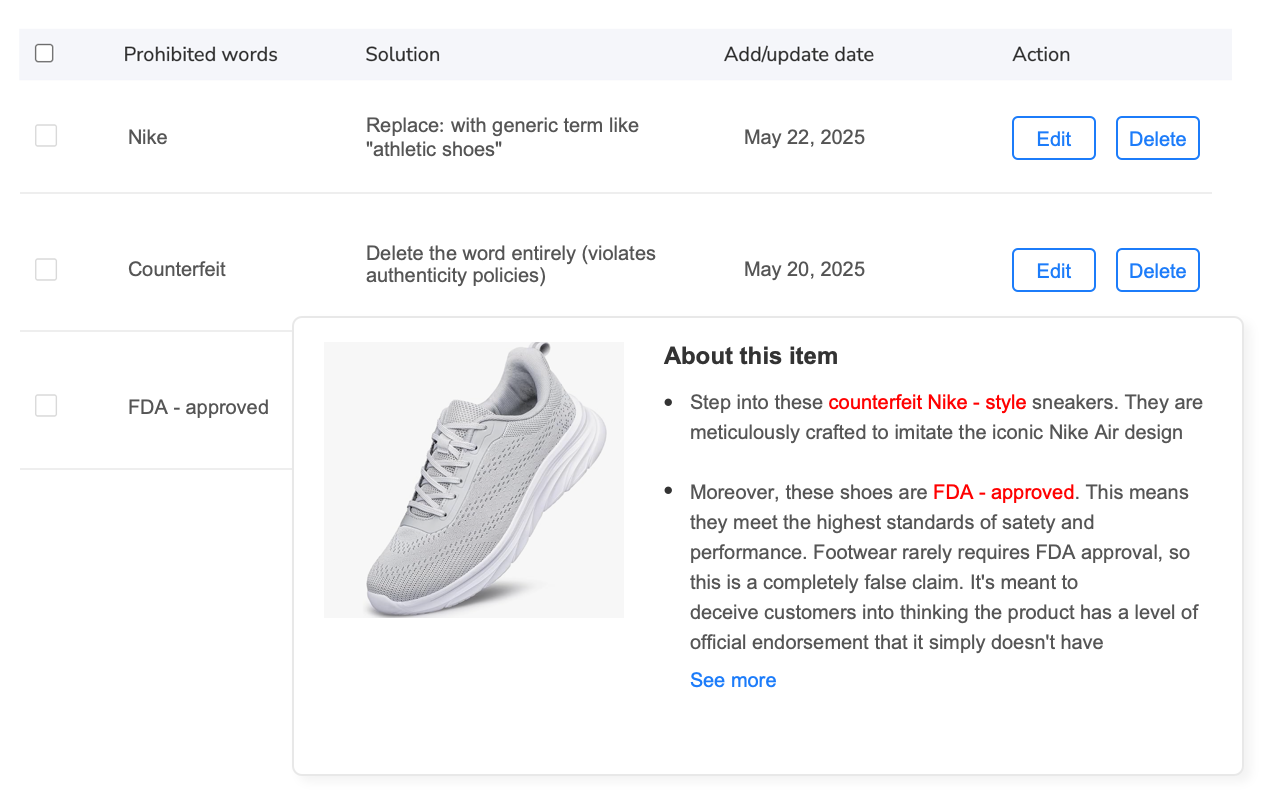
Amazon maintains an extensive list of prohibited words and restricted claims that sellers cannot include in product listings. These restrictions cover medical claims, superlative statements without proof, trademark infringement, and misleading product descriptions.
Medical and Health Claims: Terms like “cure,” “treat,” “prevent disease,” or “FDA-approved” (without actual approval) trigger immediate listing suppression and potential account suspension. Amazon’s automated systems scan for over 2,000 prohibited health-related terms.
Superlative Claims: Phrases like “best seller,” “number one,” or “top-rated” require verifiable proof. Unsubstantiated claims violate Amazon’s Customer Product Reviews Policies and can result in listing removal or suspension.
Trademark Infringement: Using trademarked brand names in titles, bullet points, or descriptions without authorization constitutes intellectual property violation. This includes terms like “compatible with [Brand]” unless explicitly permitted by the trademark holder.
Category-Specific Restrictions
Certain product categories require pre-approval, certifications, or adherence to strict listing requirements. Selling in restricted categories without proper authorization leads to immediate suspension.
Beauty and Personal Care: Products containing certain ingredients, making anti-aging claims, or classified as cosmetics require FDA compliance documentation. Amazon updated beauty category requirements in February 2025, requiring sellers to provide ingredient lists and safety certifications.
Grocery and Gourmet Food: Sellers must provide detailed expiration date management, comply with FDA regulations, and avoid health claims. Supplements and vitamins face additional scrutiny requiring third-party testing verification.
Electronics: Items with batteries, wireless capabilities, or potential safety concerns require certifications like FCC compliance, UL listing, or CE marking. Missing certifications result in listing suppression and account warnings.
Intellectual Property Violations
Intellectual property complaints from rights owners represent the fastest path to account suspension. Amazon’s Brand Registry system enables trademark owners to report violations instantly, triggering automated enforcement actions.
Common intellectual property violations include:
- Unauthorized brand usage: Listing products under brand names you don’t own or have authorization to sell
- Counterfeit product allegations: Selling products that rights owners claim are not authentic
- Copyright infringement: Using product images, descriptions, or marketing materials without permission
- Patent violations: Selling products that infringe on patented designs or utility functions
Prevention Success: Sellers using automated prohibited words checking report up to 90% reduction in listing violations and significantly improved account health scores. Proactive compliance scanning before publication can help protect your account from preventable suspensions.
Implementing Automated Compliance Solutions
Manual compliance review becomes impractical once your catalog exceeds 100 listings. Automated compliance tools enable systematic policy checking across thousands of products, flagging potential violations before they reach Amazon’s detection systems.
Prohibited Words Checking Technology
Prohibited words checking tools scan product listings against comprehensive databases of restricted terms, trademarked phrases, and policy-violating language. Advanced systems use natural language processing to detect not just exact matches but contextual violations that manual review might miss.
Pre-Publication Scanning: The most effective compliance strategy involves scanning listings before publication. This approach can help prevent violations from reaching Amazon’s systems, eliminating the risk of suspension triggers. Maxmerce’s Prohibited Words Check scans listings against platform-specific prohibited term databases before publishing to Amazon, eBay, or Walmart.
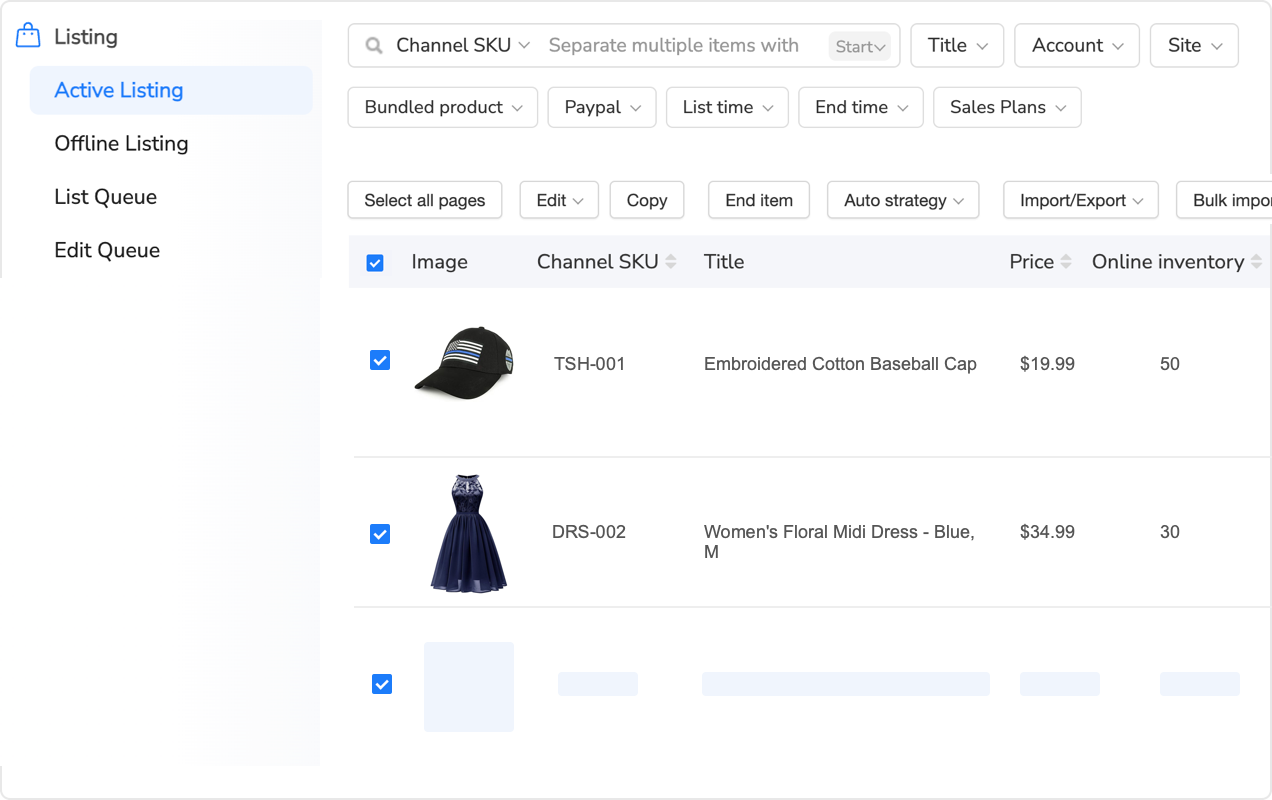
Catalog Auditing: Regular compliance audits identify violations in existing listings before Amazon’s systems detect them. Bulk scanning enables sellers to check thousands of listings simultaneously, prioritizing high-risk violations for immediate correction.
Custom Blacklists: Beyond platform-wide prohibited terms, sellers can create custom blacklists based on their category, past violations, or specific brand requirements. This targeted approach can help prevent industry-specific compliance issues.
Trademark and Intellectual Property Monitoring
Automated intellectual property monitoring tracks trademark registrations, brand restrictions, and rights owner complaint patterns. These systems can help identify potential infringement risks before rights owners file complaints.
Brand Registry Integration: Systems that integrate with Amazon Brand Registry can cross-reference your listings against registered trademarks, flagging potential conflicts. This proactive approach helps prevent intellectual property complaints that lead to immediate suspension.
Competitor Analysis: Monitoring competitor listings for common compliance issues helps identify category-specific risks. If multiple sellers in your niche receive trademark complaints, understanding the underlying violations can help protect your account.
Real-Time Account Health Monitoring
Beyond listing compliance, maintaining healthy account metrics requires continuous monitoring of performance indicators. Automated systems track ODR, cancellation rates, and late shipment metrics, providing alerts when performance approaches warning thresholds.
Performance Dashboards: Comprehensive dashboards aggregate account health metrics from multiple seller accounts, enabling sellers to monitor performance across channels. Early warning systems alert sellers when metrics trend toward Amazon’s suspension thresholds, enabling corrective action before official warnings.
Order Management Integration: Integrating compliance monitoring with order management systems can help ensure timely fulfillment and proper inventory allocation. This integration is designed to reduce cancellation and late shipment rates that contribute to poor account health.
Building a Compliance-First Listing Workflow
Sustainable account protection requires embedding compliance into your daily operations rather than treating it as an afterthought. The following workflow systematically addresses compliance at every stage of listing creation and management.
Pre-Publication Compliance Protocol
Before publishing any new listing, implement this four-step verification process:
- Category Authorization Verification: Confirm you have approval to sell in the target category, particularly for restricted categories like beauty, grocery, or electronics. Check Amazon Seller Central’s category approval status before creating listings.
- Prohibited Words Scanning: Run automated scans across titles, bullet points, descriptions, and backend keywords. Tools like Maxmerce’s Prohibited Words Check can scan listings against thousands of restricted terms in seconds.
- Trademark Clearance: Verify that product titles and descriptions don’t include unauthorized trademarked terms. Cross-reference against USPTO trademark databases or use automated trademark monitoring tools.
- Claim Substantiation Review: Ensure any performance claims, certifications, or product attributes can be supported with documentation. Keep certificates, test results, and authorization letters readily accessible.
Ongoing Catalog Maintenance
Compliance isn’t a one-time task. Amazon continuously updates policies, adds restricted terms, and modifies category requirements. Monthly catalog audits help identify compliance drift over time.
Monthly Compliance Audits: Schedule comprehensive catalog scans to detect violations in existing listings. Prioritize corrections based on violation severity, starting with intellectual property and restricted product issues.
Policy Change Monitoring: Subscribe to Amazon Seller Central notifications and policy update announcements. When Amazon announces policy changes, immediately scan your catalog for affected listings and implement necessary corrections.
Competitor Intelligence: Monitor seller forums and industry groups for emerging compliance issues. When other sellers report suspensions related to specific violations, proactively audit your catalog for similar risks.
Team Training and Documentation
For sellers with multiple team members managing listings, consistent compliance training can help prevent human errors that lead to violations. Create documented processes that team members follow for every listing operation.
Standard Operating Procedures: Document specific steps for listing creation, including mandatory compliance checks. Checklists can help ensure team members don’t skip critical verification steps.
Violation Response Protocols: Establish clear procedures for responding to listing suppressions or account warnings. Quick, systematic responses can help prevent minor violations from escalating to suspensions.
Responding to Suspension Threats
Even with proactive compliance measures, sellers may face account warnings or temporary restrictions. Understanding Amazon’s appeal process and responding effectively can mean the difference between reinstatement and permanent deactivation.
Understanding Amazon’s Warning System
Amazon typically follows a progressive discipline approach for performance-related issues, though policy violations may trigger immediate suspensions. Warning levels include:
Performance Notifications: Automated alerts when metrics approach violation thresholds. These provide 7-14 days to correct issues before restrictions apply.
Account Health Warnings: Official warnings stating specific violations and required corrections. Sellers typically have 72 hours to respond with corrective action plans.
Temporary Restrictions: Limited selling capabilities while Amazon reviews compliance issues. May include restrictions on adding new ASINs or limits on existing listing modifications.
Account Suspension: Complete selling access removal requiring formal Plan of Action and appeal process. Amazon expects detailed responses within 17 days of suspension notice.
Creating Effective Plans of Action
Amazon’s appeal process requires sellers to submit a Plan of Action (POA) addressing three specific elements:
- Root Cause Identification: Clearly identify what caused the violation. Generic explanations like “human error” or “oversight” are insufficient. Amazon expects specific identification of process failures or system gaps that led to violations.
- Corrective Actions Taken: Document specific steps already implemented to address violations. Include dates, actions taken, and evidence of compliance restoration.
- Preventive Measures Implemented: Describe systematic changes preventing future violations. Amazon looks for process improvements, automation implementation, or team training that addresses root causes.
Appeal Timeline Critical: Amazon requires Plans of Action within 17 days of suspension. Missing this deadline can result in permanent account deactivation. Submit appeals promptly, even if you’re still implementing corrective measures. You can reference ongoing improvements while demonstrating immediate actions taken.
Documentation Best Practices
Successful appeals require supporting documentation proving your compliance efforts. Maintain organized records of:
- Supplier Invoices: Proving product authenticity and authorized sourcing for intellectual property disputes
- Certifications and Test Results: Demonstrating compliance with safety, FDA, or FCC requirements
- Authorization Letters: Written permission from trademark holders to sell branded products
- Process Documentation: Standard operating procedures showing systematic compliance workflows
- Training Records: Evidence of team training on policy compliance and violation prevention
Multi-Channel Compliance Considerations
Sellers operating on multiple platforms must navigate different policy requirements for Amazon, eBay, Walmart, and other marketplaces. While some compliance standards overlap, platform-specific policies require tailored approaches.
Platform Policy Differences
Amazon vs. eBay: Amazon maintains stricter prohibited words policies and more aggressive intellectual property enforcement. eBay allows greater flexibility in product descriptions but enforces strict policies on item specifics accuracy and category placement.
Amazon vs. Walmart: Walmart requires minimum 90% product attribute completion for Buy Box eligibility, while Amazon focuses more heavily on content policy compliance. Walmart’s prohibited words list differs significantly from Amazon’s, particularly regarding competitive claims and pricing references.
Cross-Platform Compliance Tools
Managing compliance across multiple platforms requires tools that adapt to platform-specific requirements while maintaining consistent quality standards. Multi-channel listing management platforms can help validate listings against each marketplace’s unique policies before publication.
Platform-Specific Validation: Advanced tools check listings against platform-specific prohibited terms, category requirements, and attribute standards. This targeted validation helps prevent violations when cross-listing products to multiple channels.
Centralized Policy Management: Rather than maintaining separate compliance processes for each platform, centralized systems enable sellers to manage cross-platform compliance from a unified interface. This approach significantly reduces complexity for multi-channel operations.
Protect Your Amazon Account with Automated Compliance
Maxmerce’s Prohibited Words Check scans your listings for policy violations before publication, helping prevent suspensions before they happen. Compatible with Amazon, eBay, and Walmart.
Advanced Compliance Strategies
Beyond basic violation prevention, sophisticated sellers implement proactive compliance strategies that anticipate policy changes and minimize risk exposure.
Predictive Compliance Analysis
Advanced analytics tools can help identify compliance patterns that predict future violations. By analyzing which listing characteristics correlate with suppressions or warnings, sellers can proactively address vulnerabilities.
Risk Scoring: Assign risk scores to listings based on category, prohibited word density, trademark exposure, and historical violation patterns. Prioritize compliance reviews for high-risk items.
Category Trend Monitoring: Track which product categories experience increased enforcement activity. When Amazon intensifies scrutiny in specific categories, proactively audit your catalog in those areas.
Competitive Intelligence Integration
Monitoring competitor suspensions and violation patterns provides early warning of emerging compliance risks. When multiple sellers in your niche face suspensions for similar violations, investigate whether your listings share those vulnerabilities.
Violation Pattern Recognition: Identify common themes in competitor suspensions, such as specific prohibited words, category-specific violations, or intellectual property issues. Audit your catalog for similar risks before Amazon’s systems flag your account.
Supplier Compliance Requirements
For sellers working with manufacturers or wholesalers, establishing supplier compliance requirements can help prevent violations at the source. Require suppliers to provide documentation confirming:
- Product authenticity and authorization to resell
- Compliance with category-specific certifications (FDA, FCC, CE, etc.)
- Accurate product specifications and attributes
- Trademark clearance and intellectual property ownership
The Cost of Suspension vs. Prevention Investment
Amazon account suspensions carry significant financial and operational costs that extend beyond immediate sales loss. Understanding the full impact of suspension helps justify investment in proactive compliance.
Direct Financial Impact
Lost Revenue: Suspended sellers lose 100% of Amazon revenue during suspension periods. For sellers with $50,000-$100,000 monthly revenue, even a two-week suspension represents $25,000-$50,000 in lost sales.
Inventory Holding Costs: Products remain in FBA warehouses during suspension, accruing storage fees without generating revenue. Long-term storage fees double after 365 days, significantly impacting profitability.
Ranking Loss: Suspended listings lose search ranking and Best Seller badges. After reinstatement, rebuilding organic visibility can take 3-6 months, extending revenue impact far beyond suspension duration.
Operational Disruption
Appeal Process Time: Creating comprehensive Plans of Action requires 10-20 hours of documentation, analysis, and writing. For businesses without dedicated compliance resources, this diverts attention from revenue-generating activities.
Process Overhaul: Successful reinstatement often requires implementing new systems, retraining teams, and modifying workflows. These operational changes consume significant time and resources.
Prevention Cost Analysis
Compliance automation tools typically cost $19-$119 monthly depending on catalog size and feature requirements. Compared to suspension costs averaging $25,000-$50,000, prevention investment provides exceptional ROI.
| Prevention Approach | Monthly Cost | Time Investment | Effectiveness |
|---|---|---|---|
| Manual Review | $0 | 20-40 hours | 60-70% violation detection |
| Basic Compliance Tools | $19-39 | 2-5 hours | 80-85% violation detection |
| Advanced Automation | $119-399 | 1-2 hours | 90-95% violation detection |
| Compliance Consultant | $1,000-5,000 | 5-10 hours | 95%+ violation detection |
For most sellers, automated compliance tools provide the optimal balance of cost, time efficiency, and effectiveness. Starting from $19/month, these tools significantly reduce suspension risk while requiring minimal ongoing time investment.
Future-Proofing Your Compliance Strategy
Amazon continuously evolves its policies and enforcement mechanisms. Building adaptable compliance systems that respond to policy changes helps maintain long-term account health.
Staying Current with Policy Updates
Amazon announces policy changes through Seller Central news updates, but not all changes receive prominent notification. Implementing systematic policy monitoring can help ensure you don’t miss critical updates.
Official Sources: Subscribe to Amazon Seller Central announcements, Amazon Selling Partner Appstore updates, and category-specific news. Enable email notifications for policy announcements to receive immediate alerts.
Community Intelligence: Participate in seller forums, Facebook groups, and industry associations where sellers share policy enforcement experiences. Often, community members identify enforcement changes before official announcements.
Building Compliance Scalability
As your catalog grows, compliance processes must scale accordingly. Systems that work for 100 listings become unmanageable at 1,000 or 10,000 listings.
Automation-First Approach: Design compliance workflows assuming automation from the start rather than retrofitting automated tools later. This approach enables seamless scaling as catalog size increases.
Template-Based Compliance: Create pre-approved listing templates for common product types, incorporating compliant language and verified claims. New listings based on approved templates inherit compliance safeguards automatically.
Technology Integration
Modern compliance requires integration between listing management, inventory systems, order management, and analytics platforms. Connected systems enable comprehensive compliance monitoring across all operational touchpoints.
Multi-channel management platforms integrate prohibited words checking with listing creation workflows, inventory sync, and bulk editing tools. This integration is designed to help ensure compliance verification occurs automatically at every listing touchpoint.
Frequently Asked Questions
What are the most common reasons for Amazon account suspension?
The most common reasons for Amazon account suspension include policy violations in product listings (prohibited words, restricted claims), intellectual property infringement, poor account health metrics (high order defect rate, late shipment rate), inauthentic product complaints, and repeated listing policy violations. Amazon updated enforcement in January 2025, making proactive compliance more critical than ever.
How can automated tools help prevent Amazon account suspension?
Automated compliance tools help prevent Amazon account suspension by scanning listings for prohibited words before publication, detecting policy violations across your catalog, monitoring trademark and intellectual property issues, validating product claims against Amazon’s requirements, and providing real-time alerts for potential compliance risks. These tools can reduce policy violations by up to 90% compared to manual review.
What is Amazon’s Account Health Rating system?
Amazon’s Account Health Rating system evaluates sellers based on three key metrics: Order Defect Rate (target below 1%), Pre-Fulfillment Cancel Rate (target below 2.5%), and Late Shipment Rate (target below 4%). Additionally, Amazon tracks policy compliance, intellectual property complaints, and restricted product violations. Sellers must maintain healthy metrics to avoid warnings, suspensions, or deactivation.
How quickly can Amazon suspend a seller account?
Amazon can suspend seller accounts immediately upon detecting serious violations such as intellectual property infringement, selling restricted products, or multiple policy violations within a short period. For performance-related issues, Amazon typically provides warnings before suspension. However, automated systems can flag and suspend accounts within 24-48 hours of detecting critical violations, making proactive compliance essential.
What should I do if my Amazon account is suspended?
If your Amazon account is suspended, immediately review the suspension notification to understand the specific violations, gather documentation proving your compliance efforts, create a detailed Plan of Action addressing each violation, identify root causes and implement corrective measures, and submit your appeal through Amazon Seller Central. Response time is critical – Amazon expects appeals within 17 days. Consider using compliance automation tools to prevent future violations.
Can I prevent trademark infringement issues on Amazon?
Yes, you can significantly reduce trademark infringement risks by using automated prohibited words checking tools that scan for trademarked terms, avoiding branded keywords in listings unless you’re authorized, implementing pre-publication compliance scans for all new listings, maintaining a blacklist of known restricted terms, and regularly auditing your catalog for potential violations. Automated tools can detect thousands of trademarked terms that manual review might miss.
How much do compliance automation tools cost?
Compliance automation tools typically range from $19 to $399 per month depending on catalog size, feature requirements, and channel coverage. Basic prohibited words checking starts at $19/month for small catalogs, while comprehensive multi-channel compliance systems with advanced features cost $119-$399/month. Compared to the $25,000-$50,000 average cost of a two-week suspension, compliance tools provide exceptional return on investment.
Do I need compliance tools if I only sell on one marketplace?
Yes, even single-channel sellers benefit significantly from compliance automation. Amazon’s policy enforcement affects all sellers regardless of channel diversity. As your catalog grows beyond 50-100 listings, manual compliance review becomes impractical. Automated tools enable systematic checking that manual processes cannot match, particularly for detecting subtle trademark issues or category-specific restrictions.
Can compliance tools guarantee my account won’t be suspended?
No tool can guarantee 100% suspension prevention because Amazon’s policies evolve continuously and enforcement includes subjective elements. However, automated compliance tools can significantly reduce suspension risk by preventing 90%+ of common violations. Combined with proper account health monitoring and responsive customer service, compliance automation provides the strongest available protection against preventable suspensions.
Conclusion: Proactive Compliance as Competitive Advantage
Amazon account suspension prevention requires shifting from reactive violation response to proactive compliance management. As Amazon intensifies policy enforcement and automated detection systems become more sophisticated, manual compliance review no longer provides adequate protection.
Automated prohibited words checking, trademark monitoring, and account health tracking can help prevent up to 90% of violations before they trigger suspensions. For sellers managing substantial catalogs or multi-channel operations, these tools represent essential infrastructure rather than optional enhancements.
More importantly, robust compliance systems enable sellers to focus on business growth rather than suspension recovery. Time spent preventing violations provides far greater return than time spent appealing suspensions, recovering lost rankings, and rebuilding customer trust.
Maxmerce’s listing compliance tools provide automated prohibited words checking, multi-channel policy validation, and bulk catalog auditing designed to help protect your selling accounts across Amazon, eBay, and Walmart. Starting from $19/month, these tools can significantly reduce suspension risk while requiring minimal ongoing management.
Amazon account suspension prevention isn’t about perfect compliance – it’s about systematic risk reduction through automation, documentation, and proactive monitoring. Implementing these strategies today can help protect your revenue, preserve your rankings, and maintain the account health that enables long-term e-commerce success.