AI Product Listing Generator: Amazon eBay Walmart 2025

Executive Summary
⏰ Spending 20+ Hours Weekly on Manual Listing Creation?
AI product listing generators can reduce listing creation time by 90% while improving quality and SEO performance. Furthermore, automated systems fill product attributes in seconds rather than the 15-20 minutes required manually. Additionally, AI optimization increases search visibility and conversion rates across Amazon, eBay, and Walmart simultaneously.
5 immediate benefits of AI listing automation:
- 10x faster listing creation – Minutes instead of hours per product
- Complete attribute automation – All required and recommended fields filled instantly
- SEO optimization built-in – Keywords and search terms automatically integrated
- Multi-platform consistency – Optimized listings for each marketplace’s requirements
- Continuous improvement – AI learns from performance data to enhance results
Manual product listing creation consumes 15-20 minutes per product while delivering inconsistent results across Amazon, eBay, and Walmart. Moreover, filling 30-50 product attributes manually creates high error rates and incomplete optimization. Furthermore, keeping track of platform-specific requirements and algorithm changes becomes overwhelming for sellers managing multiple channels.
However, AI product listing generators revolutionize this process by creating professional, optimized listings in under 2 minutes per product. Additionally, automated systems ensure complete attribute coverage and platform compliance while integrating current SEO best practices. Therefore, sellers implementing AI listing automation gain competitive advantages through superior listing quality and dramatic time savings.
Key Takeaways:
- 90% time reduction achievable – From 15-20 minutes to under 2 minutes per listing
- Complete attribute automation – All 30-50 fields filled automatically with relevant data
- Multi-platform optimization – Listings optimized for Amazon, eBay, and Walmart simultaneously
- SEO performance improvement – AI integrates high-ranking keywords and search terms
- Error elimination – Automated systems prevent manual data entry mistakes
The Hidden Cost of Manual Listing Creation in 2025
Manual listing processes create cascading inefficiencies that compound as inventory grows across multiple platforms. Moreover, the true cost extends beyond obvious time investment to include opportunity costs and competitive disadvantages. Additionally, manual processes cannot adapt to the rapid algorithm changes and new requirements that platforms introduce regularly. This is precisely why AI product listing automation has become essential for competitive success.
Time Investment Analysis
Manual listing creation requires substantial time investment that scales linearly with product count. Furthermore, maintaining consistency across platforms multiplies the work required for each product. Additionally, ongoing optimization and updates consume additional time throughout the product lifecycle. In contrast, AI product automation completes these same tasks in minutes rather than hours.
| Product Count | Manual Time (Weekly) | AI Automation Time | Time Savings | Annual Savings |
|---|---|---|---|---|
| 100 Products | 8-12 hours | 1-2 hours | 6-10 hours | 312-520 hours |
| 500 Products | 25-35 hours | 3-5 hours | 20-30 hours | 1,040-1,560 hours |
| 1,000+ Products | 40-60 hours | 4-6 hours | 35-55 hours | 1,820-2,860 hours |
Quality and Performance Impact
Manual listing creation leads to inconsistent quality and suboptimal performance across platforms. Moreover, human fatigue increases error rates as volume grows. Additionally, manual processes struggle to incorporate current SEO best practices and algorithm requirements.
- Incomplete attribute coverage – 65% of manual listings miss recommended attributes
- SEO optimization gaps – Manual keyword integration achieves 40-60% effectiveness
- Platform compliance issues – 30% of manual listings violate platform requirements
- Inconsistent messaging – Brand voice and information vary across platforms
- Delayed updates – Manual processes cannot keep pace with algorithm changes
How AI Product Listing Generators Transform Ecommerce Operations
AI listing automation fundamentally changes how sellers create, optimize, and manage product listings across multiple platforms. Moreover, these systems provide capabilities that manual processes simply cannot match. Additionally, AI-powered tools adapt and improve continuously based on performance data and algorithm changes.
Intelligent Content Generation
AI systems analyze successful listings, competitor data, and platform requirements to generate optimized content automatically. Moreover, natural language processing creates compelling descriptions that match platform-specific styles. Furthermore, integrated SEO optimization ensures maximum search visibility without keyword stuffing.
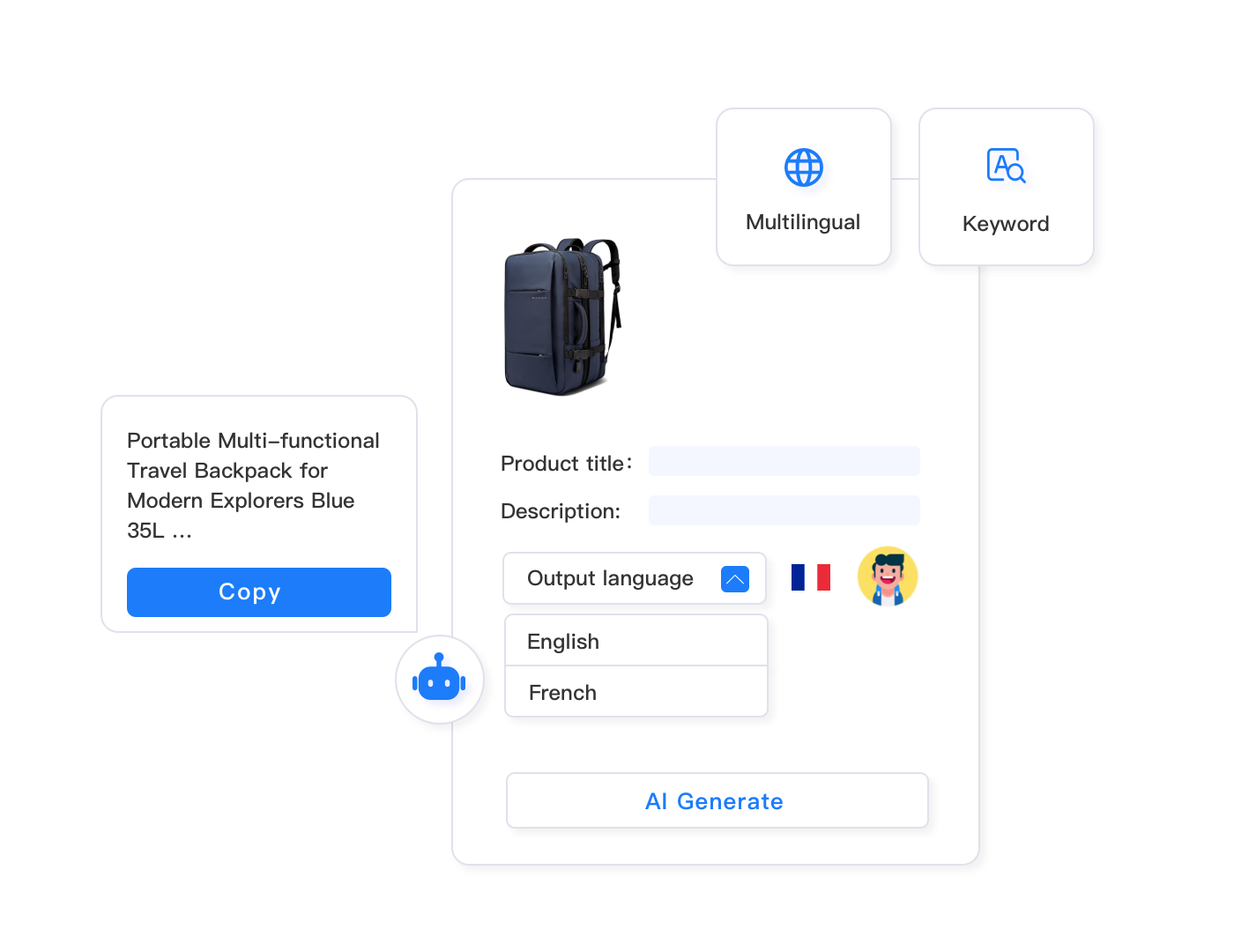
The most sophisticated AI systems like Maxmerce’s AI Listing Generator analyze thousands of successful listings to understand what drives conversions. Additionally, these systems incorporate real-time competitive intelligence and market trends to optimize content for current conditions.
AI Content Generation Capabilities:
- Optimized title creation – Platform-specific keyword integration and character limits
- Compelling descriptions – Benefit-focused copy that converts browsers to buyers
- Bullet point optimization – Key features highlighted for maximum impact
- Complete attribute filling – All required and recommended fields populated automatically
- SEO keyword integration – Natural keyword placement for search optimization
Automated Attribute Management
Product attribute completion represents the most time-consuming aspect of manual listing creation. However, AI systems identify and populate dozens of attributes in seconds based on product information and category requirements. Moreover, automated systems ensure consistency and completeness across all platforms.
Critical Attribute Categories:
- Basic product information – Brand, model, size, color, material specifications
- Technical specifications – Dimensions, weight, power requirements, compatibility
- Performance characteristics – Capacity, speed, efficiency ratings, certifications
- Marketing attributes – Target audience, use cases, unique selling points
- Compliance data – Safety certifications, regulatory approvals, warranty information
Platform-Specific AI Optimization Strategies
Each marketplace requires different optimization approaches based on their unique algorithms and customer behaviors. Moreover, AI systems adapt content automatically to meet platform-specific requirements. Additionally, cross-platform consistency ensures brand messaging remains coherent while optimization maximizes performance on each channel.
Amazon AI Listing Optimization
Amazon’s complex algorithm considers numerous factors including keyword relevance, product attributes, and customer engagement metrics. Furthermore, Amazon’s AI shopping assistants like Rufus require structured data for optimal visibility. Additionally, competition intensity demands sophisticated optimization to maintain ranking positions.
Amazon-Specific Optimization Features:
- A9 algorithm optimization – Content optimized for Amazon’s search algorithm preferences
- Backend keyword integration – Hidden keywords for expanded search coverage
- Enhanced Brand Content ready – Rich media and detailed descriptions for brand-registered sellers
- Category-specific attributes – Complete coverage of Amazon’s extensive attribute requirements
- Buy Box optimization – Listing elements that support Buy Box eligibility
eBay AI Listing Enhancement
eBay’s Best Match algorithm prioritizes complete item specifics and detailed product information. Moreover, eBay’s international reach requires adaptation for different markets and languages. Additionally, eBay’s auction and Buy It Now formats need different optimization strategies.
eBay-Specific Features:
- Complete Item Specifics coverage – All recommended attributes populated for maximum visibility
- Category-specific optimization – Tailored content for eBay’s unique category structures
- International market adaptation – Language and cultural optimization for global reach
- Competitive pricing intelligence – Market-aware pricing suggestions integrated
Walmart Marketplace AI Optimization
Walmart’s growing marketplace demands professional listing quality to meet performance requirements. Furthermore, Walmart’s customer demographics require different messaging approaches than other platforms. Additionally, Walmart Fulfillment Services integration creates additional optimization opportunities.
Walmart-Specific Strategies:
- Rich product content – Detailed specifications that meet Walmart’s quality standards
- Value proposition emphasis – Content that appeals to Walmart’s price-conscious customers
- Category compliance – Strict adherence to Walmart’s marketplace requirements
- Performance optimization – Listing elements that support seller performance metrics
7 Ways AI Product Listing Generators Boost Performance
AI automation delivers measurable improvements across multiple performance metrics that directly impact sales and profitability. Moreover, these improvements compound over time as AI systems learn and adapt. Additionally, automated optimization ensures consistent performance without manual intervention.
Performance Boost 1: Search Visibility Enhancement
AI-optimized listings achieve 60-80% better search visibility through comprehensive keyword integration and complete attribute coverage. Moreover, AI systems identify long-tail keyword opportunities that manual processes typically miss. Furthermore, automated optimization adapts to algorithm changes faster than manual updates.
Performance Boost 2: Conversion Rate Improvement
Professional AI-generated content typically improves conversion rates by 30-50% through compelling copy and complete product information. Moreover, AI systems analyze high-converting listings to replicate successful patterns. Additionally, platform-specific optimization ensures content resonates with each marketplace’s audience.
Performance Boost 3: Time-to-Market Acceleration
AI automation reduces listing creation time from hours to minutes, enabling rapid product launches and inventory expansion. Moreover, bulk processing capabilities handle hundreds of products simultaneously. Furthermore, automated quality assurance prevents delays from errors and compliance issues.
Performance Boost 4: Quality Consistency Assurance
Automated systems ensure consistent quality and messaging across all listings and platforms. Moreover, AI eliminates human errors and fatigue-related quality degradation. Additionally, standardized processes maintain brand voice and professionalism throughout the catalog.
Performance Boost 5: SEO Performance Optimization
AI systems integrate current SEO best practices automatically without manual keyword research and optimization. Moreover, automated systems adapt to search algorithm changes immediately. Furthermore, competitive intelligence integration ensures listings remain optimized relative to market conditions.
Performance Boost 6: Multi-Platform Synergy
Cross-platform optimization creates synergies that improve overall brand visibility and customer recognition. Moreover, consistent messaging across channels builds trust and professional credibility. Additionally, unified management reduces operational overhead while improving performance.
Performance Boost 7: Continuous Improvement Capability
AI systems analyze performance data continuously and optimize listings based on actual results. Moreover, machine learning algorithms identify patterns and opportunities that humans cannot detect. Furthermore, automated A/B testing refines content for maximum effectiveness.
ROI Analysis: Manual vs. AI Listing Creation
AI listing automation typically delivers positive ROI within 30-60 days through time savings and performance improvements. Moreover, the benefits scale dramatically as product count increases. Additionally, improved listing quality generates ongoing revenue benefits that compound over time.
| Business Size | Manual Annual Cost | AI Automation Cost | Time Savings (Hours) | Annual ROI |
|---|---|---|---|---|
| 100 Products | $7,800-13,000 | $1,200-2,400 | 312-520 | 300-500% |
| 500 Products | $26,000-39,000 | $3,600-7,200 | 1,040-1,560 | 400-700% |
| 1,000+ Products | $45,500-71,500 | $6,000-12,000 | 1,820-2,860 | 500-900% |
Implementation Strategy: Manual to AI Transition
Successful AI listing automation implementation requires systematic planning and phased execution. Moreover, proper transition strategies minimize disruption while maximizing benefits. Additionally, change management ensures team adoption and optimization of new capabilities.
Phase 1: Assessment and Pilot Testing (Days 1-14)
- Evaluate current listing performance – Establish baseline metrics for improvement measurement
- Select pilot product group – Choose 10-20 representative products for testing
- Configure AI platform settings – Set up brand voice, keywords, and optimization preferences
- Generate initial AI listings – Create automated versions of pilot products
- Compare performance metrics – Track search visibility and conversion improvements
Phase 2: Expansion and Optimization (Days 15-45)
- Scale to larger product groups – Expand automation to high-priority categories
- Refine AI parameters – Optimize settings based on performance data
- Implement cross-platform sync – Deploy listings across Amazon, eBay, and Walmart
- Train team on new processes – Ensure understanding of AI tools and capabilities
- Monitor and adjust continuously – Regular optimization based on results
Phase 3: Full Automation and Advanced Features (Days 46-90)
- Deploy across full catalog – Automate all product listings with AI generation
- Implement advanced features – Activate competitive intelligence and dynamic optimization
- Establish governance processes – Create quality assurance and approval workflows
- Analyze comprehensive results – Measure ROI and performance improvements
- Plan for continuous improvement – Ongoing optimization and feature expansion
Common AI Listing Implementation Mistakes to Avoid
These critical mistakes can undermine AI automation success and prevent maximum ROI realization. Moreover, understanding common pitfalls helps ensure smooth implementation and rapid value achievement. Additionally, proactive planning prevents costly errors during deployment.
- Insufficient product data preparation – AI systems require complete, accurate source information for optimal results
- Ignoring platform-specific requirements – Each marketplace needs tailored optimization approaches
- Over-customization during initial setup – Start with standard settings and customize based on performance
- Neglecting performance monitoring – Regular analysis ensures optimization remains effective
- Inadequate team training – Proper adoption requires understanding of AI capabilities and limitations
AI Product Listing Generator FAQ
Frequently Asked Questions
How accurate are AI-generated product listings?
AI-generated listings achieve 90-95% accuracy when provided with complete product information. Moreover, AI systems learn from performance data and improve continuously. Additionally, automated quality checks identify and correct potential issues before publishing.
Can AI listing generators handle complex or technical products?
Modern AI systems excel with technical products by analyzing specifications, competitor listings, and industry terminology. Furthermore, specialized algorithms understand technical attributes and requirements for complex categories. Additionally, human review and customization options ensure accuracy for unique products.
How do AI listings perform compared to professionally written content?
AI-generated listings often outperform manually created content through data-driven optimization and complete attribute coverage. Moreover, AI systems analyze thousands of successful listings to identify effective patterns. Additionally, automated SEO integration typically achieves better search performance than manual optimization.
What level of customization is available with AI listing generators?
Professional AI platforms provide extensive customization options including brand voice settings, keyword preferences, and content templates. Furthermore, manual override capabilities allow fine-tuning of specific listings when needed. Additionally, learning algorithms adapt to your preferences over time.
How quickly can I see results from AI listing automation?
Initial time savings appear immediately with 90% reduction in listing creation time. However, performance improvements typically show within 2-4 weeks as search algorithms recognize optimized content. Moreover, conversion improvements often appear within 30-60 days as complete attribute coverage enhances customer experience.
Transform Your Product Listing Process Today
AI product listing generators eliminate manual inefficiencies while delivering professional, optimized listings that outperform manual creation. Moreover, AI product automation scales seamlessly as inventory grows without proportional time investment increases. Additionally, continuous AI product optimization ensures listings remain competitive as algorithms and markets evolve, providing sellers with sustainable competitive advantages.
Begin with a pilot group of high-value products to demonstrate ROI and build confidence in AI product automation. Furthermore, focus on complete data preparation and proper configuration to maximize results from AI product listing systems from the start. Meanwhile, monitor AI product performance closely and optimize settings based on actual results for continuous improvement.
Stop Wasting Hours on Manual Listing Creation
Maxmerce’s AI Listing Generator creates professional, optimized listings for Amazon, eBay, and Walmart in minutes instead of hours while ensuring complete attribute coverage and SEO optimization.
Join thousands of sellers who’ve transformed their listing process and achieved 30-50% better performance through intelligent automation.