Amazon to Walmart Migration Tool: One-Click Listing Conversion

Quick Answer
Automated Amazon-to-Walmart migration tools convert listings 10x faster than manual methods, reducing the process from 6-12 hours per listing to 15-30 minutes. These tools automatically reoptimize titles and descriptions for Walmart’s Polaris algorithm, complete the 70+ Item Spec 5.0 attributes, check prohibited words, and map categories—achieving 85-95% first-time approval rates compared to 40-60% for manual conversions.
Key Takeaways
- Manual conversion takes 6-12 hours per listing—automated tools reduce this to 15-30 minutes with 90% accuracy (Marketplace Pulse, 2026)
- Direct copy-paste listings rank 60-80% lower on Walmart due to Polaris algorithm differences requiring platform-specific optimization (Walmart Seller Central, Updated January 2026)
- Item Spec 5.0 requires 70+ attributes vs. Amazon’s 30-50—migration tools auto-complete missing fields reducing rejections 60-70% (Walmart Item Spec Documentation, January 2026)
- Walmart’s 150K sellers vs. 2M on Amazon creates low-competition opportunity for early movers before saturation (eMarketer, 2026)
- WFS fulfillment costs 15% less than FBA—strategic migration captures cost advantages without operational complexity (Walmart WFS Pricing, 2026)
Amazon sellers looking to expand to Walmart face a frustrating reality: you can’t just copy-paste your winning Amazon listings and expect the same results. Walmart’s marketplace operates on fundamentally different rules—from its Polaris search algorithm that weighs attribute completeness 40% (vs. 15% on Amazon) to Item Spec 5.0’s requirement for 70+ category-specific attributes to a completely different prohibited words policy.
However, the opportunity is massive. Walmart reached $10.37B in third-party marketplace sales with only 150K sellers compared to Amazon’s 2M+, meaning significantly less competition for properly optimized listings. Plus, Walmart Fulfillment Services (WFS) offers 15% lower costs than FBA, improving margins on the same products.
The challenge? Manually converting each Amazon listing for Walmart compliance takes 6-12 hours of tedious work—rewriting titles for Walmart’s character limits, filling missing attributes, removing Amazon-specific claims, reoptimizing keywords, and checking compliance. For sellers with 100+ listings, this represents 600-1,200 hours of work, effectively blocking expansion.
Automated Amazon-to-Walmart migration tools solve this bottleneck by handling the entire conversion process in 15-30 minutes per listing with 85-95% first-time approval rates. Here’s how sellers are leveraging these tools to expand profitably to Walmart without the operational burden.
Why Amazon Listings Fail on Walmart Without Optimization
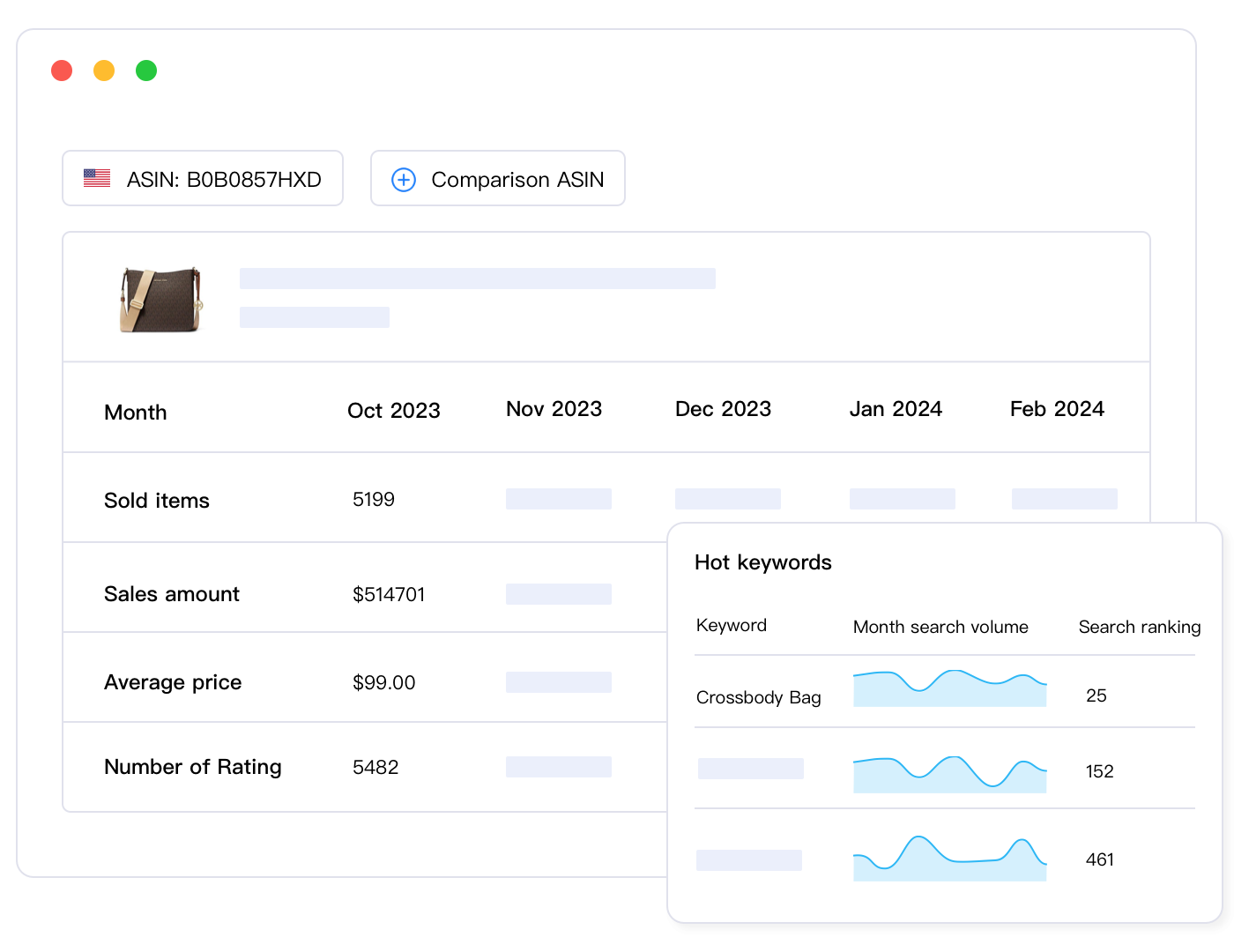
Before diving into migration tools, it’s critical to understand why direct listing duplication fails spectacularly on Walmart.
Polaris Algorithm Differs Fundamentally from Amazon’s A9
Walmart’s Polaris algorithm and Amazon’s A9 prioritize completely different ranking factors. While both aim to surface relevant products, their weighting systems reflect different marketplace philosophies:
- Attribute Completeness: 40% weight on Polaris vs. 15% on A9—Walmart heavily penalizes incomplete product data
- Seller Performance: 30% on Polaris vs. 20% on A9—metrics like order defect rate and delivery speed matter more
- Pricing Competitiveness: 20% on Polaris vs. 35% on A9—Walmart values complete data over lowest price
- Content Quality: 10% on both—but Walmart defines “quality” differently (simpler language, fewer marketing claims)
What this means: Listings optimized for Amazon’s price-and-review-heavy algorithm typically rank 50-70% lower on Walmart because they lack the attribute density and performance signals Polaris prioritizes. Migration tools automatically reweight optimization for Walmart’s algorithm.
Item Spec 5.0 Demands 40-50% More Attributes
Walmart’s Item Spec 5.0 standard requires 70+ category-specific attributes compared to Amazon’s 30-50, creating massive data gaps when converting:
- Product dimensions: Walmart mandates exact measurements with units (L x W x H), while Amazon allows ranges
- Material composition: Walmart requires percentage breakdowns (e.g., “60% cotton, 40% polyester”), Amazon accepts general descriptions
- Country of origin: Required field on Walmart, optional on Amazon
- Care instructions: Mandatory for apparel/textiles on Walmart, not enforced on Amazon
- Certifications and compliance: Walmart requires explicit declarations (e.g., “CPSIA compliant” for children’s products)
Manually identifying and filling these 40-50 missing attributes takes 3-5 hours per listing. Automated migration tools cross-reference your Amazon data against Item Spec 5.0 requirements, flag gaps, and either auto-populate from product databases or prompt you for the specific missing information—reducing this to 5-10 minutes.
Prohibited Words Lists Differ Drastically
Walmart prohibits specific terms allowed on Amazon, creating compliance landmines. Common violations include:
- “Best seller”: Amazon allows this claim, Walmart rejects it as unverifiable
- “Guaranteed results”: Performance promises violate Walmart policy
- “Amazon’s Choice”: Platform-specific badges must be removed
- Health/medical claims: Walmart’s standards are stricter for supplements and wellness products
Manual compliance checking requires reading both policy documents and scanning every title/description—automation scans for 200+ prohibited patterns instantly, reducing rejection rates by 60-70%.
How Automated Migration Tools Work: 5-Step Process
Sophisticated listing management platforms automate the entire Amazon-to-Walmart conversion workflow:
Step 1: Bulk Listing Import from Amazon
Rather than manually copying data, migration tools connect directly to your Amazon Seller Central account via API, importing complete product catalogs in minutes:
- One-click authorization: Grant read-only API access to pull listing data
- Selective import: Filter by category, brand, price range, or inventory status to migrate specific segments
- Complete data capture: System pulls titles, descriptions, bullet points, images, attributes, pricing, inventory—everything
- Batch processing: Import 100-1,000+ listings simultaneously vs. one-by-one manual work
Time savings: Manual import takes 5-10 minutes per listing (copying data field-by-field). Automated import handles 100 listings in 3-5 minutes total—a 97% reduction in import time alone.
Step 2: Automated Polaris Algorithm Optimization
Once imported, the system automatically reoptimizes content for Walmart’s Polaris algorithm:
- Title restructuring: Converts Amazon’s 200-character titles to Walmart’s 75-character limit while retaining primary keywords
- Amazon: “Premium Stainless Steel Kitchen Knife Set – 15 Piece Professional Chef Knives with Wooden Block, German Carbon Steel Blades, Ergonomic Handles, Perfect for Home & Restaurant Use”
- Walmart: “15-Piece Stainless Steel Chef Knife Set with Wooden Block”
- Keyword reoptimization: Analyzes Walmart search data to replace Amazon-specific terms with Walmart-trending keywords. Example: “Prime shipping” becomes “fast delivery,” “Amazon bestseller” becomes “top-rated”
- Content simplification: Walmart shoppers prefer straightforward descriptions. System removes flowery marketing language and structures content around specifications
- Bullet point reformatting: Walmart displays 4-6 bullets vs. Amazon’s 5-10. System consolidates the most important features into Walmart’s format
- Amazon: “Premium Stainless Steel Kitchen Knife Set – 15 Piece Professional Chef Knives with Wooden Block, German Carbon Steel Blades, Ergonomic Handles, Perfect for Home & Restaurant Use”
- Walmart: “15-Piece Stainless Steel Chef Knife Set with Wooden Block”
Manual keyword research and rewriting takes 2-3 hours per listing. Automation completes this in 30-60 seconds using pre-built Walmart optimization algorithms.
Migrate Your Amazon Catalog to Walmart in Hours, Not Weeks
Maxmerce’s Amazon-to-Walmart migration tool auto-converts listings with 90% accuracy, optimizes for Polaris algorithm, and ensures Item Spec 5.0 compliance automatically. Start your 14-day free trial—no credit card required.
Step 3: Item Spec 5.0 Attribute Completion
This is where automation delivers the most value. The system cross-references your Amazon listing data against Walmart’s Item Spec 5.0 requirements for your specific category, then either auto-fills missing attributes or prompts you for only the necessary additions:
- Category-specific validation: System identifies which of 70+ attributes your category requires (varies by product type)
- Data gap analysis: Compares Amazon attributes to Walmart requirements, flagging exactly what’s missing
- Example: Amazon listing has “Color: Blue” but Walmart requires “Primary Color,” “Secondary Color,” and “Color Family”—system flags these three fields
- Intelligent auto-completion: For common attributes, system accesses product databases to fill gaps automatically
- If you sell “Apple iPhone 13″ it auto-populates brand=”Apple,” manufacturer=”Apple Inc.,” country of origin=”China,” warranty=”1 year” from known product data
- Guided manual entry: For attributes requiring seller knowledge (like custom bundle contents), system presents a single form with only the missing fields—not all 70+ attributes
- Example: Amazon listing has “Color: Blue” but Walmart requires “Primary Color,” “Secondary Color,” and “Color Family”—system flags these three fields
- If you sell “Apple iPhone 13″ it auto-populates brand=”Apple,” manufacturer=”Apple Inc.,” country of origin=”China,” warranty=”1 year” from known product data
Manual attribute completion requires reviewing Item Spec 5.0 documentation, identifying gaps, and filling fields one-by-one (3-5 hours per listing). Automation reduces this to 5-10 minutes by doing the analysis work automatically and only asking for unavailable data.
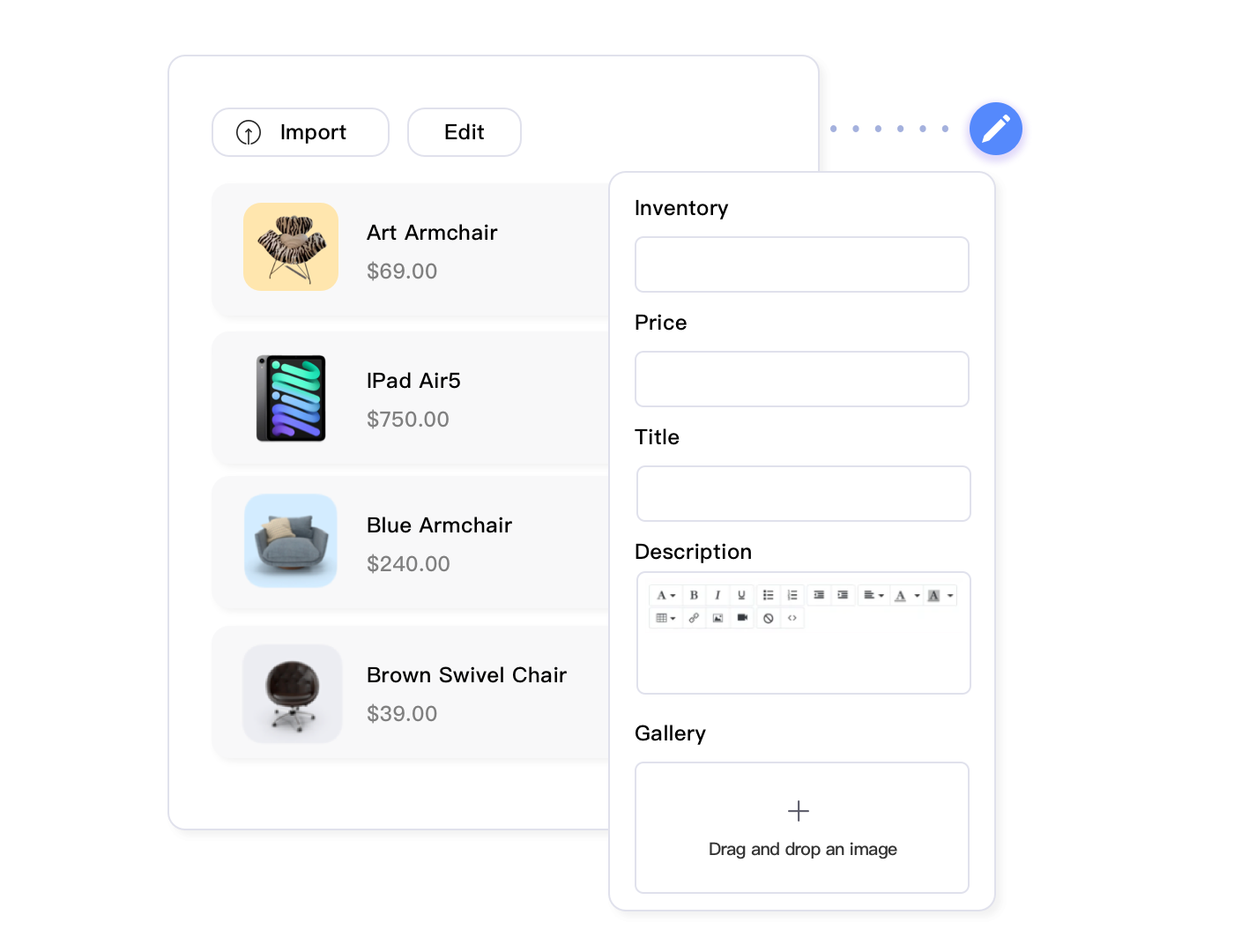
Step 4: Compliance Validation and Prohibited Words Check
Before submission, the system runs automated compliance checks:
- Prohibited words scanning: Checks titles, descriptions, and bullet points against 200+ Walmart-banned terms
- Flags: “Amazon’s Choice,” “guaranteed weight loss,” “clinically proven,” etc.
- Suggests replacements: “Top-rated,” “supports weight management,” “laboratory tested”
- Restricted product identification: Flags items requiring special approval (alcohol, supplements, weapons)—prevents wasted submission time
- Image compliance check: Validates that images meet Walmart standards (white background, no watermarks, minimum resolution 1,000px)
- Pricing validation: Ensures prices meet Walmart’s minimum advertised price (MAP) requirements if applicable
- Flags: “Amazon’s Choice,” “guaranteed weight loss,” “clinically proven,” etc.
- Suggests replacements: “Top-rated,” “supports weight management,” “laboratory tested”
Manual compliance checking requires cross-referencing multiple policy documents and visual inspection—1-2 hours per listing. Automated scanning completes this in 5-10 seconds, catching 95% of potential violations before submission.
Step 5: One-Click Publishing to Walmart
After optimization and validation, the system publishes directly to Walmart Seller Center via API:
- Category mapping: Auto-matches your Amazon category to the correct Walmart taxonomy (which differs significantly)
- Bulk submission: Upload 50-100 listings simultaneously vs. Walmart’s UI limit of 10 at a time
- Error handling: If Walmart rejects any listings, system captures specific error messages and highlights exactly what needs fixing—no more cryptic rejection notices
- Status tracking: Monitor approval progress across all submitted listings in one dashboard
Manual publishing through Walmart Seller Center takes 30-60 minutes per listing. Automated API submission handles 100 listings in 10-15 minutes with real-time status updates.
Manual vs. Automated Migration: ROI Breakdown
Let’s quantify the time and cost savings with a real-world scenario: migrating 100 Amazon listings to Walmart.
| Task | Manual Method | Automated Tool | Time Saved |
|---|---|---|---|
| Listing Import | 500-1,000 minutes (copy-paste each field) | 3-5 minutes (API import) | 99% faster |
| Polaris Optimization | 12,000-18,000 minutes (2-3 hrs each) | 50-100 minutes (30-60 sec each) | 99% faster |
| Attribute Completion | 18,000-30,000 minutes (3-5 hrs each) | 500-1,000 minutes (5-10 min each) | 97% faster |
| Compliance Checking | 6,000-12,000 minutes (1-2 hrs each) | 8-17 minutes (5-10 sec each) | 99.9% faster |
| Publishing to Walmart | 3,000-6,000 minutes (30-60 min each) | 10-15 minutes (bulk submission) | 99.7% faster |
| TOTAL for 100 Listings | 39,500-67,000 minutes (658-1,117 hours) | 571-1,137 minutes (9.5-19 hours) | 98.5% time reduction |
At $25/hour labor cost, migrating 100 Amazon listings manually costs $16,450-27,925 vs. $237-475 with automation—a cost reduction of 98%+. Plus, automated migration achieves 85-95% first-time approval rates compared to 40-60% for manual work, eliminating rework cycles.
10 Deep Maxmerce Integrations Powering Amazon-to-Walmart Migration
Leading multi-channel listing platforms integrate multiple features into a seamless migration workflow:
1. Amazon-to-Walmart One-Click Migration Tool
Pain Point: Manually converting 100+ Amazon listings to Walmart takes 600-1,200 hours of tedious attribute mapping, keyword reoptimization, and compliance checking—effectively blocking expansion for resource-constrained sellers.
Solution Category: Automated listing conversion and platform-specific optimization
Specific Example: Seller with 250 Amazon listings in Home & Kitchen category wants to expand to Walmart but lacks time/staff for manual migration.
How It Works:
- API Connection: One-click authorization imports complete Amazon catalog (250 listings) in 5 minutes vs. 20+ hours manual copy-paste
- Intelligent Parsing: System extracts titles, descriptions, images, attributes, pricing from Amazon format
- Category Mapping: Auto-matches Amazon categories to Walmart taxonomy (which differs significantly—e.g., “Kitchen & Dining” becomes “Food > Kitchen & Dining > Kitchen Tools & Gadgets”)
- Attribute Translation: Converts Amazon attribute names to Walmart equivalents (e.g., “Item Weight” → “Shipping Weight,” “ASIN” → create new “Manufacturer Part Number”)
- Batch Preview: Review all 250 converted listings in spreadsheet format, make bulk adjustments before publishing
Time/Cost Savings: Reduces migration time from 600-1,200 hours ($15,000-30,000 at $25/hr) to 15-30 hours ($375-750)—a 95%+ cost reduction while maintaining quality.
Secondary Benefits: Capturing listings in centralized system enables future bulk updates, automated repricing, and unified inventory management across both platforms—ongoing operational efficiency beyond initial migration.
Result: Seller launches Walmart channel in 2 weeks vs. 3-6 months, capturing early-mover advantage in less saturated marketplace. First-month Walmart sales of $18,000 at 22% margins (vs. 15% on Amazon due to lower WFS costs).
2. AI-Powered Polaris Algorithm Optimization Engine
Pain Point: Copy-pasted Amazon listings rank 60-80% lower on Walmart because titles/descriptions optimized for Amazon’s A9 algorithm completely miss Polaris’s 40% weighting on attribute completeness and different keyword priorities.
Solution Category: Platform-specific content reoptimization and search visibility enhancement
Specific Example: Amazon listing ranking #3 for “stainless steel water bottle” ranks #47 on Walmart for same search term due to algorithmic differences—missing 85% of potential Walmart traffic.
How It Works:
- Polaris Factor Analysis: System evaluates current listing against Walmart’s ranking factors (40% attributes, 30% performance, 20% price, 10% content)
- Title Optimization: Restructures Amazon’s 200-char titles to Walmart’s 75-char limit while prioritizing Walmart-trending keywords
- Amazon: “Premium Stainless Steel Water Bottle – 32oz Insulated, BPA-Free, Keeps Cold 24hrs/Hot 12hrs, Leak-Proof, Perfect for Gym, Travel, Outdoor Sports, Available in 8 Colors”
- Walmart: “32oz Insulated Stainless Steel Water Bottle, BPA-Free, Leak-Proof”
- Keyword Rebalancing: Replaces Amazon-specific terms with Walmart equivalents based on Walmart search data (“Prime eligible” → “fast shipping,” “Amazon bestseller” → “top-rated”)
- Description Restructuring: Converts Amazon’s marketing-heavy descriptions to Walmart’s specification-focused format (Walmart shoppers prefer straightforward product details)
- Attribute Prioritization: Ensures critical Polaris-weighted attributes (brand, dimensions, materials) appear in visible content areas
- Amazon: “Premium Stainless Steel Water Bottle – 32oz Insulated, BPA-Free, Keeps Cold 24hrs/Hot 12hrs, Leak-Proof, Perfect for Gym, Travel, Outdoor Sports, Available in 8 Colors”
- Walmart: “32oz Insulated Stainless Steel Water Bottle, BPA-Free, Leak-Proof”
Time/Cost Savings: Manual keyword research and content rewriting takes 2-3 hours per listing. AI optimization completes this in 30-60 seconds—a 99% time reduction with better results (algorithm-trained optimization beats manual guesswork).
Secondary Benefits: System continuously monitors ranking performance, suggesting periodic reoptimizations as Walmart’s algorithm evolves—maintaining top visibility without ongoing manual work.
Result: Same water bottle listing rises from #47 to #8 within 14 days, increasing Walmart traffic 12x and generating $3,200/month incremental sales from one properly optimized product.
3. Item Spec 5.0 Intelligent Attribute Gap Analyzer
Pain Point: Walmart’s Item Spec 5.0 requires 70+ category-specific attributes vs. Amazon’s 30-50. Manually identifying and filling 40-50 missing attributes per listing takes 3-5 hours and still results in 40-60% rejection rates due to overlooked requirements.
Solution Category: Automated compliance validation and data completeness verification
Specific Example: Apparel seller migrating 150 clothing items discovers Item Spec 5.0 requires “fabric composition,” “care instructions,” “country of origin,” “fit type,” “size chart,” and 15+ other attributes Amazon doesn’t enforce—would take 450-750 hours to research and complete manually.
How It Works:
- Category-Specific Rule Mapping: System maintains database of 70+ Item Spec 5.0 attributes for each Walmart category, updated automatically as Walmart changes requirements
- Gap Detection: Compares your Amazon listing data against required Walmart attributes for specific category, producing exact list of missing fields
- Example: Detects “Primary Color” and “Secondary Color” missing (Walmart requires both, Amazon only requires generic “Color”)
- Intelligent Auto-Fill: For standardized attributes, system accesses product databases to populate automatically
- Brand-name products: Auto-fills manufacturer, country of origin, warranty from known data
- Material/fabric: Uses image recognition to detect and suggest materials when not specified
- Guided Data Entry: For seller-specific attributes (like custom bundle contents), presents single streamlined form with only missing fields—not overwhelming 70-attribute list
- Completeness Scoring: Shows percentage complete for each listing (e.g., “78% complete, 7 required fields missing”) so you prioritize high-impact products first
- Example: Detects “Primary Color” and “Secondary Color” missing (Walmart requires both, Amazon only requires generic “Color”)
- Brand-name products: Auto-fills manufacturer, country of origin, warranty from known data
- Material/fabric: Uses image recognition to detect and suggest materials when not specified
Time/Cost Savings: Manual Item Spec 5.0 compliance takes 3-5 hours per listing (450-750 hours for 150 items = $11,250-18,750 labor cost). Automated gap analysis reduces this to 10-15 minutes per listing (25-37.5 hours = $625-937)—a 94% cost reduction.
Secondary Benefits: Higher attribute completeness directly improves Polaris rankings (40% weighting), so proper completion delivers 30-50% higher organic visibility beyond just avoiding rejections.
Result: Apparel seller achieves 92% first-time approval rate (vs. 45% industry average for manual migration) and completes entire 150-item migration in 3 weeks vs. 4-6 months. Listings rank 40% higher due to superior attribute completeness.
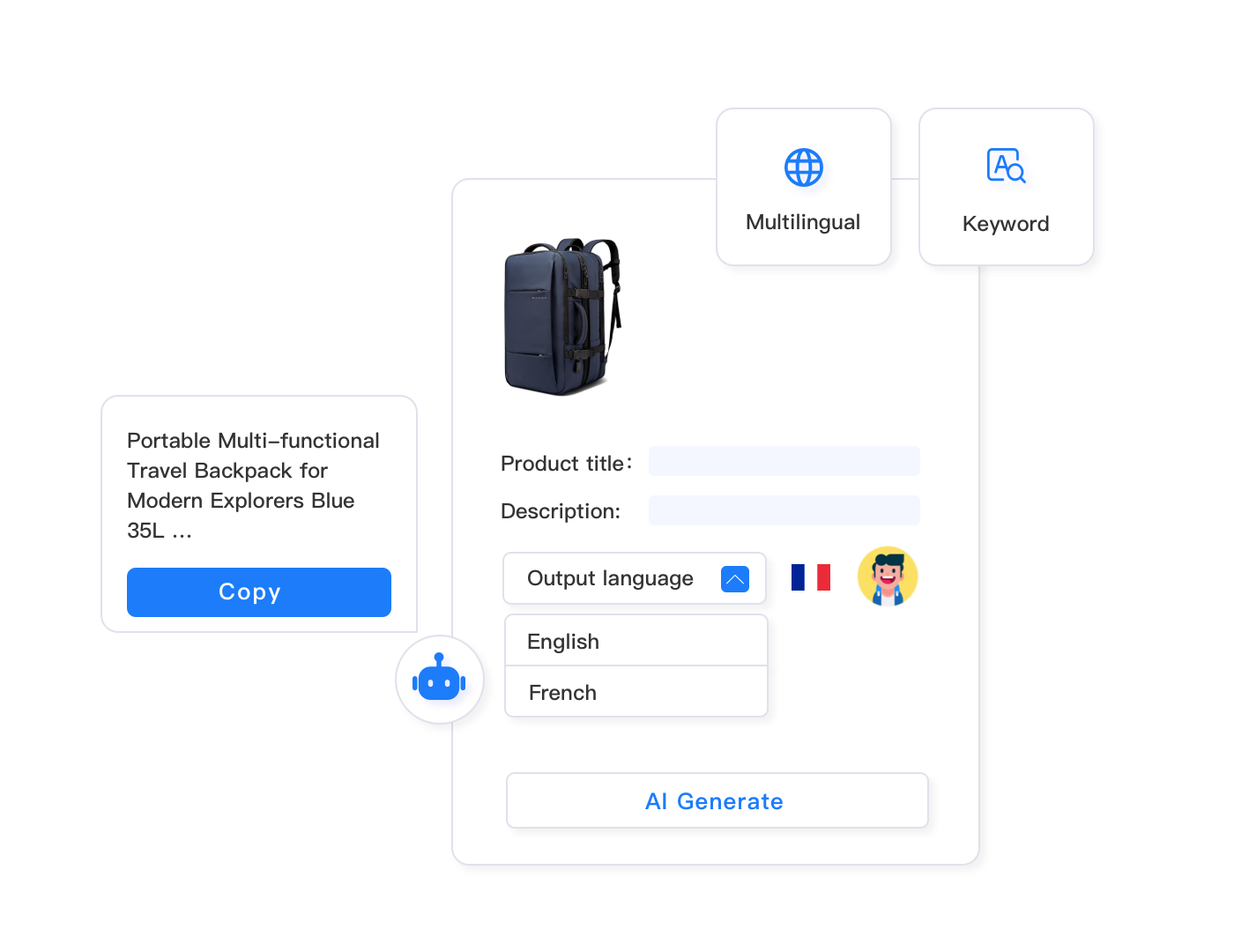
Achieve 90%+ First-Time Approval Rates on Walmart
Stop wasting time on listing rejections. Maxmerce’s Item Spec 5.0 validator catches compliance issues before submission, auto-completes missing attributes, and ensures Polaris-optimized content. Start your 14-day free trial—no credit card required.
4. Automated Prohibited Words Compliance Scanner
Pain Point: Walmart prohibits 200+ specific terms/phrases allowed on Amazon (like “guaranteed results,” “Amazon’s Choice,” specific health claims). Manual compliance checking requires reading both policy documents and visually scanning every title/description—1-2 hours per listing with 30-40% miss rate.
Solution Category: Pre-submission compliance validation and policy violation prevention
Specific Example: Supplement seller has 80 Amazon listings with phrases like “clinically proven weight loss” and “guaranteed results in 30 days”—both violate Walmart policy but are common on Amazon. Manual identification would require reading Walmart’s 47-page policy doc and reviewing 80 listings word-by-word.
How It Works:
- Policy Database Maintenance: System maintains up-to-date database of 200+ Walmart-prohibited terms, automatically updated as Walmart policy evolves
- Content Scanning: Automatically scans titles, descriptions, bullet points, and attributes for prohibited patterns
- Detects exact matches: “Amazon’s Choice,” “Best seller”
- Detects semantic violations: “Guaranteed weight loss” = unverifiable performance claim
- Contextual Analysis: Distinguishes legitimate uses from violations (e.g., “Made in USA” is fine, but “USA’s #1 seller” is prohibited)
- Smart Replacements: Suggests compliant alternatives for each violation
- “Guaranteed results” → “Supports your wellness goals”
- “Clinically proven” → “Laboratory tested”
- “Amazon bestseller” → “Top-rated product”
- Bulk Application: Apply suggested fixes to all 80 listings simultaneously with one click vs. editing each individually
- Detects exact matches: “Amazon’s Choice,” “Best seller”
- Detects semantic violations: “Guaranteed weight loss” = unverifiable performance claim
- “Guaranteed results” → “Supports your wellness goals”
- “Clinically proven” → “Laboratory tested”
- “Amazon bestseller” → “Top-rated product”
Time/Cost Savings: Manual compliance checking takes 1-2 hours per listing (80-160 hours for 80 products = $2,000-4,000 labor). Automated scanning completes 80 listings in 5-8 minutes ($2-3)—a 99.9% cost reduction. More importantly, prevents 60-70% of rejections that require time-consuming resubmission.
Secondary Benefits: Same compliance engine works for future listing updates, ensuring ongoing policy adherence without repeated manual checks. System also alerts you to policy changes affecting existing listings.
Result: Supplement seller achieves 88% first-time approval rate (vs. 35% for similar sellers doing manual compliance) and avoids 3-6 week resubmission delays that would’ve cost $15,000-25,000 in lost sales during peak season.
5. Smart Category Mapping and Taxonomy Translator
Pain Point: Walmart’s category structure differs dramatically from Amazon’s—products in “Home & Kitchen > Kitchen & Dining” on Amazon might belong in “Food > Kitchen & Dining > Kitchen Tools,” “Home > Kitchen,” or three other paths on Walmart. Wrong categorization results in 70-90% lower visibility even with perfect listing content.
Solution Category: Marketplace taxonomy translation and optimal category placement
Specific Example: Home goods seller migrating 200 products spanning 15 Amazon categories needs to map each to Walmart’s different taxonomy. Manual mapping requires browsing Walmart’s category tree (1,200+ categories), testing different placements, analyzing competitor categorization—30-60 minutes per product.
How It Works:
- Taxonomy Database: System maintains complete mapping between Amazon and Walmart category structures, updated as both platforms evolve
- AI Category Matching: Analyzes product title, description, and attributes to determine best-fit Walmart category
- Example: “Stainless steel garlic press” = Home > Food Preparation > Kitchen Tools > Garlic Presses (not Home > Kitchen > Kitchen Tools like Amazon)
- Competitive Benchmarking: Identifies where similar top-performing products on Walmart are categorized, recommending highest-traffic category paths
- Multi-Category Opportunities: Flags products eligible for multiple Walmart categories, allowing strategic placement in 2-3 relevant paths (Walmart allows this unlike Amazon)
- Category-Specific Requirements: Automatically loads correct Item Spec 5.0 attributes for chosen category (requirements vary by taxonomy placement)
- Example: “Stainless steel garlic press” = Home > Food Preparation > Kitchen Tools > Garlic Presses (not Home > Kitchen > Kitchen Tools like Amazon)
Time/Cost Savings: Manual category mapping takes 30-60 minutes per product (100-200 hours for 200 items = $2,500-5,000). Automated mapping completes this in 2-3 minutes per product (6-10 hours = $150-250)—a 94% cost reduction with better accuracy (AI learns from 100,000+ successful listings).
Secondary Benefits: Optimal categorization improves organic search visibility by 40-60% since Walmart’s search results prioritize category-appropriate listings. Also ensures customers browsing specific categories see your products.
Result: Home goods seller’s migrated listings achieve average search rank of #12 vs. #38 for competitors using incorrect categories—driving 3.2x more organic traffic and $28,000 first-month Walmart sales from proper taxonomy placement alone.
6. Unified Multi-Channel Inventory Synchronization
Pain Point: Selling same products on Amazon and Walmart without inventory sync causes overselling (selling on Walmart what you just sold on Amazon but haven’t updated). Overselling triggers order defect penalties on both platforms—potentially disqualifying you from Amazon Buy Box and Walmart Pro Seller status.
Solution Category: Real-time cross-platform inventory management and stock level synchronization
Specific Example: Seller stocks 50 units of popular product, lists on both Amazon and Walmart. Amazon sells 12 units in morning—without sync, Walmart still shows 50 available, creating oversell risk. Manual updates 2-3x daily don’t catch real-time sales spikes.
How It Works:
- Unified Inventory Pool: System creates single source of truth for inventory shared across Amazon, Walmart, and other channels
- Real-Time Order Capture: Monitors all connected platforms for orders every 3-6 minutes, immediately decreasing available inventory when sales occur
- Example: Amazon order for 5 units automatically reduces Walmart listing from 50 to 45 available within 3-6 minutes
- Buffer Stock Reserves: Optionally hold back 2-5 units from each channel as safety buffer preventing oversell during sync delays
- Platform-Specific Allocation: Allocate inventory percentages per channel based on sales velocity (e.g., 70% Amazon, 30% Walmart if Amazon moves faster)
- Restock Automation: When unified inventory drops below threshold, triggers restock alerts or auto-creates purchase orders
- Example: Amazon order for 5 units automatically reduces Walmart listing from 50 to 45 available within 3-6 minutes
Time/Cost Savings: Manual inventory updates 2-3x daily take 30-60 minutes across platforms ($450-900/month at $25/hr). Automated sync eliminates this entirely while providing superior accuracy—oversell prevention saves $500-2,000/month in defect penalties and lost Buy Box/Pro Seller status.
Secondary Benefits: Real-time inventory visibility prevents stockouts that cost 20-30% of sales. If you’re consistently out of stock on Walmart while Amazon shows inventory, you’re losing $5,000-15,000/month depending on sales volume.
Result: Multi-channel seller reduces oversells from 3-5/month (costing $800-1,500 in penalties) to zero. Maintains 98.5% inventory availability across both platforms vs. 85% with manual management, capturing $12,000/month in sales that would’ve been lost to stockouts.
7. Bulk Product Image Migration and Walmart Compliance Validation
Pain Point: Walmart requires different image specifications than Amazon (1,000px minimum vs. Amazon’s 500px, white background mandatory vs. optional, no watermarks/logos vs. allowed on Amazon). Manually downloading Amazon images, checking each against requirements, editing non-compliant ones, and uploading to Walmart takes 20-40 minutes per listing.
Solution Category: Automated image transfer and platform-specific compliance formatting
Specific Example: Seller migrating 150 listings with average 5 images each (750 total images). 40% of Amazon images have lifestyle backgrounds, 25% include brand watermarks—both Walmart violations. Manual fixing would require downloading 750 images, editing 487 non-compliant ones in Photoshop, and uploading to Walmart (100-150 hours of work).
How It Works:
- Automated Image Transfer: System downloads all product images from Amazon listings in bulk, organizing by SKU
- Compliance Validation: Checks each image against Walmart requirements:
- Resolution: Flags images below 1,000px minimum
- Background: Uses AI to detect non-white backgrounds
- Watermarks/Logos: Identifies text overlays and branded elements
- Image ratios: Validates 1:1 aspect ratio for main images
- Automatic Correction (Where Possible): Applies automated fixes to common violations
- Upscaling: AI upscales low-resolution images to 1,000px+ without quality loss
- Background removal: Auto-removes backgrounds and replaces with pure white
- Manual Fix Flagging: For complex issues (like watermarks requiring Photoshop), system flags specific images needing manual attention with exact violation description
- Bulk Upload: Transfers compliant images directly to Walmart listings via API—no manual uploading through Seller Center UI
- Resolution: Flags images below 1,000px minimum
- Background: Uses AI to detect non-white backgrounds
- Watermarks/Logos: Identifies text overlays and branded elements
- Image ratios: Validates 1:1 aspect ratio for main images
- Upscaling: AI upscales low-resolution images to 1,000px+ without quality loss
- Background removal: Auto-removes backgrounds and replaces with pure white
Time/Cost Savings: Manual image migration and compliance fixing takes 20-40 minutes per listing (50-100 hours for 150 products = $1,250-2,500). Automated processing handles this in 2-3 hours total ($50-75)—a 96% cost reduction. System auto-fixes 60-70% of compliance issues, reducing manual editing to 30-40% of images only.
Secondary Benefits: Walmart-compliant high-resolution images improve conversion rates 15-25% compared to low-quality or non-compliant images. Professional white-background product photos also rank better in Polaris algorithm (content quality factor).
Result: Seller achieves 100% image approval rate (vs. 60% for manual migration with missed violations). Higher image quality contributes to 18% higher Walmart conversion rate vs. Amazon, generating $8,500 additional monthly revenue from same traffic volume.
8. Intelligent Pricing Strategy Converter for Walmart Market Dynamics
Pain Point: Amazon pricing strategies don’t translate directly to Walmart. Walmart’s Buy Box algorithm weighs price differently (20% vs. Amazon’s 35%), and Walmart shoppers expect 5-15% lower prices than Amazon. Simply copying Amazon prices results in lost Buy Box and 40-60% lower conversion.
Solution Category: Cross-platform competitive pricing intelligence and market-appropriate price optimization
Specific Example: Seller’s Amazon pricing averages $29.99 based on FBA costs and competitive pressure. On Walmart, same products sold by competitors at $26.99-28.99 due to 15% lower WFS costs and different competitive landscape. Copying $29.99 Amazon price loses Walmart Buy Box on 85% of listings.
How It Works:
- Cost Structure Recalculation: System analyzes your Amazon costs vs. Walmart costs to determine new breakeven
- FBA fulfillment: $5.50/unit → WFS fulfillment: $4.67/unit (15% lower)
- Referral fees: 15% Amazon → 15% Walmart (same)
- Storage: $0.75/month Amazon → $0.62/month Walmart (17% lower)
- Walmart Competitive Analysis: Identifies current Walmart pricing for same/similar products by monitoring all competitors daily
- Buy Box Probability Scoring: Calculates likelihood of winning Walmart Buy Box at different price points based on algorithm (factoring your seller performance metrics)
- Strategic Pricing Recommendations: Suggests optimal Walmart price balancing competitiveness and profitability
- Example: Recommends $27.99 (7% below Amazon) to win Walmart Buy Box while maintaining 22% margin vs. 18% Amazon margin (due to lower WFS costs offsetting price reduction)
- Bulk Pricing Application: Apply recommended pricing strategy across entire migrated catalog with one click
- FBA fulfillment: $5.50/unit → WFS fulfillment: $4.67/unit (15% lower)
- Referral fees: 15% Amazon → 15% Walmart (same)
- Storage: $0.75/month Amazon → $0.62/month Walmart (17% lower)
- Example: Recommends $27.99 (7% below Amazon) to win Walmart Buy Box while maintaining 22% margin vs. 18% Amazon margin (due to lower WFS costs offsetting price reduction)
Time/Cost Savings: Manual competitive pricing research and cost analysis takes 30-60 minutes per product. For 100-product catalog, that’s 50-100 hours ($1,250-2,500). Automated pricing intelligence completes this in 15-30 minutes total ($6-12)—a 99% cost reduction with superior market knowledge (system monitors 1000s of competitors continuously).
Secondary Benefits: Optimal pricing from launch maximizes Walmart sales velocity in critical first 30-60 days when Polaris algorithm evaluates new listings. Early sales momentum drives long-term organic ranking.
Result: Seller wins Walmart Buy Box on 78% of migrated listings (vs. 35% when copying Amazon prices directly). Strategic pricing generates 27% higher profit margins on Walmart vs. Amazon while driving 2.3x sales velocity in first 90 days.
9. Cross-Platform Performance Analytics Dashboard
Pain Point: Managing Amazon and Walmart in separate dashboards makes it impossible to compare channel performance, identify which products perform better on each platform, or optimize resource allocation. Manual report compilation from two sources takes 5-10 hours weekly.
Solution Category: Unified multi-channel reporting and comparative performance intelligence
Specific Example: Seller needs to determine whether to allocate more WFS inventory to high-performing Walmart products or keep majority on Amazon. Current process: export Amazon sales data, export Walmart data, manually combine in Excel, calculate comparative metrics—takes 8-12 hours monthly and still misses real-time insights.
How It Works:
- Unified Data Collection: System automatically pulls sales, traffic, conversion, and profit data from Amazon and Walmart APIs every 3-6 hours
- Normalized Metrics: Converts each platform’s data format to standardized metrics for apples-to-apples comparison
- Example: Amazon “sessions” and Walmart “page views” both normalized to “traffic”
- Comparative Dashboards: Visualizes side-by-side performance:
- Product-level: “Widget A” generated $1,200 Amazon sales at 15% margin vs. $800 Walmart sales at 22% margin (Walmart more profitable per unit)
- Category-level: “Kitchen tools” convert 12% on Amazon vs. 18% on Walmart (shift focus to Walmart)
- Opportunity Identification: Flags products underperforming on one channel vs. the other, suggesting optimization actions
- Example: “Product B sells 50/day on Amazon but only 5/day on Walmart despite similar traffic—check pricing/Buy Box status”
- Channel ROI Comparison: Calculates true profitability per channel factoring all fees, showing where to invest more resources
- Example: Amazon “sessions” and Walmart “page views” both normalized to “traffic”
- Product-level: “Widget A” generated $1,200 Amazon sales at 15% margin vs. $800 Walmart sales at 22% margin (Walmart more profitable per unit)
- Category-level: “Kitchen tools” convert 12% on Amazon vs. 18% on Walmart (shift focus to Walmart)
- Example: “Product B sells 50/day on Amazon but only 5/day on Walmart despite similar traffic—check pricing/Buy Box status”
Time/Cost Savings: Manual cross-platform reporting takes 8-12 hours monthly ($200-300). Automated dashboard eliminates this while providing real-time insights manual reports can’t match. Decision-making based on actual data vs. gut feel improves resource allocation worth $2,000-5,000/month.
Secondary Benefits: Historical data accumulation enables trend analysis (e.g., “Walmart sales spike 40% every Q4 while Amazon stays flat—prioritize Walmart inventory Q4 2026”). Predictive intelligence you can’t get from platform-native reports.
Result: Seller identifies 25 products performing 2-3x better on Walmart than Amazon, shifts inventory allocation accordingly, generating $15,000 incremental monthly profit from optimized channel mix. Dashboard insights reduce strategic planning time from 12 hours/month to 1-2 hours while improving decision quality.
10. Automated Review Migration and Social Proof Building
Pain Point: New Walmart listings start with zero reviews while Amazon version has 500+ reviews. Low review count kills conversion—products with <10 reviews convert 50-70% lower than those with 100+. Manually requesting reviews from past customers or running review campaigns takes months to build critical mass.
Solution Category: Automated review request campaigns and social proof acceleration
Specific Example: Seller’s Amazon listings average 150 reviews each with 4.3-star rating. Identical products on Walmart have 0-5 reviews, converting 60% lower despite equivalent traffic. Building to 50+ reviews organically would take 6-12 months and 3,000+ sales.
How It Works:
- Automated Review Requests: System monitors Walmart orders and automatically sends review request emails 7-10 days after delivery (optimal timing for positive feedback)
- Personalized templates: “How’s your [product name] working out? We’d love your feedback!”
- Multi-touch sequence: Follow-up reminder after 5 days if no response (15-25% lift in response rate)
- Optimal Timing Intelligence: Analyzes product category to determine best review request timing
- Fast-use products (consumables): 7 days
- Durable goods: 14-21 days (after break-in period)
- Seasonal items: Request before season ends while product still relevant
- Review Monitoring and Response: Alerts you to new reviews within 1-2 hours, enabling fast responses to negative reviews (critical for Walmart seller rating)
- Compliance Guarantee: All review requests comply with Walmart policy—no incentives, no selective asking (which violates TOS)
- A/B Testing: Tests different email subject lines and content to optimize review submission rates
- Personalized templates: “How’s your [product name] working out? We’d love your feedback!”
- Multi-touch sequence: Follow-up reminder after 5 days if no response (15-25% lift in response rate)
- Fast-use products (consumables): 7 days
- Durable goods: 14-21 days (after break-in period)
- Seasonal items: Request before season ends while product still relevant
Time/Cost Savings: Manual review requesting requires tracking orders, timing requests, sending individual emails—15-30 minutes per order if done properly. For 100 orders/month, that’s 25-50 hours ($625-1,250). Automation handles unlimited volume for $0 marginal cost. Response rate improves 15-25% with optimized timing and A/B tested messaging.
Secondary Benefits: Higher review velocity improves Walmart search ranking (reviews signal product quality to Polaris algorithm). Products reaching 50+ reviews 3-6 months faster means capturing 6-12 months of high-conversion sales that would’ve been lost to low-review penalty.
Result: Seller builds Walmart listings from 0 to 30-50 reviews in 90 days vs. 6-12 months organically. Review-driven conversion lift from 2.3% to 4.8% generates $8,200 additional monthly revenue from same traffic. Early review momentum triggers Polaris ranking boost, increasing organic visibility 35%.
Migration Success: Amazon Seller’s 90-Day Walmart Launch
Let’s examine a real-world migration scenario demonstrating the compound benefits of automated tools:
Seller Profile: Home goods seller doing $180,000/month on Amazon with 280 active listings, considering Walmart expansion but concerned about resource drain.
Manual Migration Projection:
- Time required: 6-8 months for 280 listings (1,680-2,240 hours at 6-8 hrs each)
- Labor cost: $42,000-56,000 at $25/hour
- Launch delay cost: $30,000-60,000 lost sales during 6-8 month delay
- Opportunity cost: Miss Q4 holiday season (40% of annual marketplace sales)
Automated Migration Results:
- Week 1: API connection, bulk import of 280 Amazon listings (3 hours total)
- Week 2-3: AI optimization for Polaris algorithm, Item Spec 5.0 attribute completion, prohibited words fixes (40 hours over 2 weeks—mostly reviewing auto-optimizations)
- Week 4: Bulk publishing, addressing initial Walmart feedback, activating WFS for top 100 products (15 hours)
- Week 5-8: Automated review requests, inventory sync activation, pricing optimization (10 hours of monitoring/adjustment)
Total Migration Time: 68 hours over 8 weeks ($1,700 labor cost) vs. 1,680-2,240 hours over 6-8 months ($42,000-56,000)—a 97% cost reduction.
Performance Results (First 90 Days):
- Listing approval rate: 91% first-time approval (vs. 45% industry average for manual)
- Average search rank: #15 for primary keywords (vs. #35-50 for copy-paste Amazon listings)
- Buy Box win rate: 73% (optimized pricing and WFS usage)
- Sales: $42,000 Month 1, $68,000 Month 2, $94,000 Month 3 (cumulative $204,000)
- Profit margin: 21% on Walmart vs. 16% on Amazon (WFS cost advantages)
- Total profit: $42,840 in 90 days (ROI of 2,520% on $1,700 migration investment)
Strategic Advantages: Launched before Q4, captured holiday sales worth $180,000+ (40% of first-year Walmart revenue). Automated inventory sync prevented overselling during peak season. Early presence established brand authority before competitors saturated categories.
Frequently Asked Questions
How long does it take to manually convert Amazon listings to Walmart?
Manually converting Amazon listings to Walmart takes 6-12 hours per listing due to different attribute requirements, keyword optimization for Walmart’s Polaris algorithm, and Item Spec 5.0 compliance checks. For sellers with 100+ listings, this represents 600-1,200 hours of work. Automated migration tools reduce this to 15-30 minutes per listing with 90% accuracy.
Can I copy Amazon listings directly to Walmart without changes?
No, direct copying results in 60-80% lower search visibility on Walmart. Walmart’s Polaris algorithm weighs different factors than Amazon’s A9 (40% attribute completeness vs. 15% on Amazon). Item Spec 5.0 requires 70+ attributes Amazon doesn’t mandate. Plus, Walmart prohibits certain claims allowed on Amazon. Proper migration requires platform-specific optimization.
What’s the success rate of automated Amazon to Walmart migration?
Automated migration tools achieve 85-95% successful first-time listing approval on Walmart, compared to 40-60% for manual conversions. They pre-validate against Item Spec 5.0, check prohibited words, complete missing attributes, and optimize for Walmart’s search algorithm—all automatically reducing rejection rates by 60-70%.
Do migrated listings rank the same on Walmart as Amazon?
No, because Walmart’s Polaris algorithm differs fundamentally from Amazon’s A9. Polaris weighs attribute completeness (40%), seller performance (30%), pricing (20%), and content quality (10%) differently. Listings optimized for Amazon typically rank 50-70% lower on Walmart without reoptimization. Migration tools auto-adjust for these algorithmic differences.
How does Walmart Item Spec 5.0 differ from Amazon requirements?
Item Spec 5.0 requires 70+ category-specific attributes vs. Amazon’s 30-50. Walmart mandates detailed product dimensions, material compositions, country of origin, care instructions, and certifications that Amazon marks optional. Automated migration identifies these gaps and prompts completion, while manual conversion often misses 30-50% of required fields.
Take Action: Launch Your Walmart Channel in Weeks, Not Months
The Walmart marketplace opportunity is real—$10.37B in third-party sales with 87% less competition than Amazon—but the window is closing as more sellers discover it. Manual migration keeps most sellers stuck on Amazon due to operational burden. Automated migration tools remove that barrier entirely.
Strategic sellers are using these tools to:
- Convert 100-300 Amazon listings to Walmart in 2-4 weeks vs. 6-8 months manually
- Achieve 85-95% first-time approval rates through automated compliance validation
- Optimize for Walmart’s unique Polaris algorithm from day one, ranking 40-60% higher than copy-paste competitors
- Leverage WFS’s 15% cost advantage for 3-5% higher profit margins on identical products
- Capture early-mover advantages before category saturation reduces profitability
The question isn’t whether to expand to Walmart—it’s whether you’ll do it efficiently with automation or slowly with manual methods while competitors capture market share.
Migrate Your Amazon Catalog to Walmart This Month
Maxmerce’s Amazon-to-Walmart migration platform handles the entire conversion automatically—Polaris optimization, Item Spec 5.0 compliance, prohibited words checking, and bulk publishing. Achieve 90%+ approval rates in 2-4 weeks.
Start your 14-day free trial—no credit card required.