Walmart Returns Management: Protect Performance Metrics

- 30-day return window: Most Walmart marketplace items qualify for 30-day returns (15 days for electronics) – delayed refund processing beyond 5 business days damages your performance metrics (Walmart Seller Support, December 2024)
- WFS return automation: Walmart handles inspection, restocking, and refunds for WFS items but charges $3.50-$7.50 processing fees – self-fulfilled requires manual workflows but saves fees (Walmart WFS Fee Schedule, October 2024)
- ODR protection: Returns don’t directly impact Order Defect Rate, but denied valid returns and refund delays count against you – maintain <5% return denial rate to avoid Walmart review (Walmart Performance Standards, November 2024)
- Return rate benchmarks: Healthy Walmart accounts maintain <5% overall return rate, with 8-12% acceptable for apparel/electronics – rates >15% trigger performance investigations (Walmart Marketplace Analytics, Q3 2024)
- Serial returner detection: Customers returning >40% of purchases or always claiming “not as described” indicate fraud – platforms like Maxmerce’s Analytics module track customer-level return patterns across all channels (Industry data, 2024)
- Multi-channel complexity: Selling on Walmart + Amazon + eBay requires coordinated return tracking to prevent restocking defective items across platforms – unified systems eliminate 85% of return-related inventory errors (E-commerce Operations Report, September 2024)
Why Walmart Returns Management Matters More Than You Think
Here’s what most Walmart sellers don’t realize until it’s too late: Walmart returns themselves won’t tank your account. Poor return handling will.
A seller we spoke with in November 2024 faced a Walmart performance review after their Order Defect Rate climbed to 1.8%. The culprit wasn’t the returns – it was delayed refund processing. They were taking 7-10 days to process refunds for seller-fulfilled orders, triggering customer complaints that counted against their ODR. Walmart requires refunds within 2 business days of return receipt to maintain good standing.
The math gets brutal fast. Process 500 orders monthly with a typical 8% return rate (40 returns). If you’re slow on just 10 refunds (25% of returns), those customer complaints push your ODR dangerously close to Walmart’s thresholds. One seller told us they lost Buy Box eligibility for three weeks while fixing their return workflow – costing them an estimated $12,000 in lost sales during their peak season.

Returns impact your business in three critical ways. First, they hit your cash flow – you refund the customer but wait days or weeks to receive and resell the item. Second, they expose quality issues – a product with 15% return rate signals listing problems or supplier defects. Third, they affect performance metrics indirectly through processing speed and customer satisfaction.
The challenge intensifies when you’re selling the same products across Walmart, Amazon, and eBay. Each platform has different return windows (Walmart: 30 days, Amazon: varies by category, eBay: seller-defined). A customer returns a defective speaker on Walmart, but if you’re not tracking returns across channels, you might accidentally restock that same unit and ship it to an Amazon buyer – doubling your return costs and tanking metrics on both platforms.
Understanding Walmart Returns Policy and Seller Requirements
The 30-Day Return Window (With Exceptions)
Walmart’s marketplace return policy gives customers 30 days from delivery date to initiate Walmart returns for most products. But there are critical exceptions every seller needs to know for proper Walmart returns management.
Electronics get only 15 days. Computers, tablets, phones, TVs, cameras – the return window shrinks to 15 days from delivery. If you sell tech, this tighter deadline actually works in your favor by reducing the window for buyer’s remorse returns. However, it also means you need faster customer service response times because customers have less time to contact you about issues.
Certain categories are non-returnable by Walmart policy. Hazmat items, perishables, custom-made products, intimate apparel, and software with broken seals can’t be returned. If you sell in these categories, you still need to handle defective or damaged items under Walmart’s quality standards, but you’re protected from “changed my mind” returns.
The return window starts at delivery, not order date. This distinction matters for slow-shipping items. A customer orders on December 1st but receives the item December 10th – their 30-day window runs until January 9th, not December 31st. Sellers sometimes mistakenly deny returns thinking the window expired based on order date, damaging their metrics.
How Walmart Returns Affect Your Order Defect Rate
Walmart returns don’t directly count against your ODR. What counts is how you handle them. Walmart measures three return-related factors that impact your performance.
First, refund processing speed. Walmart expects refunds processed within 2 business days of receiving the returned item (or receiving customer’s return tracking if you approved the return). Wait 5+ business days and you risk customer complaints. Those complaints feed directly into your ODR calculation.
Second, return denial rate. Denying valid returns triggers immediate ODR impacts. Walmart’s system flags denials where the customer was within the return window and the reason was legitimate (item defective, not as described, wrong item shipped). Maintain denial rate <5% to stay in good standing. One seller we interviewed was denying 12% of returns to protect margins – Walmart suspended their account for 14 days pending review.
Third, return-related negative feedback. Customers who have poor return experiences leave negative reviews mentioning “seller wouldn’t accept return” or “took 2 weeks to get refund.” These reviews damage your seller rating and contribute to ODR through Walmart’s quality scoring algorithms.
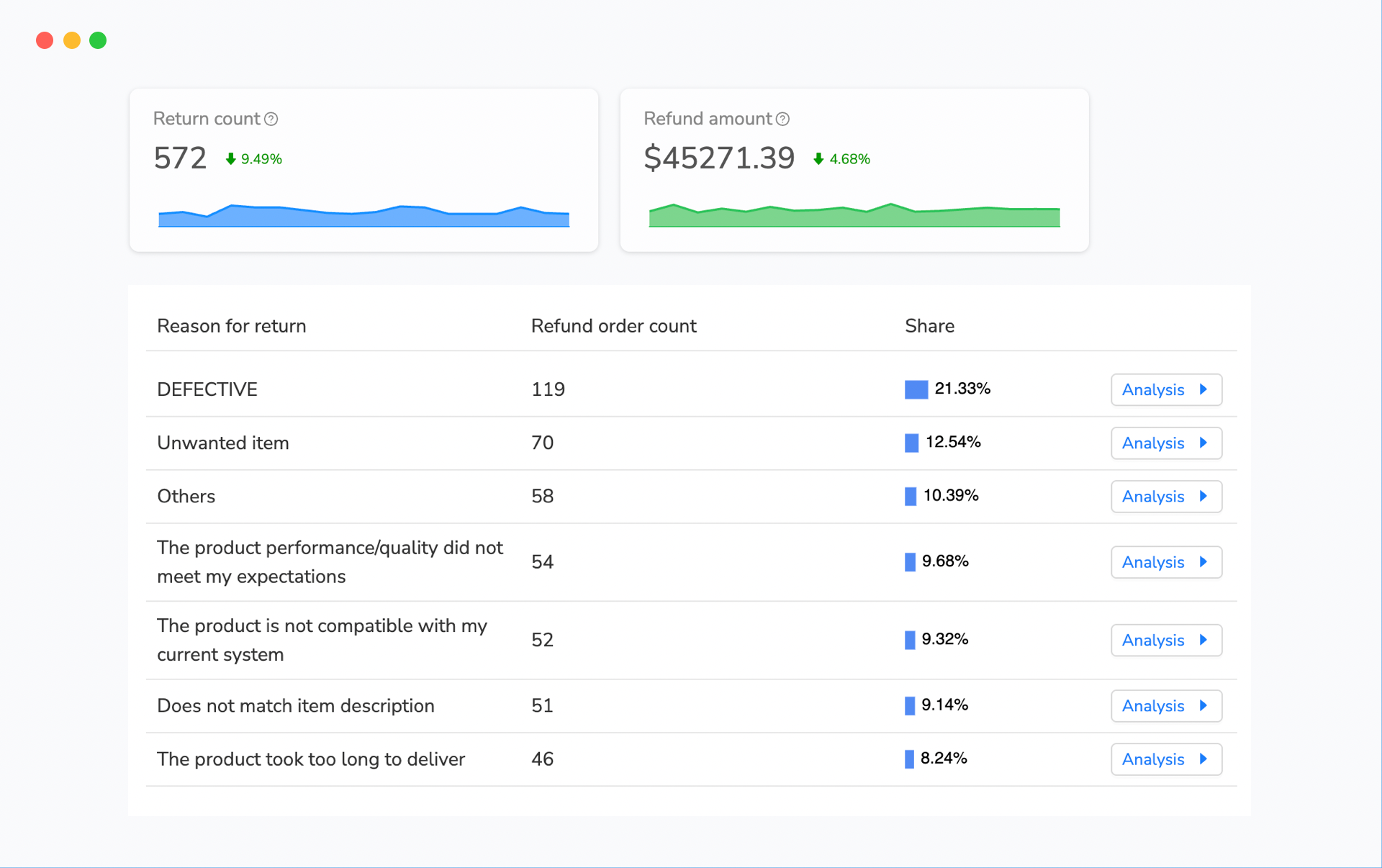
Monitoring return rates by product reveals quality issues before they destroy your metrics. A jacket with 18% return rate for “wrong size” indicates listing images don’t match actual fit. A gadget with 22% returns for “doesn’t work” signals supplier defects. The challenge is catching these patterns early when you’re managing 500+ SKUs.
Return analytics systems solve this by aggregating return data across all your products and channels. Platforms like Maxmerce’s Analytics module track return rates by product, category, supplier, and timeframe. The system flags products exceeding your defined thresholds (say, 12% return rate) and segments returns by reason – showing you exactly which products have quality issues versus listing problems versus sizing inconsistencies.
Here’s the workflow: The system connects via API to Walmart Seller Center (plus Amazon, eBay if you’re multi-channel), pulls return data daily, categorizes returns by reason codes, calculates return rates for each SKU, identifies outliers using statistical analysis, and generates alerts when products cross thresholds. This turns a 3-hour weekly spreadsheet task into a 5-minute dashboard review.
WFS Returns Workflow: What Walmart Handles vs What You Manage
The Automated WFS Return Process
Walmart Fulfillment Services handles the heavy lifting for WFS items, but you’re still paying for it through return processing fees. Understanding the Walmart returns workflow helps you decide whether WFS makes sense for your product mix.
Here’s what happens when a customer initiates a WFS return. Customer requests return through Walmart.com, Walmart automatically approves if within return window and valid reason, Walmart generates return shipping label and emails customer, customer ships item to Walmart fulfillment center, Walmart receives and inspects within 2-3 business days, and Walmart processes refund to customer immediately upon receipt.
The inspection determines your next step. If the item is resellable (unopened, undamaged, all accessories included), Walmart returns it to your WFS inventory automatically. You’ll see the inventory increment in Seller Center within 24 hours. If the item is damaged or missing components, Walmart classifies it as “unfulfillable” and may issue a reimbursement claim if damage occurred in their facility.
WFS return fees hit your account monthly. Walmart charges $3.50-$7.50 per return depending on product size and category. Small standard items cost $3.50, large items cost $5.25-$7.50. These fees cover inspection, restocking, and customer refund processing. For a seller processing 40 returns monthly, that’s $140-$300 in WFS return fees alone.

Seller-Fulfilled Return Management (When You Control It)
Seller-fulfilled returns require manual workflows but give you complete control over approval, inspection, and restocking decisions. The tradeoff is time investment.
The seller-fulfilled return process starts when customers request returns through their Walmart account. You receive notification in Seller Center within minutes. You have 24 hours to approve or deny the request. If approved, you provide a return shipping label (you pay return shipping for defective/wrong items, customer pays for buyer’s remorse returns in many cases, though policies vary).
Customer ships the item to your designated return address. You track the return shipment through the carrier. You receive the item and inspect within 2 business days (Walmart expects this timeline). You process the refund through Seller Center immediately after inspection. The refund appears in customer’s account within 3-5 business days depending on their payment method.
The inspection step is critical. Check if the item matches what was sold (serial numbers, SKU codes), verify condition (unopened, undamaged, all accessories included), and document everything with photos if there’s any discrepancy. If the returned item doesn’t match the original order or is clearly damaged by customer misuse, you have grounds to deny the refund – but you need documentation to defend the decision if the customer escalates to Walmart.
Processing 40 returns monthly through seller-fulfilled workflow requires approximately 8-10 hours of labor. That breaks down to 1-2 hours receiving notification and approving/denying requests, 3-4 hours receiving and inspecting returned items, 2-3 hours processing refunds in Seller Center, and 2 hours handling exceptions (customer disputes, damaged items, missing components). For sellers paying $15/hour for customer service staff, that’s $120-$150 monthly labor cost – comparable to WFS fees but requiring active management.
Automating Walmart Returns Request Responses and Tracking
Manual Walmart returns management breaks down when you’re processing 50+ returns monthly across multiple platforms. You start missing Walmart’s 24-hour approval deadline, delayed refunds trigger customer complaints, and return-related messages get lost in your inbox chaos. Walmart returns automation eliminates these failure points.
The core challenge is return request volume combined with platform-specific rules. Walmart requires 24-hour approval response. Amazon varies by category. eBay depends on your individual return policy. When you’re getting 5-10 return requests daily across three platforms, manually checking each request against the correct policy consumes 45-60 minutes daily – time you could spend sourcing products or optimizing listings.
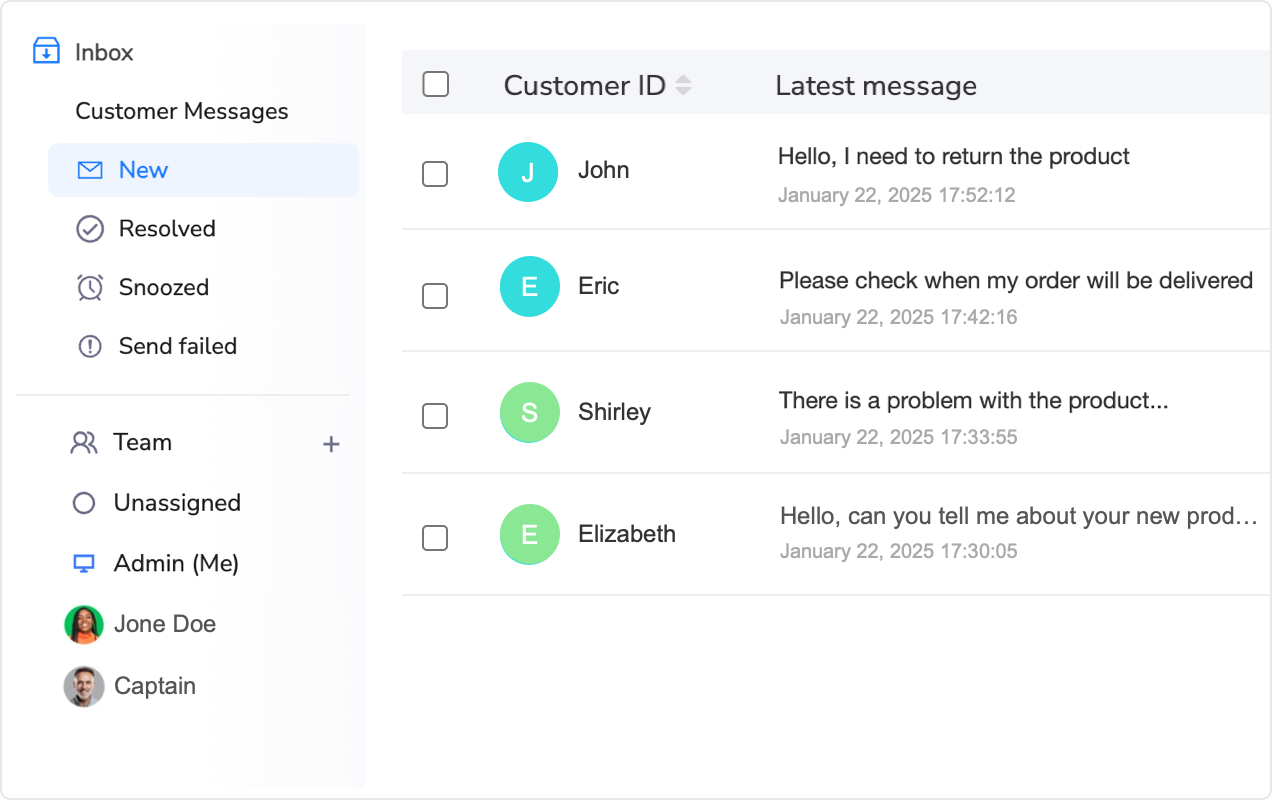
Customer service automation systems designed for multi-channel selling solve this by unifying return tracking. Think about the workflow most sellers struggle with: checking Walmart Seller Center for new return requests, logging into Amazon Seller Central separately, checking eBay return requests in Resolution Center, manually comparing each request against platform policies, and approving or denying in each platform’s interface. That’s five different systems and 15-20 clicks per return request.
Platforms like Maxmerce’s CRM module consolidate this workflow into a unified return management interface. Here’s how it works in practice: The system connects via API to Walmart Seller Center, Amazon Seller Central, and eBay, pulling return requests in real-time as customers submit them. All requests appear in a single inbox regardless of platform. The system automatically categorizes requests by platform, return reason, and urgency (flagging requests approaching approval deadlines).
The automation handles policy validation automatically. When a Walmart return request arrives, the system checks the delivery date against Walmart’s 30-day window, verifies the product category (is it returnable or in the non-returnable list?), and confirms return reason validity (defective item qualifies, buyer’s remorse depends on category). For requests that clearly qualify under platform policies, you can enable auto-approval – the system approves the return, generates the return label, and notifies the customer without manual intervention.
The time savings compound fast. Processing 50 monthly returns manually requires 12-15 hours (15-18 minutes per return including checking policy, approving in platform interface, generating labels, and documenting). Automated systems reduce this to 2-3 hours monthly for exception handling – requests that fall outside standard policies and require your judgment. That eliminates 10-12 hours monthly, which at $20/hour labor cost saves $200-$240 monthly.
Template-Based Return Communication
Return request responses need to be fast but personalized. Generic “your return is approved” emails feel robotic and miss opportunities to address customer concerns that might prevent future returns. Template systems with dynamic variables solve this balance.
The key is creating platform-specific templates that incorporate order details automatically. A Walmart return approval should include the customer’s name, order number, product name, return address, and expected refund timeline. You don’t want to manually type this for every return – but you also don’t want customers receiving impersonal automated responses.
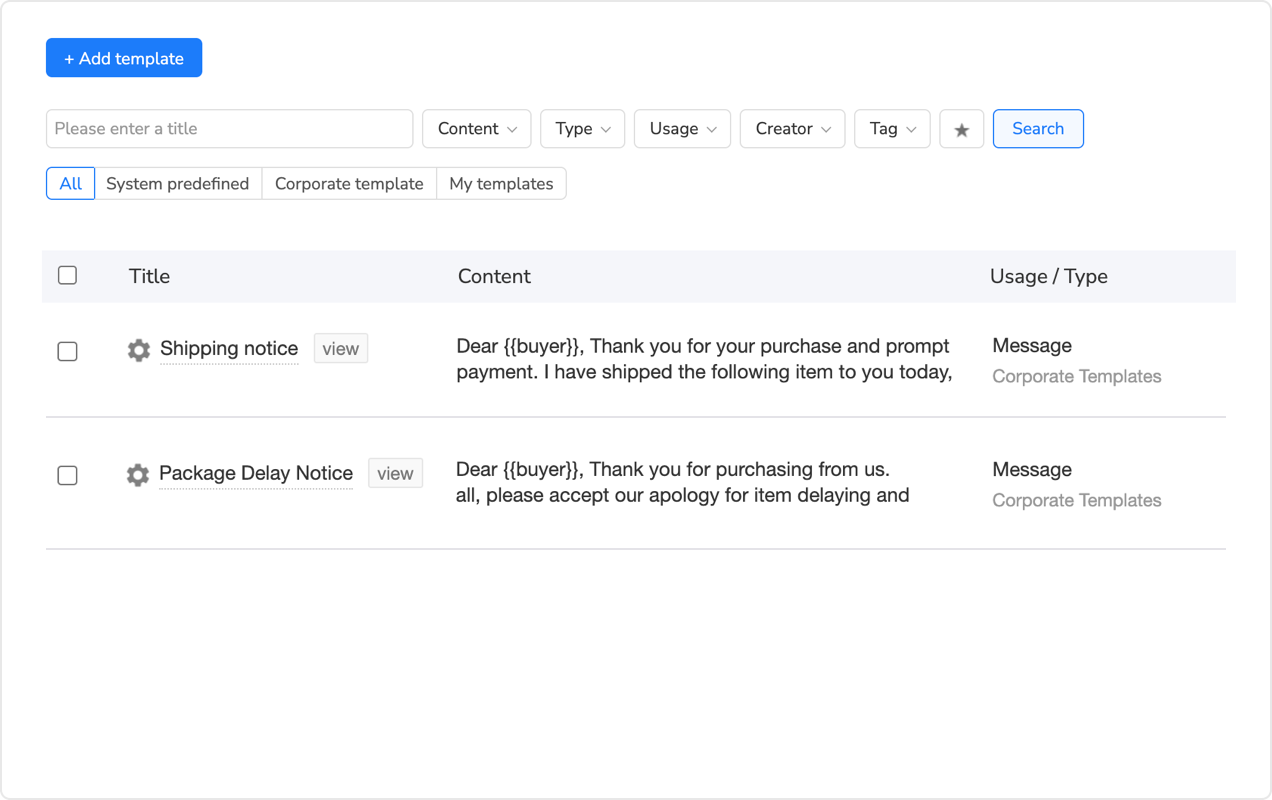
Template systems designed for e-commerce return management include category-specific templates for common scenarios. “Return approved – defective item” templates emphasize quality concerns and offer replacement options. “Return approved – wrong size” templates for apparel include sizing chart links to help customers order correctly next time. “Return denied – outside window” templates politely explain the 30-day policy while offering partial credit as customer service gesture.
Dynamic variables pull data from the order automatically. Variables like {customer_name}, {order_number}, {product_name}, {return_deadline}, {refund_amount}, and {return_shipping_address} populate from your order management system. You write the template once with these variables, and the system generates personalized emails for each return request. This reduces response time from 5-8 minutes per return to 30 seconds – just select the appropriate template and click send.
Identifying and Preventing Fraudulent or Serial Returners
Not all Walmart returns are legitimate. Serial returners abuse Walmart’s 30-day policy, ordering items for one-time use then returning them. Fraudulent returners claim “item not received” on delivered packages or swap authentic items with counterfeits before initiating Walmart returns. These returners cost you double – you lose the sale and incur return processing costs.
The challenge is distinguishing between legitimate customers with bad luck and systematic abusers. A customer who returns 2 out of 3 purchases might have genuine sizing issues or received defective items. A customer who returns 8 out of 10 purchases over three months with reason “no longer needed” is likely abusing the system for free short-term product use.
Red Flags That Indicate Return Fraud
Customer-level return patterns reveal fraud. Track these specific behaviors:
- Return rate >40%: Anyone returning more than 40% of purchases over 90 days warrants investigation – legitimate customers rarely exceed 20% return rates even in high-return categories like apparel
- Same return reason repeatedly: Customers claiming “not as described” for 5+ different products suggest they’re using items temporarily then returning under false pretenses
- Returns at maximum window: Returns consistently initiated on day 28-30 of the 30-day window indicate calculated exploitation rather than genuine dissatisfaction discovered shortly after delivery
- High-value items only: Returners who only buy and return expensive products (>$100) while keeping cheap items are likely using expensive products for events then returning
- Serial numbers don’t match: When returned electronics have different serial numbers than originally shipped, customers are swapping authentic items with broken ones

Tracking these patterns manually is nearly impossible when you’re processing 50+ orders weekly. You’d need to maintain a customer database with purchase history, return history by customer, return reasons, return timing, and order values – then analyze monthly for patterns. Most sellers don’t have time for this level of forensic analysis.
Customer analytics systems automate fraud detection by maintaining customer-level databases across all your platforms. Maxmerce’s Analytics module tracks every customer’s purchase and return history, automatically calculating return rates by customer, flagging customers who exceed defined thresholds (you set the limit, typically 40-50%), identifying suspicious patterns like consistent maximum-window returns, and generating alerts when fraud indicators cluster around specific customers.
The system works by connecting to your Walmart, Amazon, and eBay seller accounts, pulling order and return data daily, matching orders to customers across platforms (using email addresses and shipping addresses), calculating return metrics for each customer over rolling 90-day windows, and comparing customer behavior against established fraud patterns using statistical models.
When the system flags a suspicious customer, you have several options. For Walmart Seller Center, you can’t block specific customers from purchasing, but you can closely scrutinize their future return requests, require additional documentation (photos, detailed explanations) before approving returns from flagged customers, and report egregious fraud to Walmart Seller Support with evidence (purchase history, return patterns, serial number mismatches).
Multi-Channel Return Coordination: Preventing Cross-Platform Defect Restocking
Here’s a nightmare scenario that’s more common than sellers admit: A customer returns a Bluetooth speaker on Walmart claiming “doesn’t pair with devices.” You inspect it, can’t replicate the issue in 60 seconds of testing, mark it as resellable, and restock into your inventory. Two weeks later, an Amazon customer buys the same unit and returns it for the same reason. Now you’ve paid return shipping twice, processed two refunds, and the defective unit might cycle into your eBay inventory next.
This happens because most sellers track inventory by SKU, not by individual unit serial numbers. Your inventory system knows you have “3 units of SKU BT-SPEAKER-123 available” but doesn’t flag that Unit #2 was returned twice for connectivity issues. When that unit sells again, the return cycle repeats.
The Serial Number Tracking Challenge
Preventing this requires unit-level return tracking, especially for electronics, appliances, and serialized products. When you receive a return, you need to log the specific serial number, the return reason, the platform it was returned from, and the inspection results. Then you need to either remove that unit from circulation entirely or flag it for additional testing before restocking.
Manual serial number tracking breaks down fast. You’d need to photograph serial numbers at receiving, log each unit in a spreadsheet with columns for SKU, serial number, location, purchase platform, return history, and inspection notes, update the spreadsheet every time a unit sells or returns, and cross-reference serial numbers before restocking to check return history. That’s viable for 10-20 units monthly but impossible for 100+ serialized products.
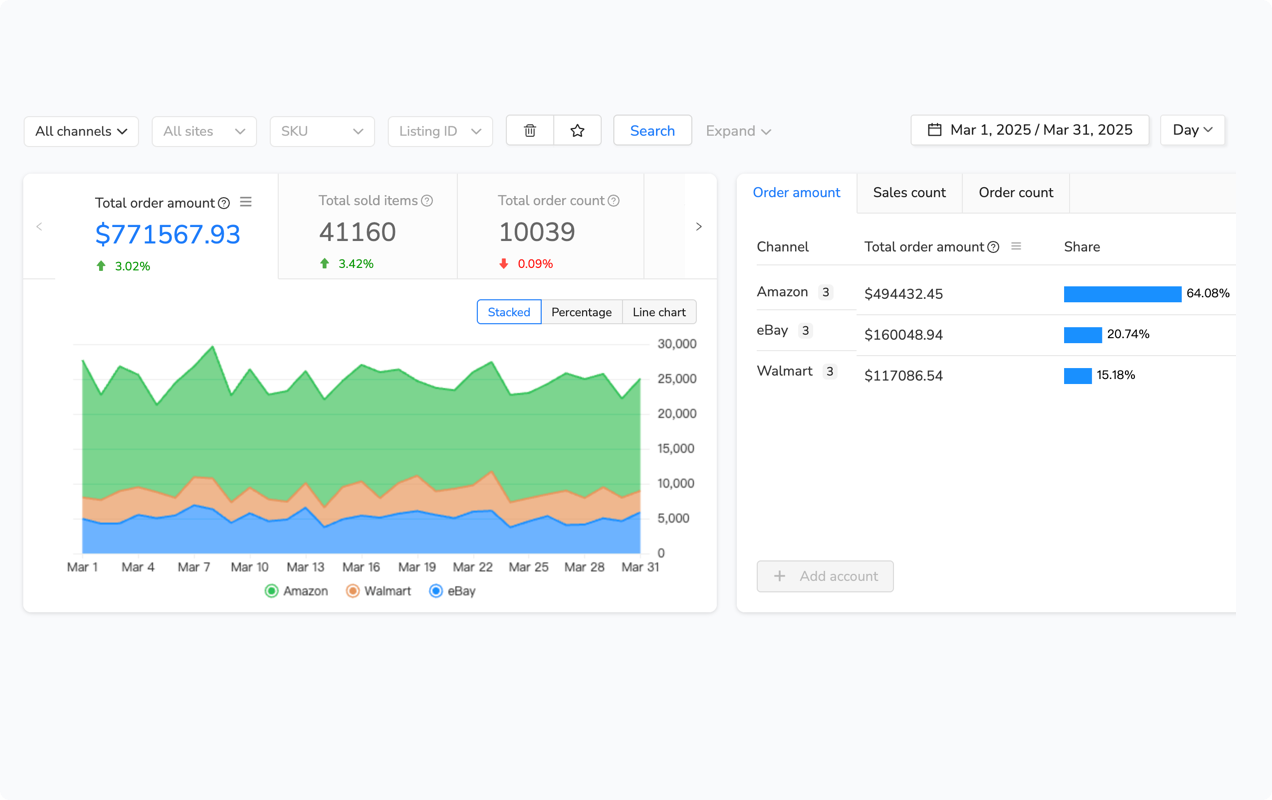
Multi-channel inventory systems solve this by maintaining unit-level tracking across platforms. When a return arrives, you scan the serial number or manually enter it. The system checks if that specific unit was previously returned (on any platform – Walmart, Amazon, eBay), displays the return history including previous return reasons and dates, and flags units with multiple returns as “requires additional inspection” or “do not restock.”
For non-serialized products, you use lot tracking instead. Group products by receiving date and supplier batch. When a customer returns a product, log it by lot number. If multiple returns come from the same lot (say, Lot #2024-11-15 has 8 returns out of 50 units sold), that entire lot likely has quality issues and shouldn’t be restocked without investigation.
Platform-Specific Return Policy Compliance
Multi-channel selling complicates returns because each platform has different requirements that you must follow to maintain good standing.
Walmart requires 30-day return window for most items, 2-business-day refund processing, accepts returns with or without original packaging in most categories, and charges you return shipping for defective/wrong items. Amazon varies by category – typically 30 days but some categories get 90 days, requires instant refunds for FBA (Amazon handles returns), allows you to charge 20% restocking fee for non-defective returns in some categories, and has strict returnless refund requirements for items under $10 in some cases. eBay follows your individual return policy – you set the return window (14, 30, or 60 days), you define who pays return shipping, and you choose whether to offer free returns.
| Return Policy Element | Walmart | Amazon | eBay |
|---|---|---|---|
| Standard Return Window | 30 days (15 for electronics) | 30 days (varies by category) | Seller-defined (14-60 days) |
| Refund Processing Timeline | 2 business days target | Instant (FBA) / 2 days (FBM) | Within 6 hours of receiving item |
| Return Shipping Cost (Defective) | Seller pays | Amazon pays (FBA) / Seller (FBM) | Seller pays |
| Return Shipping (Buyer’s Remorse) | Often seller pays | Buyer pays (most categories) | Seller defines policy |
| Restocking Fee Allowed | No | Up to 20% (some categories) | Up to 20% (if disclosed) |
| Approval Response Deadline | 24 hours | Immediate (FBA) / 48 hours (FBM) | 3 business days |
Remembering which policy applies to which platform creates constant mental overhead. A return request arrives – you need to check which platform it’s from, recall that platform’s return window, verify approval deadline, determine who pays return shipping based on return reason, and process the refund according to platform timelines. Multiply this by 50+ monthly returns across three platforms and you’re spending 2-3 hours weekly just on policy compliance verification.
Unified multi-channel return management systems eliminate this overhead by encoding platform policies into automated workflows. Platforms like Maxmerce consolidate return requests from all channels into a single interface, automatically apply platform-specific policies based on request source (Walmart = 24-hour approval, eBay = 3 business days), calculate refund amounts based on platform restocking fee rules, generate return labels with correct shipping payment (seller-paid for defective, customer-paid where allowed), and enforce platform-specific refund timelines with alerts as deadlines approach.
Here’s the workflow in practice: Return request arrives from Walmart for a $45 speaker. The system identifies it’s Walmart (30-day window, 24-hour approval deadline, 2-day refund target), checks the delivery date (26 days ago – still within window), verifies return reason (“doesn’t work” = defective = seller pays return shipping), auto-approves the return (since it meets all policy criteria), generates prepaid return label charged to your account, and schedules a refund processing reminder for 2 business days after the tracking shows “delivered to seller.”
The time savings compound when you’re processing returns from multiple platforms. Manual processing requires 12-15 minutes per return (checking platform, verifying policy, generating labels, processing refunds in platform interface). Automated systems reduce this to 2-3 minutes for standard returns (just reviewing the auto-approval) and 8-10 minutes for exceptions requiring manual judgment. For 50 monthly returns, that’s a reduction from 10-12.5 hours to 3-5 hours – eliminating 6-8 hours monthly.
When to Accept vs Deny Walmart Returns Requests in Seller Center
The Walmart returns denial decision carries significant performance risk. Deny a valid return and you damage your ODR. But accepting fraudulent or policy-violating Walmart returns costs you money. The key is knowing exactly where Walmart’s lines are.
Valid Reasons to Deny Returns
Walmart allows denial in specific scenarios where the return violates policy or timeline. Document everything when denying because customers can escalate to Walmart support.
Return window expired: Customer requests return on day 35 when policy is 30 days – clear denial with documentation of delivery date. Walmart’s system flags this automatically, but customers sometimes dispute delivery dates if they refused delivery or package sat at carrier facility.
Non-returnable category: Customer tries to return hazmat items, custom-made products, opened intimate apparel, software with broken seals, or perishables – these violate Walmart’s non-returnable item list. Cite the specific policy when denying.
Item condition doesn’t match claim: Customer claims “never opened” but returns item with clear usage signs, missing accessories, or activated product keys. Require photos from customer before denying, and document with your own photos when item arrives.
Serial number mismatch: Customer returns electronics with different serial number than originally shipped – clear evidence of fraud. Keep records of serial numbers for high-value items. This is one of the few scenarios where Walmart supports immediate denial.
Return reason contradicts evidence: Customer claims “item never arrived” but tracking shows delivered and signed for. Customer claims “defective” but diagnostic data from smart device shows normal operation. These require evidence gathering before denial.
The 5% Denial Rate Threshold
Walmart doesn’t publish official denial rate limits, but seller data shows accounts with >5% return denial rate face increased scrutiny. Denial rate is calculated as (denied returns / total return requests) over rolling 90 days. For sellers processing 50 returns quarterly, you can deny 2-3 before hitting the 5% threshold. Exceed it and Walmart may flag your account for manual review.
The challenge is that legitimate denials count the same as questionable ones in Walmart’s automated systems. If you’re selling hazmat products and getting frequent return requests that violate non-returnable policy, your denial rate might be 12-15% even though every denial is policy-compliant. In these cases, proactive communication with Walmart Seller Support helps – document your denial reasons and request review before automated flags trigger account restrictions.
Most successful multi-channel sellers maintain <3% denial rate by accepting borderline returns as customer service cost and only denying clear-cut policy violations. One seller told us they accept returns even 2-3 days outside the 30-day window if customer has reasonable explanation (package sat at wrong address, customer was traveling) – the goodwill prevents negative reviews and keeps denial rate safely low.
Reducing Walmart Returns Rates Through Listing Optimization
The best Walmart returns management strategy is preventing returns in the first place. Most Walmart returns stem from listing problems – inaccurate descriptions, misleading photos, wrong specifications, or missing details that would have informed the purchase decision.
Common Listing Issues That Drive Returns
Apparel sizing inconsistencies cause 40-60% of clothing returns. Your size chart doesn’t match actual garment measurements, product photos make items look larger than reality, or you’re listing Chinese sizes without converting to US equivalents. Solution: Measure every SKU and create detailed size charts with chest, waist, length measurements. Include a “fits small/true/large” note based on return feedback patterns.
Missing compatibility information drives tech returns. Customers buy a phone case that doesn’t fit their specific phone model variation, a charger that isn’t compatible with their device generation, or software that requires system specs they don’t have. Solution: List all compatible models explicitly in bullet points. Use negative compatibility too – “Not compatible with iPhone 14 Pro Max” prevents wrong purchases.
Photo-reality mismatch creates 25-30% of “not as described” returns. Product photos show professional lighting making colors appear different, zoom angles that misrepresent size, or staged settings that exaggerate features. Solution: Include plain white background photos alongside lifestyle images. Add a ruler or common object for scale reference in photos.

Using Return Data to Improve Listings
Return reasons tell you exactly what’s wrong with your listings. A product with 15% return rate for “wrong size” needs sizing information updated. A gadget with 12% returns for “doesn’t work as expected” needs feature explanations expanded or limitations disclosed.
The workflow: Pull return data by SKU for the past 90 days, segment by return reason (size, defective, not as described, changed mind), identify products with >10% returns for specific reasons, analyze what listing changes would address those reasons, and update listings with additional details, measurements, compatibility info, or limitation disclosures. Repeat monthly as new return patterns emerge.
Return analytics platforms automate this correlation. Maxmerce’s Analytics module tracks return reasons by product, identifies the specific listing attributes associated with high returns (color variants, size options, feature sets), and generates recommendations like “Products listing ‘waterproof’ have 18% higher return rate – consider changing to ‘water-resistant’ for accuracy” or “Size Small has 25% return rate vs 8% for Medium/Large – update size chart.”
This turns return reduction from guesswork into data-driven optimization. Instead of wondering why a jacket has high return rate, you see that 70% of returns are for “size too small” specifically from customers ordering size Small – indicating your Small sizing runs smaller than industry standard and needs a “runs small, consider sizing up” warning in the listing.
Managing returns across Walmart, Amazon, and eBay shouldn’t require three different systems.
Try Maxmerce’s unified return tracking and customer service automation platform. Consolidate return requests from all channels, automate policy compliance, and identify problematic products before they tank your metrics.
Start your 14-day free trial—no credit card required
Frequently Asked Questions
Q: What’s Walmart’s standard return window for marketplace orders?
A: Walmart allows 30 days for most marketplace returns, calculated from delivery date. Electronics get 15 days. The return window starts when the customer receives the item, not when they place the order. For WFS items, Walmart handles the return process. For seller-fulfilled items, you manage returns directly through Seller Center.
Q: How do returns affect my Walmart Order Defect Rate?
A: Returns themselves don’t directly impact ODR. What damages ODR is poor handling – denying valid returns (adds to ODR), delayed refund processing (customer complaints count), or return-related negative reviews. Walmart tracks refund processing speed. Refunds processed within 2 business days maintain good standing. Delays beyond 5 business days trigger performance alerts.
Q: What happens when customers return WFS items?
A: Walmart receives the return at their fulfillment center, inspects the item condition within 2-3 business days, and determines if it’s resellable. If sellable, it goes back into your WFS inventory automatically. If damaged, Walmart may issue a reimbursement claim. You receive notification through Seller Center. The refund is processed to customer automatically. You’re charged a return processing fee (typically $3.50-$7.50 depending on category).
Q: How can I identify serial returners abusing Walmart’s return policy?
A: Track customer-level return rates (anyone returning >40% of purchases warrants investigation), monitor return reasons for patterns (claiming “not as described” repeatedly for same product types), and watch for short timeframes (returns always on day 29 of 30-day window). Return analysis systems help flag these patterns automatically. For confirmed abuse, you can report through Walmart Seller Center with documentation.
Q: Should I accept or deny return requests in Walmart Seller Center?
A: Accept valid returns within Walmart’s return window to protect your metrics. Deny only when return window expired (customer requests return on day 35 when policy is 30 days), item is non-returnable category (hazmat, custom-made items), or return reason doesn’t match evidence (customer claims “defective” but tracking shows “undelivered”). Denial rate >5% triggers Walmart review. Document all denials with clear reasoning in Seller Center.
Q: What’s the difference between returns handling for WFS vs seller-fulfilled items?
A: WFS: Walmart receives returns, inspects items, processes refunds automatically, charges you return processing fees, and restocks sellable items. Seller-Fulfilled: You provide return shipping label, customer ships to your address, you inspect and process refund, you handle restocking, and you control return approval/denial. WFS simplifies workflow but costs more per return. Self-fulfilled gives you control but requires manual processing.
Q: How do I handle returns when selling the same product on Walmart, Amazon, and eBay?
A: You need unified return tracking across platforms because each has different policies (Walmart: 30 days, Amazon: varies by category, eBay: seller-defined). Multi-channel management systems consolidate return requests from all platforms into one inbox, automatically apply platform-specific return rules, adjust inventory across channels when returns are restocked, and flag products with high return rates regardless of platform. This prevents selling the same defective unit across multiple channels.
Q: What return rate is considered acceptable on Walmart Marketplace?
A: Walmart doesn’t publish official return rate thresholds, but data shows healthy accounts maintain <5% overall return rate, with <10% being acceptable for most categories. Electronics and apparel naturally run higher (8-12%). Return rates >15% trigger internal reviews. More important than the rate is the trend – sudden spikes indicate listing problems or quality issues requiring immediate investigation.
Related Walmart Marketplace Articles