Amazon PPC ACOS Optimization: Reduce Costs & Boost ROI 2025

💰 High ACOS Killing Your Profits? Here’s Your Action Plan
Amazon PPC ACOS optimization can reduce advertising costs by 30-50% while maintaining or increasing sales. Furthermore, strategic bid management and negative keyword optimization eliminate wasteful spending. Additionally, automated tools provide continuous optimization that manual management cannot match.
5 immediate ACOS reduction tactics:
- Implement aggressive negative keyword harvesting – Block irrelevant search terms daily
- Optimize bid strategies by placement – Reduce top-of-search bids for cost efficiency
- Use dayparting for budget control – Run ads only during high-conversion hours
- Target long-tail keywords – Lower competition means lower cost-per-click
- Monitor Search Term Reports religiously – Daily optimization prevents cost creep
Amazon PPC costs have increased 25% over the past two years, crushing seller profitability across all categories. Moreover, average ACOS rates now exceed 30% in competitive niches, making sustainable growth challenging for most sellers. Furthermore, rising click costs and increased competition demand sophisticated optimization strategies that go beyond basic campaign management.
However, strategic Amazon PPC ACOS optimization enables sellers to reduce advertising costs by 30-50% while maintaining sales velocity. Additionally, advanced automation tools provide continuous optimization that delivers consistent ROAS improvements. Therefore, sellers implementing comprehensive optimization strategies achieve profitable advertising even in highly competitive markets.
Key Takeaways:
- 30-50% ACOS reduction is achievable – Through systematic optimization and negative keyword management
- Automation outperforms manual optimization – AI-driven tools adjust bids 24/7 for maximum efficiency
- Cross-platform advertising saves 20-40% – Unified management reduces operational overhead
- TACOS provides better profitability insight – Total advertising cost of sales reveals true ROI
- Long-tail keywords offer 60%+ cost savings – Less competitive terms drive qualified traffic cheaper
Understanding Amazon PPC Cost Challenges in 2025
Amazon advertising costs continue escalating due to increased seller competition and platform algorithm changes. Moreover, click costs have risen 15-25% annually across most product categories. Additionally, new advertising formats and placement options create complexity that many sellers struggle to optimize effectively.
Current Amazon PPC Cost Drivers
Multiple factors contribute to rising Amazon PPC costs that impact seller profitability. Furthermore, understanding these drivers enables more effective optimization strategies. Additionally, successful sellers adapt their approaches to counter these cost pressures systematically.
| Cost Driver | Impact Level | 2024-2025 Change | Optimization Strategy |
|---|---|---|---|
| Increased Competition | Very High | +35% | Long-tail keyword focus |
| Rising Click Costs | High | +25% | Bid automation & dayparting |
| Algorithm Changes | Medium | +15% | Continuous monitoring |
| New Ad Formats | Medium | +20% | Strategic format selection |
ACOS vs TACOS: Choosing the Right Optimization Metric
ACOS (Advertising Cost of Sales) measures advertising spend as a percentage of advertising revenue. However, TACOS (Total Advertising Cost of Sales) provides more comprehensive profitability insight by comparing advertising spend to total revenue including organic sales. Moreover, TACOS reveals how advertising drives overall business growth rather than just paid revenue.
When to Focus on ACOS Optimization:
- New product launches – Direct advertising ROI matters most initially
- Seasonal campaigns – Time-limited promotional periods require immediate returns
- Budget-constrained periods – Limited advertising spend demands efficiency
- High-margin products – Products with 50%+ margins can sustain higher ACOS
When to Focus on TACOS Optimization:
- Established products – Advertising drives organic ranking improvements
- Brand building campaigns – Long-term market position development
- Market share acquisition – Strategic investment in competitive positioning
- Product ecosystem expansion – Cross-selling and customer lifetime value focus
8 Proven Amazon PPC ACOS Optimization Strategies
These optimization strategies address the biggest cost drivers while maintaining or improving advertising effectiveness. Moreover, each strategy builds upon others to create comprehensive cost management. Additionally, systematic implementation typically reduces ACOS by 30-50% within 60-90 days.
Strategy 1: Implement Advanced Negative Keyword Management
Negative keyword optimization represents the fastest way to reduce wasted advertising spend. Moreover, systematic negative keyword harvesting prevents irrelevant clicks that consume budget without driving sales. Furthermore, automated negative keyword discovery tools identify cost-saving opportunities that manual analysis misses.
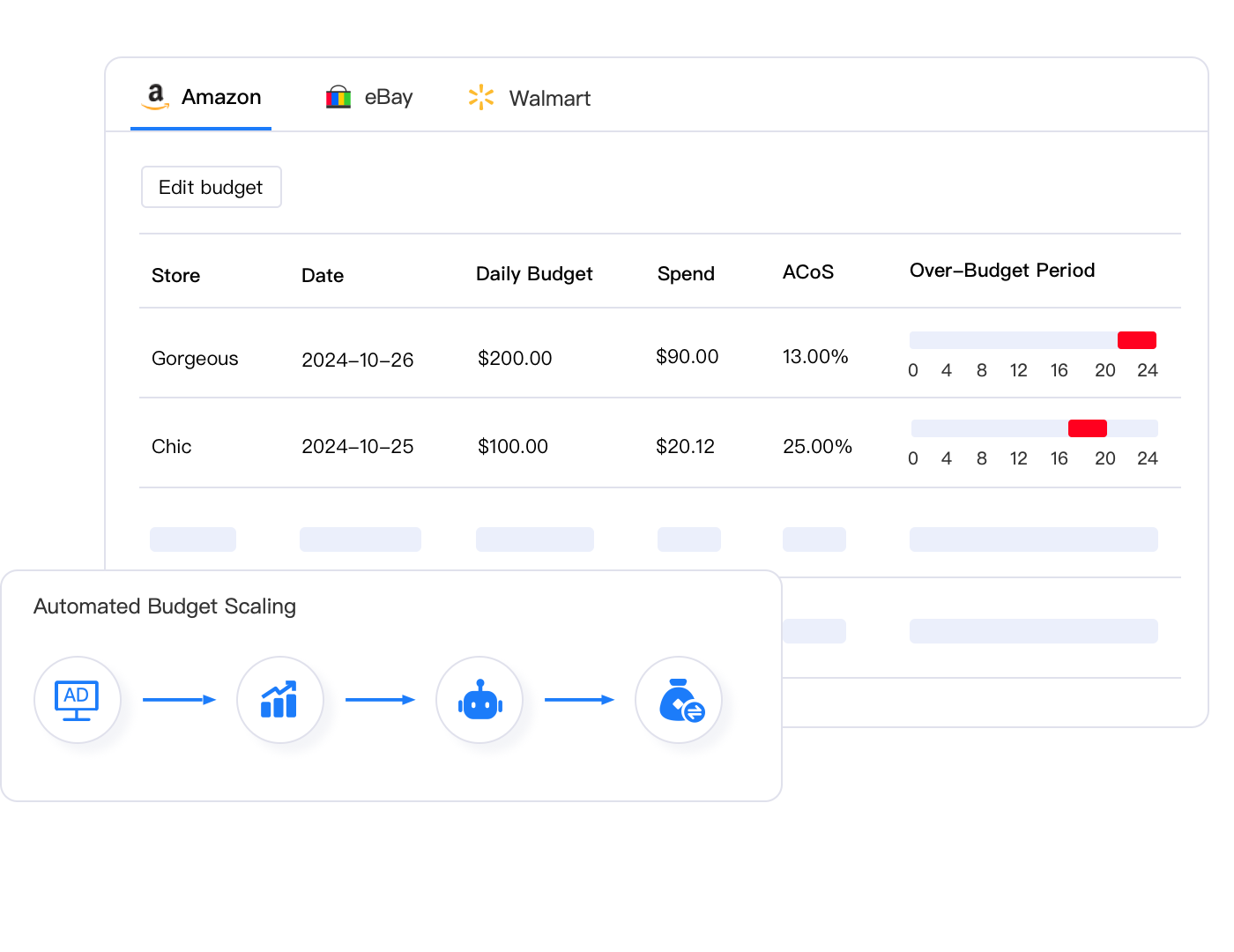
Automated Negative Keyword Harvesting Process:
- Daily search term analysis – Review all search terms that generated clicks but no conversions
- Performance threshold setting – Automatically add terms with >5 clicks and 0 conversions as negatives
- Irrelevance detection – Flag search terms that don’t match product intent or category
- Competitor brand blocking – Prevent spending on competitor brand searches
- Cross-campaign synchronization – Apply negative keywords across all relevant campaigns simultaneously
Strategy 2: Optimize Bid Strategies by Placement and Performance
Strategic bid management reduces costs while maintaining visibility in high-converting placements. Moreover, placement-specific bidding enables budget allocation to the most profitable positions. Additionally, advanced bidding automation adjusts bids based on real-time performance data and competitive landscape changes.
Placement-Specific Bid Optimization:
- Top of search placement – Reduce bids by 20-40% due to higher cost and lower conversion rates
- Product pages placement – Maintain higher bids for targeted, high-intent traffic
- Rest of search placement – Optimize for volume at reduced cost per click
- Sponsored Brand placements – Focus on brand awareness and customer acquisition cost
Strategy 3: Deploy Dynamic Dayparting for Budget Control
Dayparting optimization concentrates advertising spend during high-conversion time periods. Moreover, automated dayparting adjusts bids and budgets based on hourly performance data. Furthermore, time-based optimization can reduce overall advertising costs by 15-25% while maintaining sales volume.
Strategy 4: Focus on Long-Tail Keyword Opportunities
Long-tail keywords provide significant cost advantages due to lower competition and higher purchase intent. Moreover, three-word and four-word phrases typically cost 40-60% less than broad keywords while delivering better conversion rates. Additionally, long-tail optimization builds sustainable competitive advantages through niche market positioning.
Strategy 5: Implement Cross-Campaign Budget Optimization
Budget optimization across multiple campaigns prevents overspending in low-performing areas while maximizing investment in successful campaigns. Moreover, automated budget redistribution responds to performance changes faster than manual management. Furthermore, cross-campaign optimization ensures budget allocation aligns with actual results rather than initial estimates.
Strategy 6: Utilize Advanced Match Type Strategies
Strategic match type selection balances discovery opportunities with cost control. Moreover, combining exact match for proven keywords with phrase match for expansion enables controlled growth. Additionally, broad match modifier usage requires careful negative keyword management to prevent irrelevant spending.
Strategy 7: Optimize Product Targeting and Category Strategies
Product targeting campaigns enable precise competitor targeting while category campaigns capture broader market share. Moreover, automated ASIN harvesting identifies high-performing target products for expanded reach. Furthermore, category bidding strategies can reduce costs while maintaining market visibility.
Strategy 8: Deploy AI-Powered Bid Automation
AI-driven bid management provides 24/7 optimization that responds to competitive changes and performance fluctuations instantly. Moreover, machine learning algorithms identify patterns and opportunities that human analysis cannot detect. Additionally, automated systems eliminate emotional decision-making that often leads to suboptimal bid adjustments.
Cross-Platform Advertising Management for Maximum Efficiency
Managing advertising across Amazon, eBay, and Walmart simultaneously creates operational efficiencies and strategic advantages. Moreover, unified advertising management reduces overhead costs while providing comprehensive market coverage. Additionally, cross-platform data insights enable better optimization decisions and resource allocation.
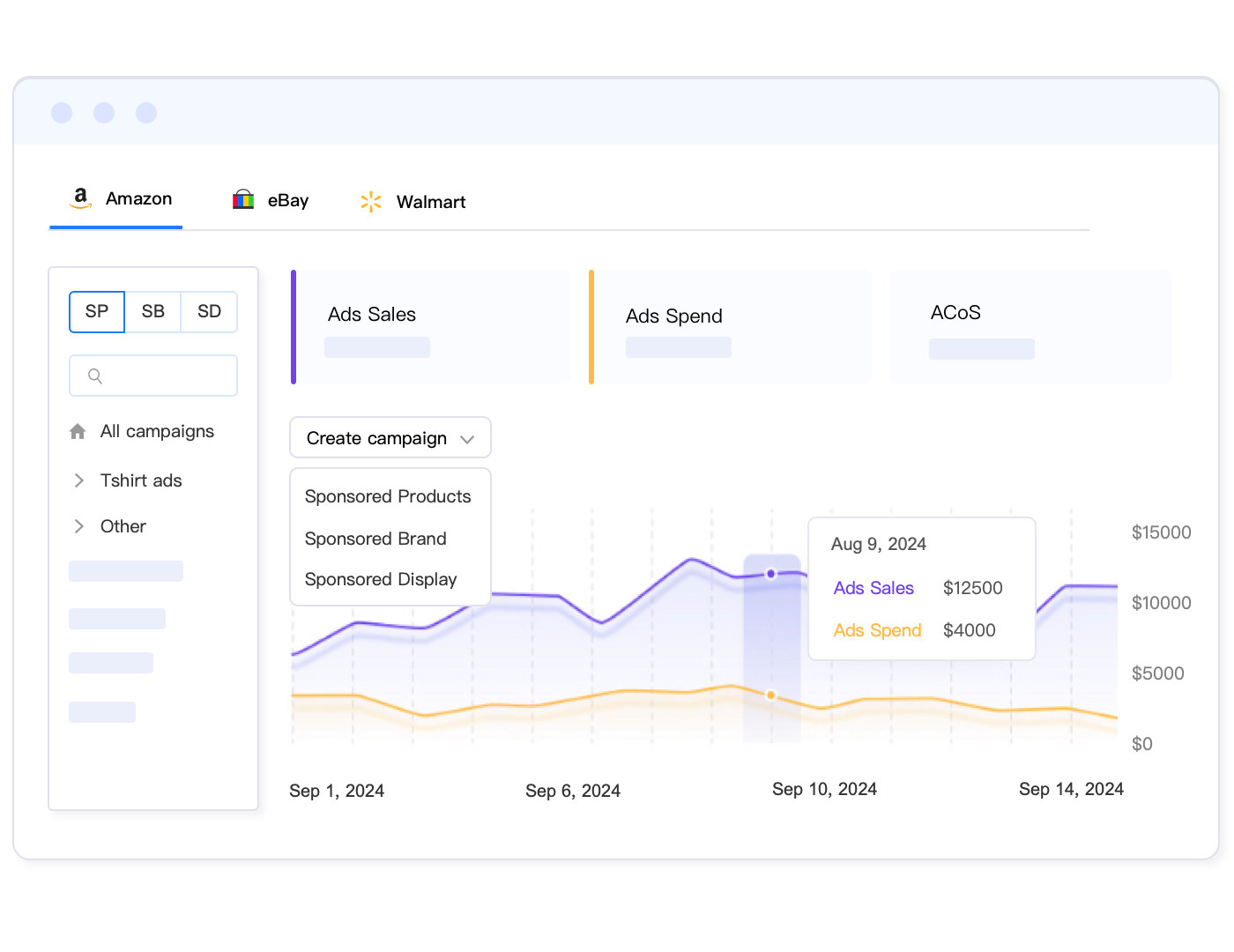
Benefits of Unified Advertising Management
Cross-platform advertising management eliminates redundant processes while providing comprehensive market insights. Furthermore, unified reporting enables better budget allocation decisions across different marketplaces. Additionally, shared keyword research and creative assets reduce operational overhead significantly.
- Operational cost reduction – 30-40% reduction in management overhead
- Improved data insights – Cross-platform performance comparisons reveal optimization opportunities
- Budget optimization – Allocate spend to highest-performing platforms dynamically
- Competitive intelligence – Monitor competitor strategies across multiple marketplaces
- Streamlined reporting – Consolidated performance metrics for strategic decision-making
Platform-Specific Optimization Considerations
Amazon PPC Optimization Focus Areas:
- Sponsored Products automation – High-volume keyword management and bid optimization
- Sponsored Brands strategy – Brand awareness and customer acquisition focus
- Sponsored Display targeting – Retargeting and competitor audience capture
- DSP integration – Advanced audience targeting for premium brands
eBay Promoted Listings Strategy:
- Category-based optimization – Different strategies for auction vs fixed-price listings
- Seasonal adjustment – Bid modifications for holiday and peak selling periods
- Competitive positioning – Strategic bidding for category leadership
Automation vs Manual PPC Management: ROI Analysis
Advertising automation consistently outperforms manual management through continuous optimization and data-driven decision making. Moreover, automated systems respond to market changes instantly while manual processes create delayed reactions. Additionally, automation scales without proportional cost increases, enabling efficient growth.
| Management Approach | Monthly Cost | ACOS Performance | Time Investment | Scalability |
|---|---|---|---|---|
| Manual Management | $2,000-5,000 | 25-35% | 20-30 hours/week | Limited |
| Basic Automation | $300-800 | 18-25% | 5-10 hours/week | Good |
| Advanced AI Automation | $500-1,200 | 12-18% | 2-5 hours/week | Excellent |
Implementation Roadmap: 30-60-90 Day Optimization Plan
Systematic Amazon PPC optimization implementation ensures maximum cost reduction without disrupting profitable campaigns. Moreover, phased deployment allows testing and refinement at each stage. Additionally, early wins build confidence while more sophisticated optimization strategies deploy.
Days 1-30: Foundation and Quick Wins
- Implement aggressive negative keyword harvesting – Review and add 100+ negative keywords based on search term reports
- Optimize bid adjustments by placement – Reduce top-of-search bids by 30-50% for cost efficiency
- Deploy basic dayparting – Concentrate budget during highest-converting hours
- Consolidate duplicate campaigns – Eliminate keyword overlap and budget competition
- Set up comprehensive performance tracking – Establish baseline metrics for optimization measurement
Days 31-60: Advanced Optimization
- Deploy automated bidding strategies – Implement AI-driven bid management for core campaigns
- Expand long-tail keyword targeting – Research and target 3-4 word phrases with lower competition
- Optimize product targeting campaigns – Refine ASIN targeting based on performance data
- Implement cross-campaign budget optimization – Automate budget allocation based on performance
- Integrate cross-platform management – Unify Amazon with eBay and Walmart advertising
Days 61-90: Scale and Refinement
- Analyze optimization results – Measure ACOS reduction and ROI improvement
- Scale successful strategies – Expand working tactics across additional product lines
- Implement predictive optimization – Use machine learning for proactive bid adjustments
- Optimize for TACOS improvement – Focus on strategies that drive overall business growth
- Document processes and train team – Ensure sustainable optimization practices
Common Amazon PPC Optimization Mistakes to Avoid
These critical mistakes can undermine optimization efforts and waste advertising budget. Moreover, understanding common pitfalls helps ensure successful implementation and maximum cost savings. Additionally, proactive planning prevents expensive errors during optimization deployment.
- Pausing campaigns instead of optimizing – Reduces organic ranking and wastes previous advertising investment
- Focusing only on ACOS without considering TACOS – Misses long-term profitability and growth opportunities
- Over-aggressive negative keyword addition – Can block relevant traffic and reduce campaign reach
- Ignoring seasonal performance patterns – Optimization strategies must account for cyclical variations
- Insufficient testing periods – Changes need 2-4 weeks to show statistical significance
Amazon PPC ACOS Optimization FAQ
Frequently Asked Questions
What’s a good ACOS for Amazon PPC in 2025?
Good ACOS varies by product margin and business goals, but 15-25% is considered excellent for most categories. However, new products may sustain 30-40% ACOS during launch phases. Moreover, focus on TACOS for long-term profitability assessment rather than ACOS alone.
How quickly can I reduce my Amazon advertising costs?
Immediate improvements appear within 7-14 days through negative keyword optimization and bid adjustments. However, significant ACOS reduction typically requires 30-60 days of systematic optimization. Additionally, automation tools can accelerate results compared to manual management.
Should I use Amazon’s automated bidding or third-party tools?
Third-party automation tools generally outperform Amazon’s native options through more sophisticated algorithms and cross-campaign optimization. Moreover, professional tools provide better reporting and optimization features. Additionally, unified management across multiple platforms offers operational advantages.
How do I balance ACOS optimization with organic ranking?
Maintain advertising investment in high-performing campaigns while optimizing wasteful spending through negative keywords and bid adjustments. Furthermore, focus on TACOS metrics that account for advertising’s impact on organic sales. Additionally, gradual optimization prevents ranking drops from sudden advertising reductions.
What’s the ROI of investing in PPC automation tools?
PPC automation tools typically pay for themselves within 30-60 days through cost savings and improved efficiency. Moreover, automated optimization often achieves 20-40% better ACOS than manual management. Additionally, time savings enable focus on strategic business growth rather than daily campaign management.
Start Optimizing Your Amazon PPC Costs Today
Amazon PPC ACOS optimization requires systematic implementation of proven strategies combined with continuous monitoring and adjustment. Moreover, automation tools provide the consistency and speed needed for maximum cost reduction. Additionally, cross-platform advertising management creates operational efficiencies that compound cost savings.
Begin with negative keyword optimization and placement bid adjustments for immediate cost reduction. Furthermore, gradually implement automation and advanced strategies based on performance data and business needs. Meanwhile, monitor both ACOS and TACOS metrics to ensure optimization drives sustainable profitability growth.
Stop Overpaying for Amazon Advertising
Maxmerce’s cross-platform advertising management automates bid optimization, negative keyword harvesting, and budget allocation across Amazon, eBay, and Walmart.
Join thousands of sellers who’ve reduced their advertising costs 30-50% while maintaining sales growth through intelligent automation and strategic optimization.