Amazon FBA Storage Limits 2025: Smart Inventory Management Guide

Amazon FBA storage limits 2025 have become significantly more restrictive, with sellers experiencing up to 75% capacity cuts as Amazon reduces limits from 6 months to 5 months of expected sales volume. Smart inventory management tools like Maxmerce’s Inventory Sync and SKU Insights help sellers optimize stock levels, reduce storage fees, and maximize the limited space Amazon provides while maintaining profitable operations.
Key Takeaways:
- Capacity reduced by up to 75% – Amazon cut FBA storage limits from 6 to 5 months of sales volume in May 2025
- Storage fees start at 181 days – Aged inventory surcharges begin much earlier than the previous 365-day threshold (Amazon, 2025)
- IPI score of 400+ is critical – Maintain above 400 to avoid severe storage restrictions and capacity penalties (Amazon Seller Central, 2025)
- Monthly capacity management required – Limits are set monthly in cubic feet, replacing quarterly and weekly systems (Amazon, March 2025)
- Strategic inventory tools essential – Real-time tracking and analytics prevent stockouts while optimizing storage efficiency (Industry Analysis, 2025)
The Amazon FBA storage limits 2025 update represents the most significant inventory management challenge sellers have faced in years. With many sellers reporting capacity cuts to just 30% of their previous allocation, the need for sophisticated inventory management has never been more critical. This comprehensive guide explores the new restrictions, analyzes their impact on seller operations, and provides actionable strategies to maximize profits within these tighter constraints.
Understanding Amazon FBA Storage Limits 2025: What Changed
Amazon’s approach to FBA storage limits underwent a fundamental transformation in 2025, shifting from a seller-friendly 6-month capacity allocation to a much more restrictive 5-month system. This change affects every aspect of how sellers manage their Amazon FBA storage limits 2025 strategy, from initial inventory planning to long-term growth projections.
The Scale of Capacity Reductions
The Amazon FBA storage limits 2025 implementation caught many sellers off guard with its severity. Industry reports indicate that capacity cuts reached as high as 75% for some sellers, with the majority experiencing reductions to approximately 30% of their April 2025 storage allocation. These dramatic cuts forced immediate adjustments to inventory strategies and highlighted the critical importance of efficient space utilization.
From Time-Based to Cubic Feet Measurement
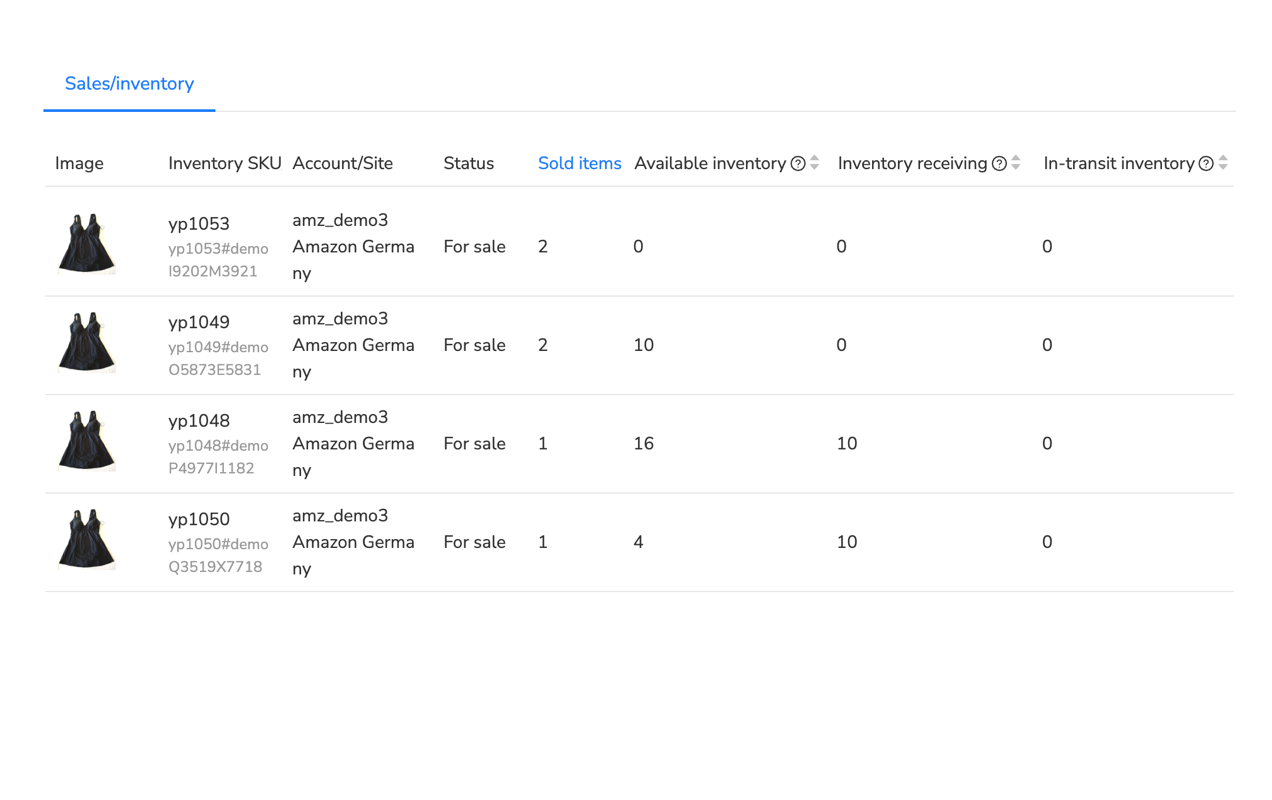
A crucial change in Amazon FBA storage limits 2025 is the measurement methodology. Amazon now sets capacity limits and measures inventory usage in cubic feet rather than the number of units, providing what they consider a more accurate estimate of the capacity needed in fulfillment centers and delivery vehicles. This shift requires sellers to think differently about product selection and inventory composition, favoring items with better cubic foot efficiency.
Monthly Capacity Management System
As of March 2025, Amazon replaced the complex system of weekly restock limits and quarterly storage limits with a single monthly capacity limit for each storage type. This consolidation combines both restock and storage metrics into one comprehensive limit, with capacity allocations for the upcoming month typically provided in the fourth week of each month through the Capacity Monitor in Seller Central.
The New FBA Storage Fee Structure for 2025
Understanding the financial implications of Amazon FBA storage limits 2025 requires a deep dive into the updated fee structure. Amazon has restructured storage fees to encourage faster inventory turnover and penalize long-term storage more aggressively than ever before.
Monthly Storage Fee Increases
Standard monthly storage fees for Amazon FBA storage limits 2025 now cost $0.78 per cubic foot during the January through September period, escalating to $2.40 per cubic foot during peak season from October through December. These fees represent a significant increase from previous years and underscore Amazon’s commitment to maximizing fulfillment center efficiency.
| Storage Period | Rate per Cubic Foot | Additional Fees |
|---|---|---|
| January – September | $0.78 | Standard monthly fee |
| October – December | $2.40 | Peak season surcharge |
| 181+ Days (Aged Inventory) | $1.50 – $6.90 | Escalating surcharges |
Aged Inventory Surcharge: The New Long-Term Storage Reality
Perhaps the most significant change in Amazon FBA storage limits 2025 fee structure is the replacement of traditional long-term storage fees with the Aged Inventory Surcharge. This new system begins charging additional fees at just 181 days instead of the previous 365-day threshold, with escalating charges that can reach $6.90 per unit for inventory stored over a year.
The aged inventory surcharge structure creates multiple pressure points designed to encourage rapid inventory turnover. Starting at $1.50 per cubic foot for inventory aged 181-270 days, the fees increase progressively, reaching their peak for items stored beyond 365 days. This aggressive fee structure makes efficient inventory management essential for maintaining profitability under Amazon FBA storage limits 2025.

Maximizing Your IPI Score Under Amazon FBA Storage Limits 2025
The Inventory Performance Index (IPI) score has become even more critical under Amazon FBA storage limits 2025, serving as the primary determinant of storage capacity allocation. Maintaining an IPI score above 400 is essential for avoiding severe storage restrictions and maximizing your allocated space within the new limits.
IPI Components and Optimization Strategies
Your IPI score under Amazon FBA storage limits 2025 is calculated based on four key components: excess inventory percentage, sell-through rate, stranded inventory percentage, and in-stock rate for popular products. Each component requires specific attention and optimization strategies to maintain the critical 400+ threshold.
The sell-through rate component measures how quickly you move inventory relative to your capacity allocation. Under Amazon FBA storage limits 2025, this metric has become even more important as sellers must demonstrate efficient use of limited space. Maxmerce’s Daily Product Performance feature tracks sell-through rates in real-time, providing the granular data needed to identify optimization opportunities and maintain strong IPI scores.
Strategies for IPI Score Improvement
Improving your IPI score under Amazon FBA storage limits 2025 requires a multi-faceted approach focusing on inventory velocity and efficiency. The most effective strategy involves identifying and removing slow-moving inventory before it impacts your score, typically targeting items with more than 90 days of stock on hand.
Stranded inventory management has become particularly crucial under Amazon FBA storage limits 2025. Even small amounts of stranded inventory can significantly impact your IPI score and reduce your capacity allocation. Regular monitoring and quick resolution of stranded inventory issues help maintain optimal scores and maximize available storage space.
Strategic Inventory Planning for Amazon FBA Storage Limits 2025
Success under Amazon FBA storage limits 2025 requires a fundamental shift from reactive inventory management to proactive strategic planning. Sellers must now approach inventory decisions with the precision of a chess grandmaster, thinking several moves ahead and considering the cascade effects of every inventory decision.
The 1-2 Month Sweet Spot Strategy
Industry analysis of Amazon FBA storage limits 2025 has identified a critical sweet spot for inventory levels: maintaining 1-2 months of stock on hand for key SKUs. This approach helps sellers avoid both the aged inventory surcharges that begin at 181 days and the low-stock fees that Amazon imposes for maintaining less than 4 weeks of inventory.
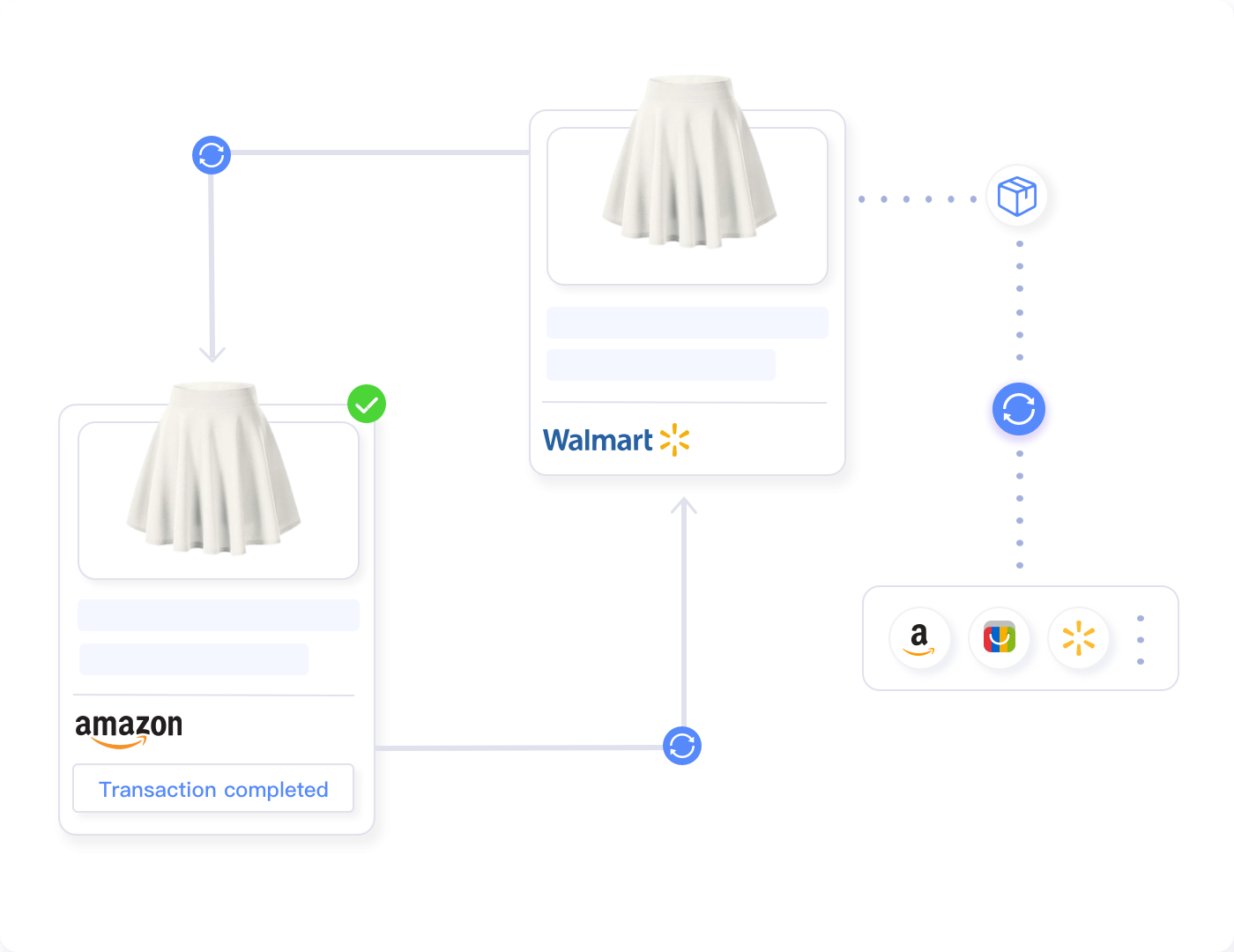
Implementing the sweet spot strategy requires sophisticated demand forecasting and inventory velocity tracking. Maxmerce’s Inventory Sync provides real-time synchronization across all sales channels, ensuring that inventory levels remain optimized across Amazon and other marketplaces while staying within Amazon FBA storage limits 2025 constraints.
Product Mix Optimization
Amazon FBA storage limits 2025 have made product mix optimization essential for maximizing revenue per cubic foot. Sellers must now carefully evaluate their product portfolios, prioritizing items with high velocity and favorable cubic foot efficiency ratios. This shift requires detailed analysis of product performance metrics and strategic decisions about which products deserve limited storage space.
The new cubic foot measurement system under Amazon FBA storage limits 2025 particularly impacts sellers of large or low-density products. These sellers must be especially strategic about product selection and inventory levels, often requiring premium pricing strategies or product bundling to maintain profitability within the space constraints.
Seasonal Planning and Peak Preparation
Planning for seasonal demand under Amazon FBA storage limits 2025 requires earlier preparation and more aggressive inventory management than ever before. The peak season storage fee increase from $0.78 to $2.40 per cubic foot makes October through December inventory planning critical for maintaining profitability.
Successful seasonal planning now involves gradually building inventory throughout the year rather than the traditional pre-season buildup. This approach spreads storage costs across multiple months and reduces the risk of being caught with excess inventory during peak fee periods under Amazon FBA storage limits 2025.
Leveraging Technology for Amazon FBA Storage Limits 2025 Compliance
The complexity of Amazon FBA storage limits 2025 management makes advanced technology tools not just helpful but essential for competitive success. Modern inventory management requires real-time data, predictive analytics, and automated optimization to navigate the new constraints effectively.
Real-Time Monitoring and Alerts
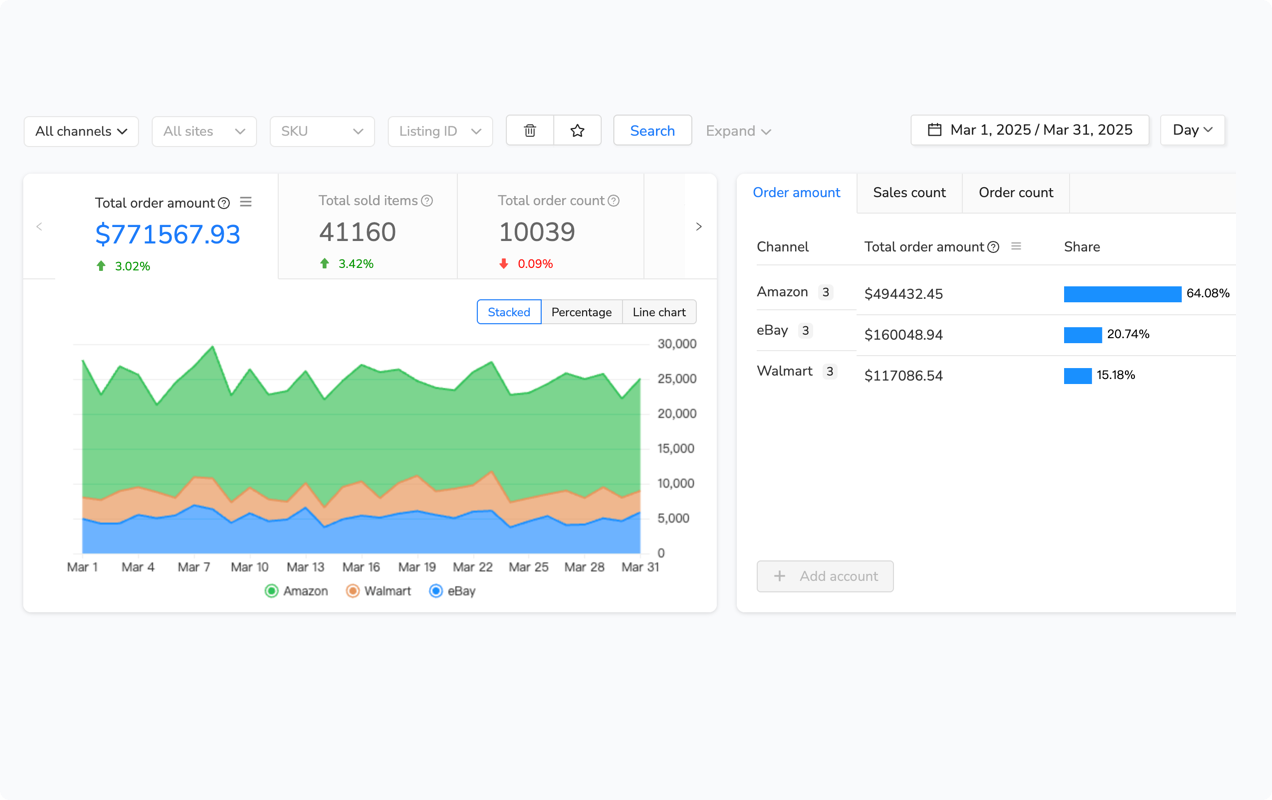
Maxmerce’s Multi-Channel Dashboard provides comprehensive visibility into inventory levels across all sales channels, enabling sellers to monitor their Amazon FBA storage limits 2025 compliance in real-time. The platform’s alert system notifies sellers when inventory levels approach critical thresholds, preventing costly overage situations and stockouts.
The dashboard’s integration with Amazon’s Capacity Monitor provides up-to-the-minute updates on storage utilization and remaining capacity. This real-time visibility is crucial for making informed decisions about inventory replenishment and product launches under Amazon FBA storage limits 2025 constraints.
Predictive Analytics for Demand Forecasting
Accurate demand forecasting has become exponentially more important under Amazon FBA storage limits 2025. Traditional forecasting methods that worked with generous storage allowances can lead to disaster under the new restrictions. Advanced analytics platforms use machine learning algorithms to analyze sales patterns, seasonal trends, and market dynamics to provide more accurate demand predictions.
Maxmerce’s Daily Product Performance feature combines historical sales data with real-time market trends to generate precise demand forecasts. This capability helps sellers optimize inventory levels to meet demand without exceeding Amazon FBA storage limits 2025 allocations, reducing both stockout risk and excess inventory costs.
Automated Inventory Optimization
Manual inventory management simply cannot keep pace with the demands of Amazon FBA storage limits 2025 compliance. Automated optimization tools continuously analyze inventory levels, sales velocity, and capacity constraints to recommend optimal stock levels and reorder timing.
These automation tools integrate with Amazon’s API systems to provide real-time updates on capacity utilization and automatically adjust inventory recommendations based on changing constraints. This level of automation is essential for maintaining optimal performance under the dynamic conditions of Amazon FBA storage limits 2025.
Advanced Strategies for Amazon FBA Storage Limits 2025 Optimization
Mastering Amazon FBA storage limits 2025 requires advanced strategies that go beyond basic inventory management. These sophisticated approaches help sellers not just survive but thrive under the new constraints, turning limitations into competitive advantages.
Product Portfolio Rebalancing
Amazon FBA storage limits 2025 have forced many sellers to fundamentally reevaluate their product portfolios. The new constraints favor products with high velocity, compact packaging, and strong profit margins per cubic foot. Successful sellers are systematically analyzing their catalogs to identify optimization opportunities and eliminate products that no longer justify their storage allocation.
This rebalancing process involves detailed analysis of each product’s contribution to overall profitability, considering not just gross margins but also storage efficiency and velocity metrics. Products that previously seemed profitable may no longer justify their space under Amazon FBA storage limits 2025, requiring difficult but necessary portfolio decisions.
Alternative Fulfillment Integration
Smart sellers are leveraging Amazon’s Warehousing and Distribution (AWD) service as a strategic complement to their FBA operations under Amazon FBA storage limits 2025. AWD provides overflow storage that automatically replenishes FBA inventory as needed, effectively extending storage capacity without violating FBA limits.
This hybrid approach works particularly well for seasonal items, slower-moving products, or during periods when FBA limits are especially restrictive. By maintaining core fast-moving inventory in FBA and overflow stock in AWD, sellers can maintain service levels while optimizing their use of limited FBA storage space under Amazon FBA storage limits 2025.
Dynamic Pricing for Inventory Optimization
Dynamic pricing strategies have become essential tools for managing Amazon FBA storage limits 2025 compliance. By adjusting prices based on inventory levels and aging, sellers can influence demand patterns to optimize storage utilization and prevent aged inventory surcharges.
This approach involves systematic price reductions for inventory approaching the 181-day aged inventory threshold, aggressive discounting for items exceeding 270 days, and premium pricing for fast-moving items with limited stock. The goal is to maintain optimal inventory turnover while maximizing revenue within Amazon FBA storage limits 2025 constraints.
Cost Management Under Amazon FBA Storage Limits 2025
The financial implications of Amazon FBA storage limits 2025 extend far beyond simple storage fees. Successful sellers must develop comprehensive cost management strategies that account for the interconnected nature of storage costs, opportunity costs, and revenue optimization under the new constraints.
Total Cost of Storage Analysis
Understanding the true cost of storage under Amazon FBA storage limits 2025 requires analysis that goes beyond the obvious monthly fees. The total cost includes direct storage fees, aged inventory surcharges, opportunity costs from limited capacity allocation, and the potential revenue loss from stockouts due to conservative inventory management.
This comprehensive cost analysis helps sellers make informed decisions about product mix, inventory levels, and pricing strategies. Products that appear profitable based solely on gross margins may become loss leaders when all storage-related costs are factored in under Amazon FBA storage limits 2025.
ROI Optimization Strategies
Maximizing return on investment under Amazon FBA storage limits 2025 requires shifting focus from absolute sales volumes to efficiency metrics. Sellers must optimize for revenue per cubic foot, profit per storage day, and inventory turnover rates rather than traditional metrics like total sales or profit margins.
Maxmerce’s Profit Analyzer provides sophisticated ROI calculations that factor in all Amazon FBA storage limits 2025 costs, enabling sellers to make data-driven decisions about product selection and inventory levels. This analysis capability is essential for maintaining profitability under the new constraints.
Common Mistakes to Avoid with Amazon FBA Storage Limits 2025
Understanding common pitfalls helps sellers avoid costly mistakes that can severely impact profitability and performance under Amazon FBA storage limits 2025. These mistakes often stem from outdated practices that worked under the previous, more generous storage allocation system.
Overestimating Capacity Needs
Many sellers continue to plan inventory levels based on pre-2025 capacity allocations, leading to shipment restrictions and stockouts. Under Amazon FBA storage limits 2025, sellers must plan for significantly reduced capacity and build strategies around these constraints rather than hoping for allocation increases.
This mistake often manifests in aggressive inventory buildup during supposedly favorable months, only to discover that capacity allocations remain restrictive. Successful sellers under Amazon FBA storage limits 2025 plan conservatively and focus on efficiency rather than volume.
Neglecting Aged Inventory Management
The shift from 365-day to 181-day aged inventory thresholds under Amazon FBA storage limits 2025 has caught many sellers unprepared. Inventory that would have been acceptable under the old system now incurs significant surcharges, dramatically impacting profitability.
Preventing this mistake requires proactive inventory aging management, with systematic review and action plans for inventory approaching the 150-day mark. Waiting until inventory reaches 181 days often means accepting significant losses or emergency liquidation at unfavorable prices.
Inadequate Technology Investment
Attempting to manage Amazon FBA storage limits 2025 compliance with manual methods or basic tools is a recipe for failure. The complexity and real-time nature of the new constraints require sophisticated technology solutions for effective management.
Sellers who underinvest in inventory management technology often find themselves constantly reacting to problems rather than preventing them. The cost of appropriate technology solutions is typically far less than the cumulative cost of inefficient inventory management under Amazon FBA storage limits 2025.

Future-Proofing Your Amazon FBA Strategy
Amazon FBA storage limits 2025 represent just the beginning of Amazon’s push toward greater fulfillment efficiency. Successful sellers must anticipate future changes and build flexible strategies that can adapt to evolving constraints and requirements.
Building Operational Flexibility
Future success under evolving Amazon FBA storage limits requires operational flexibility that allows rapid adaptation to changing constraints. This flexibility includes diversified fulfillment options, scalable technology solutions, and agile inventory management processes that can quickly adjust to new requirements.
Sellers who build rigid systems optimized only for current Amazon FBA storage limits 2025 constraints risk obsolescence as Amazon continues to refine its requirements. Future-proofed operations maintain efficiency under current constraints while preserving the ability to adapt quickly to future changes.
Technology Evolution Preparation
Amazon’s continued investment in fulfillment technology suggests that future storage management will become even more sophisticated and data-driven. Sellers must choose technology partners who demonstrate commitment to innovation and continuous platform development.
Maxmerce’s comprehensive analytics suite provides not just current compliance tools but also the data foundation needed for future optimization strategies. As Amazon FBA storage limits continue to evolve, having access to comprehensive historical data and advanced analytics capabilities will become increasingly valuable.
Frequently Asked Questions
What are the new Amazon FBA storage limits for 2025?
Amazon reduced FBA capacity limits from 6 months to 5 months of expected sales volume starting in May 2025. Many sellers experienced capacity cuts as high as 75%, with some reporting allocation reductions to only 30% of their previous storage space. Limits are now measured in cubic feet and set monthly rather than quarterly.
How can I optimize my FBA inventory to reduce storage fees?
Keep 1-2 months of stock on hand for key SKUs to avoid both aged inventory surcharges (starting at 181 days) and low-stock fees (under 4 weeks). Maintain an IPI score above 400, regularly remove slow-moving inventory, and use advanced analytics tools to monitor velocity and optimize stock levels in real-time.
What happens if I exceed my Amazon FBA storage limits?
Amazon will prevent new FBA shipments from being sent to warehouses until your inventory levels fall within your capacity limits. While automatic overage fees were eliminated in mid-2024, you’ll face shipment restrictions that can lead to stockouts on fast-selling items and lost sales opportunities.
How do I calculate my IPI score under the new limits?
Your IPI score is calculated based on four components: excess inventory percentage, sell-through rate, stranded inventory percentage, and in-stock rate for popular products. Each component is weighted differently, with sell-through rate becoming increasingly important under the new capacity constraints.
What tools help manage Amazon FBA storage limits 2025 effectively?
Effective management requires real-time inventory tracking, predictive analytics, and automated optimization tools. Maxmerce’s suite includes Inventory Sync for real-time synchronization, SKU Insights for performance analysis, Daily Product Performance tracking, and Multi-Channel Dashboard for comprehensive visibility across all sales channels.
How do aged inventory surcharges work in 2025?
Amazon replaced the traditional 365-day long-term storage fee with aged inventory surcharges that begin at 181 days. Fees start at $1.50 per cubic foot for inventory aged 181-270 days and escalate progressively, reaching up to $6.90 per unit for inventory stored over 365 days.
Get Your Free Amazon FBA Inventory Health Assessment
Don’t let Amazon FBA storage limits 2025 catch you unprepared. Maxmerce’s comprehensive inventory management suite helps sellers optimize storage utilization, reduce fees, and maximize profits within the new constraints. Our advanced analytics identify optimization opportunities and provide real-time monitoring to prevent costly mistakes.
Start your free trial today and see how Maxmerce can help you master Amazon FBA storage limits 2025 while growing your business profitably. Join thousands of sellers who trust Maxmerce for smarter inventory management across all marketplace channels.
Amazon FBA storage limits 2025 have fundamentally changed the game for sellers, requiring more sophisticated inventory management strategies than ever before. Success under these new constraints demands the right combination of strategic planning, advanced technology tools, and proactive optimization. Sellers who adapt quickly and invest in proper inventory management solutions will not only survive the new limits but gain competitive advantages over those who struggle with manual or outdated approaches.
The key to thriving under Amazon FBA storage limits 2025 lies in treating storage space as a precious resource that must be optimized for maximum return. This mindset shift, combined with tools like Maxmerce’s comprehensive inventory management suite, enables sellers to maintain growth and profitability even within the tighter constraints. The sellers who emerge strongest from this transition will be those who view the challenge as an opportunity to build more efficient, profitable operations that are better positioned for long-term success.