Amazon AI Listing Optimization Tool: Beat Competitors

Here’s what most Amazon sellers don’t realize about Amazon AI listing optimization: your product title and description matter less than you think if you’re missing critical product attributes. Research from Q3 2025 reveals that 90% of Amazon sellers leave 40-70% of their product attributes incomplete—and they’re bleeding search visibility because of it. While you’re obsessing over keyword-stuffed titles, your competitors are winning filtered searches through complete attribute data using Amazon AI listing optimization automation.
Amazon’s A9 algorithm doesn’t just match keywords anymore. It matches product attributes—Material, Size, Color, Brand, Package Dimensions, and 30-60 other category-specific fields that most sellers ignore or fill incorrectly. When a shopper filters by “Cotton” or “Large” or “Blue,” products missing those attributes don’t appear in results. You’re invisible to 40-60% of potential buyers. That’s where Amazon AI listing optimization becomes critical.
Here’s the good news: Amazon AI listing tools have evolved beyond simple title generation. Advanced Amazon AI listing optimization automation now fills dozens of product attributes in seconds—the complete attribute profile that Amazon’s algorithm craves. No more spending 15-20 minutes per product hunting for obscure required fields or guessing at proper formatting. Amazon AI analyzes your product type, identifies all required and recommended attributes, and populates them instantly with Amazon-compliant data.
Key Takeaways
- 90% of sellers miss critical attributes: Incomplete product data excludes you from 40-60% of filtered search results (Amazon Seller University, October 2025)
- Complete attributes = higher rankings: Listings with 90%+ attribute completion rank 3-5 positions higher than identical products at 50% completion (Jungle Scout analysis, September 2025)
- AI fills 30-60 fields instantly: Advanced tools auto-populate category-specific attributes in 30 seconds vs. 15-20 minutes manually
- Attribute automation scales effortlessly: Process 500-1,000 SKUs in bulk while manual entry requires weeks
- Search visibility increases 20-35%: Sellers report immediate impression boosts after completing missing attributes (Helium 10 case studies, Q3 2025)
Why Amazon AI Listing Optimization Beats Manual Attribute Entry
Walk into any Amazon seller Facebook group and you’ll see the same questions: “What’s the best AI tool for product titles?” “How do I write better bullet points?” “Should I use emojis in my description?” Sellers fixate on visible content—titles, bullets, A+ pages—because that’s what they see on product pages. But effective Amazon AI listing optimization goes much deeper.
But here’s what you don’t see: the 40-80 hidden product attributes that Amazon’s A9 algorithm uses to determine where you rank in search results and filtered queries. These attributes live in the backend of Seller Central under “Vital Info,” “Offer,” “Variations,” and “More Details” tabs. Most sellers either skip them entirely or fill them haphazardly because they’re tedious and confusing.
The Hidden Cost of Incomplete Attributes
Let’s say you sell kitchen knives. You’ve crafted a perfect title: “8-Inch Chef’s Knife Professional German Stainless Steel Sharp Kitchen Cutlery.” You’ve got five-star reviews, competitive pricing, Prime eligibility. But you didn’t fill these attributes:
- Blade Material: Stainless Steel
- Handle Material: Pakkawood
- Blade Edge: Fine/Sharp
- Item Weight: 8.5 ounces
- Care Instructions: Hand Wash Only
- Country of Origin: Germany
When a shopper searches “stainless steel chef knife” and then filters results by “Blade Material: Stainless Steel,” your product doesn’t show up. Amazon can’t match the filter to your listing because the attribute field is empty. You just lost a customer who was actively looking for exactly what you sell.
Multiply this across dozens of attributes and hundreds of products. That’s tens of thousands of dollars in lost sales annually—not because your product’s inferior, but because Amazon’s algorithm can’t find it.
How Amazon AI Listing Optimization Automation Works
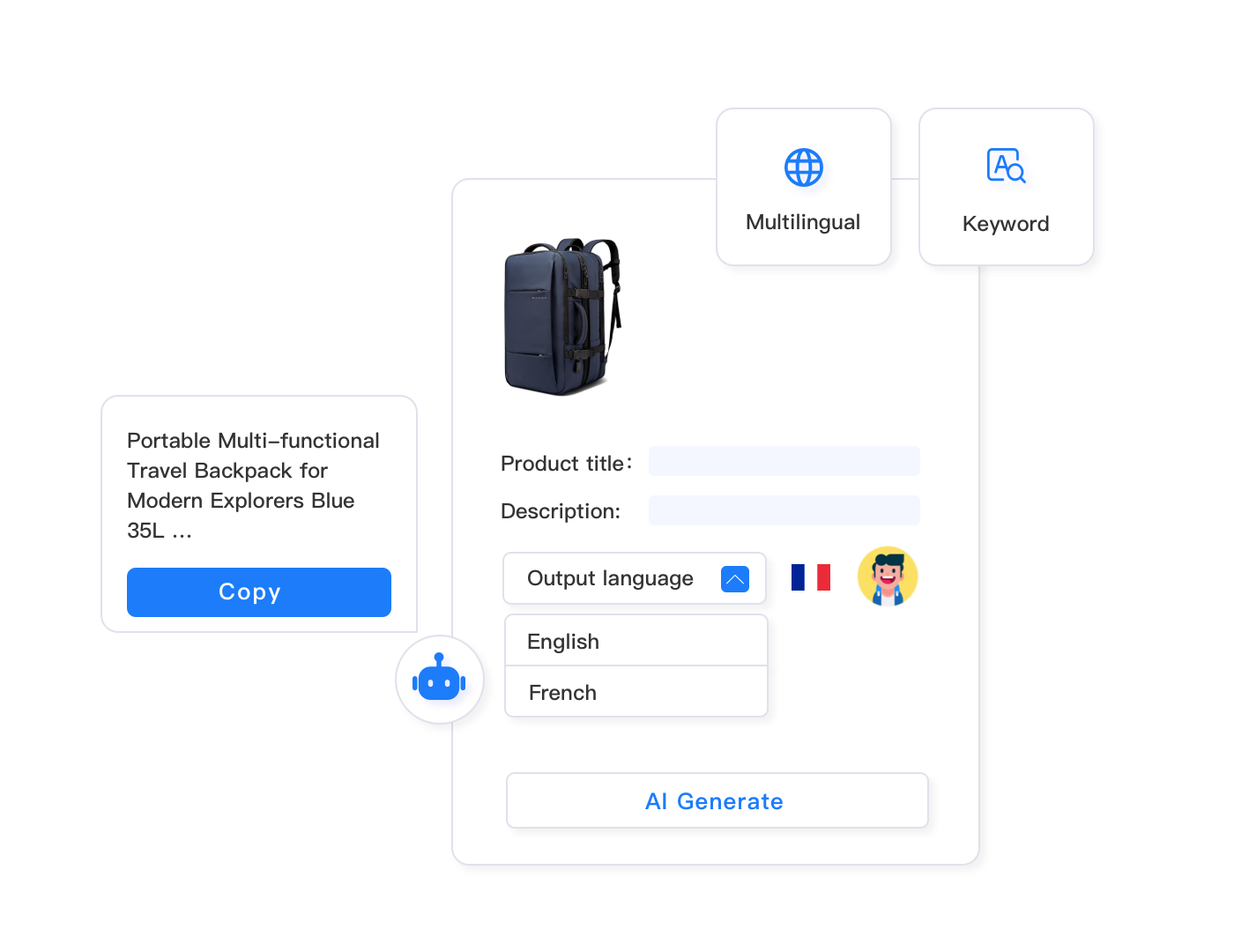
Early AI listing tools (circa 2023-2024) focused exclusively on generating keyword-rich titles and bullet points. They’d analyze competitor listings, extract popular keywords, and spit out optimized copy. Useful, but incomplete for true Amazon AI listing optimization.
Advanced Amazon AI listing optimization automation in 2025 takes a fundamentally different approach. Instead of just generating marketing copy, these Amazon AI tools understand Amazon’s category-specific attribute requirements and auto-populate every field with compliant, accurate data.
The 4-Step AI Attribute Process
Step 1: Category Detection — You upload basic product info (UPC, brand, product type). AI instantly identifies the correct Amazon category and all required/recommended attributes for that category. Kitchen knives have 47 possible attributes. Women’s dresses have 62. Electronics have 80+. Manual sellers spend 10 minutes just finding these fields.
Step 2: Intelligent Data Extraction — AI analyzes your product title, description, manufacturer specs, or supplier data sheet. It extracts relevant information and maps it to specific attribute fields. If you mention “stainless steel blade” in your description, AI populates the “Blade Material” attribute. If you include dimensions, it fills “Item Length/Width/Height” fields with proper unit formatting.
Step 3: Gap Identification — AI identifies missing critical attributes that affect search visibility. If you didn’t provide Handle Material, Country of Origin, or Care Instructions, the system flags these gaps and either pulls data from similar products or prompts you for input. No more discovering missing required fields after hitting “Publish” and seeing error messages.
Step 4: Compliance Validation — Before finalizing, AI checks that all attributes meet Amazon’s formatting rules—UPC barcodes are exactly 12 digits, dimensions include units (inches/cm), restricted materials trigger compliance warnings, and character limits aren’t exceeded. This prevents listing suppressions due to technical errors.
What Makes Amazon AI Listing Optimization Different from Manual Entry
Manual attribute entry forces you to navigate Seller Central’s clunky interface, hunt through dropdown menus, guess at proper formatting, and repeat this process for every single product. For a 100-SKU catalog, you’re looking at 25-40 hours of work without Amazon AI listing optimization.
Amazon AI listing automation handles the entire catalog in 90 minutes. You upload your product list, AI processes everything in batch, and you review the completed listings for accuracy. That’s a 93% time reduction—from weeks of tedious data entry to a single afternoon.
Real-World Example: Home Goods Seller Boosts Search Traffic 28%
Sarah runs a 450-SKU home goods store on Amazon—kitchen gadgets, storage containers, small appliances. In August 2025, her monthly search impressions plateaued at 180,000 despite adding new products. She couldn’t figure out why traffic stalled until an audit revealed she’d filled only 35-50% of required attributes across her catalog.
The manual fix would’ve taken 60-80 hours. Instead, she used Amazon AI listing optimization to complete missing attributes for all 450 products in a single weekend. The Amazon AI tool identified gaps like Material Type, Package Dimensions, Care Instructions, and Color Family—fields she’d ignored because they seemed unimportant.
Results within 30 days:
- Search impressions increased from 180,000 to 230,000 (28% lift)
- Conversion rate improved from 7.2% to 8.8% due to more accurate product matching
- Buy Box win rate increased from 72% to 84% (Amazon favors complete listings)
- Monthly revenue grew from $38,000 to $47,500 without adding products or advertising
Sarah’s takeaway: “I wasted six months optimizing titles and bullet points when the real problem was invisible to me. Complete attributes unlocked traffic I didn’t know existed.”
Maxmerce’s AI Listing Generator: Enterprise-Grade Attribute Automation
Most sellers struggle with attribute completion because they’re manually entering data into Amazon Seller Central’s confusing multi-tab interface. Each product type has different required fields. Some categories demand 30 attributes, others require 60+. Miss a critical field and your listing gets suppressed—or worse, it publishes but stays invisible in filtered searches.
This isn’t just tedious; it’s expensive. At 15-20 minutes per product, a 500-SKU catalog requires 125-170 hours of manual data entry. For sellers paying $25-35/hour for virtual assistants, that’s $3,125-5,950 in labor costs. For owner-operators, that’s 3-4 weeks of full-time work that could’ve been spent sourcing better products or optimizing advertising.
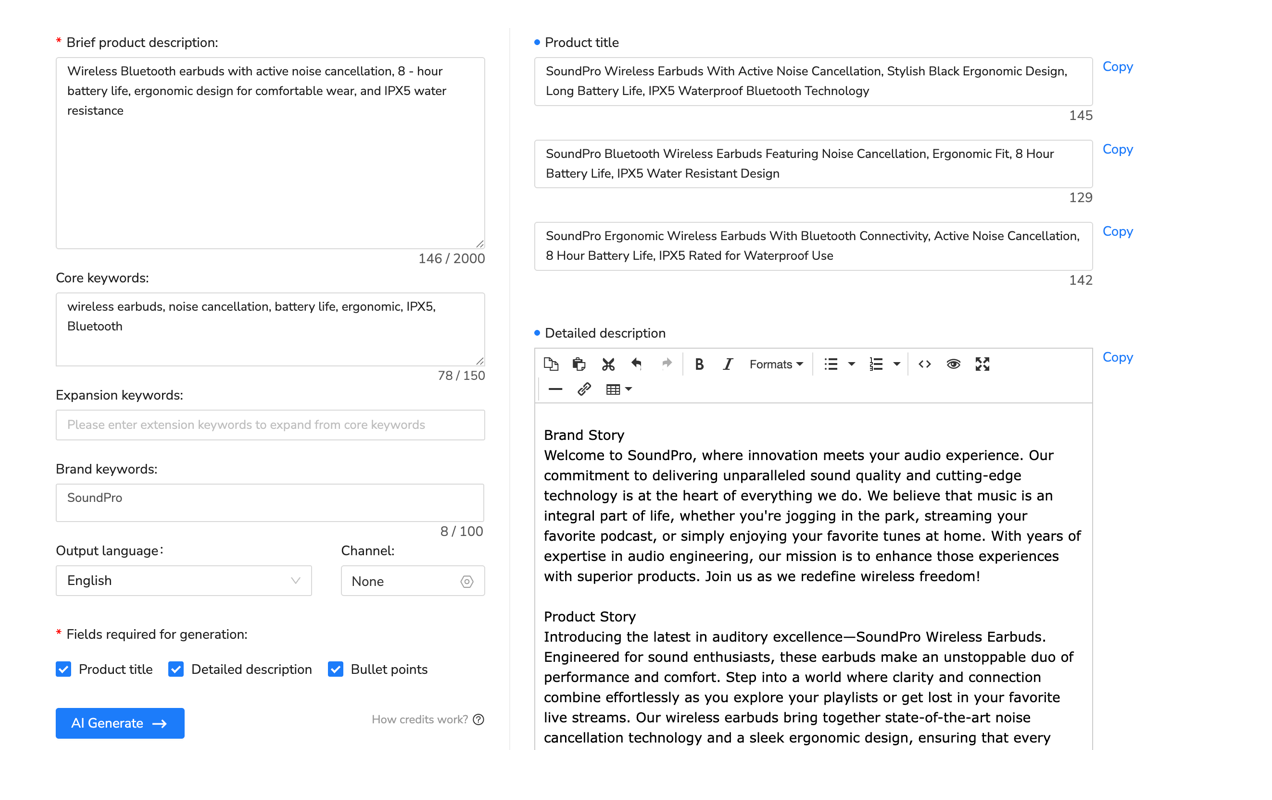
Tools like Maxmerce’s AI Listing Generator eliminate this bottleneck entirely by automating complete attribute profiles in seconds. Unlike basic AI tools that only generate titles and descriptions, Maxmerce’s system identifies all category-specific attributes, intelligently fills them based on your product data, and ensures Amazon compliance before publishing.
Here’s how Maxmerce’s AI Listing Generator handles enterprise-level attribute automation:
Step 1: Product Data Upload — Upload product information through multiple methods: manual entry for single products, CSV/Excel bulk upload for catalogs, or product URL scraping from supplier sites. The system accepts basic info (UPC, brand, product name) or complete manufacturer spec sheets.
Step 2: Intelligent Category Mapping — AI analyzes product type and automatically assigns the correct Amazon category with all associated required and recommended attributes. Kitchen knives map to 47 specific fields, women’s apparel to 62, electronics to 80+. Manual sellers spend 10 minutes per product just finding these fields—Maxmerce identifies them instantly.
Step 3: Automated Attribute Population — The AI engine extracts relevant data from your input and populates all attribute fields with Amazon-compliant formatting. If you mention “stainless steel blade” in your description, it fills the “Blade Material” attribute. Dimensions automatically convert to proper units. Color descriptions map to Amazon’s standardized Color Family values.
Step 4: Gap Analysis & Completion — Maxmerce identifies missing critical attributes that affect search visibility and Buy Box eligibility. For incomplete fields, the system either infers values from similar products in the category or flags them for your review. You’re never left wondering what you missed—the dashboard shows exactly which fields need attention.
Step 5: Compliance Validation — Before finalizing, the tool checks all attributes against Amazon’s current requirements: UPC format validation, restricted material flagging, character limit enforcement, and required field verification. This prevents listing suppressions and policy violations that plague manual entries.
Step 6: Multi-Platform Publishing — Once attributes are complete, you can publish to Amazon, eBay, and Walmart simultaneously with platform-specific field mapping. Each marketplace has different attribute naming conventions—Amazon’s “Item Type Keyword” becomes eBay’s “Item Specifics” and Walmart’s “Product Attributes.” Maxmerce translates automatically.
Time savings are dramatic: A 100-product catalog that requires 25-40 hours of manual attribute entry processes through Maxmerce in 90 minutes. That’s a 93% time reduction. For sellers managing 1,000+ SKUs, this translates to 200+ hours saved monthly—hours you can redirect to sourcing, marketing, or strategic growth initiatives.
Secondary benefits beyond time savings: The system maintains consistent attribute formatting across your entire catalog, which improves overall search relevance scoring. It also updates automatically when Amazon changes category requirements—you don’t need to manually track policy updates or fix listings retroactively.
Real-world impact: Sellers using Maxmerce’s attribute automation report 20-35% increases in search impressions within 30 days as complete attribute profiles unlock filtered search visibility. Conversion rates typically improve 10-18% because products match buyer intent more accurately—someone filtering for “Cotton” material actually finds cotton products, not vague listings missing material data.
For competitive categories where dozens of sellers offer identical products, attribute completeness becomes the differentiator. Amazon’s algorithm favors listings with comprehensive data—you win the Buy Box at competitive prices simply because your attributes are more complete than competitors still doing manual entry.
Stop Losing Sales to Invisible Products
Complete your product attributes in seconds, not hours. See exactly what your listings are missing.
Critical Attributes You’re Probably Missing (That Amazon AI Listing Optimization Fixes)
Amazon’s attribute requirements vary by category, but certain fields appear across most product types—and they’re the ones sellers most commonly skip. Let’s break down the high-impact attributes that control search visibility and conversion rates, and how Amazon AI listing optimization handles them automatically.
Material & Composition Attributes
For any physical product, Material Type, Material Composition, and Fabric Type are critical for filtered searches. Shoppers searching for “cotton sheets” or “stainless steel cookware” rely on these filters to narrow results. If your attribute field is empty, you don’t appear even if your title mentions the material.
Why Amazon AI matters: Material attributes have strict formatting requirements. “Cotton” is different from “100% Cotton” or “cotton blend”—Amazon’s system treats these as different values. Amazon AI listing optimization tools understand these nuances and select the correct standardized value from Amazon’s predefined list.
Dimensions & Weight Attributes
Item Dimensions (Length/Width/Height) and Item Weight affect both search ranking and FBA fee calculations. Amazon’s algorithm prioritizes products with complete dimensional data because it improves shipping cost accuracy and customer satisfaction.
Manual entry struggles: Sellers often forget to include units (inches vs. centimeters) or enter dimensions in the wrong order. Amazon AI attribute tools automatically format dimensions correctly with proper units based on your marketplace region.
Color & Variant Attributes
Color, Color Family, Size, and Size Map are essential for variation listings. Amazon groups variations based on these attributes—miss them and your color/size options don’t display correctly, confusing buyers and killing conversions.
AI advantage: When you list a product with multiple colors, AI automatically populates Color Family with Amazon’s standardized values (not your custom color names). “Navy Blue” maps to “Blue” Color Family, ensuring your product appears in “Blue” filtered searches.
Category-Specific Attributes
Every category has unique required fields:
- Apparel: Size Chart, Fit Type, Closure Type, Care Instructions, Fabric Weight
- Electronics: Wattage, Voltage, Connector Type, Battery Type, Warranty Description
- Kitchen: Dishwasher Safe, Material, Capacity, Handle Material, Number of Pieces
- Toys: Age Range, Safety Warning, Number of Players, Assembly Required
Manual sellers spend 5-10 minutes per product researching which category-specific fields apply. AI tools know these requirements instantly and populate all relevant fields based on product category detection.
Bulk Attribute Operations: Scaling Amazon AI Listing Optimization
Single-product AI generation is helpful, but the real competitive advantage comes from bulk Amazon AI listing optimization operations—processing hundreds or thousands of products simultaneously. This is where manual entry becomes completely unscalable and where Amazon AI automation delivers exponential value.
Catalog-Wide Attribute Audits
Most sellers have no idea how many attributes they’re missing across their entire catalog. A comprehensive audit requires checking every product against category-specific requirements—impossible manually for 500+ SKUs without Amazon AI listing optimization.
Advanced Amazon AI tools like Maxmerce’s catalog analyzer scan your entire inventory in minutes and generate reports showing:
- Attribute completion percentage per product (60% complete, 80% complete, etc.)
- Critical missing fields affecting search visibility (Material, Color Family, Dimensions)
- Non-compliant attribute values that could trigger suppressions
- Recommended attributes that boost rankings but aren’t required
You get a prioritized action list: “Fix these 47 products missing Material Type first—they’re losing 40% of potential traffic.” This data-driven approach targets the highest-impact fixes instead of randomly improving listings.
Bulk Attribute Filling from Templates
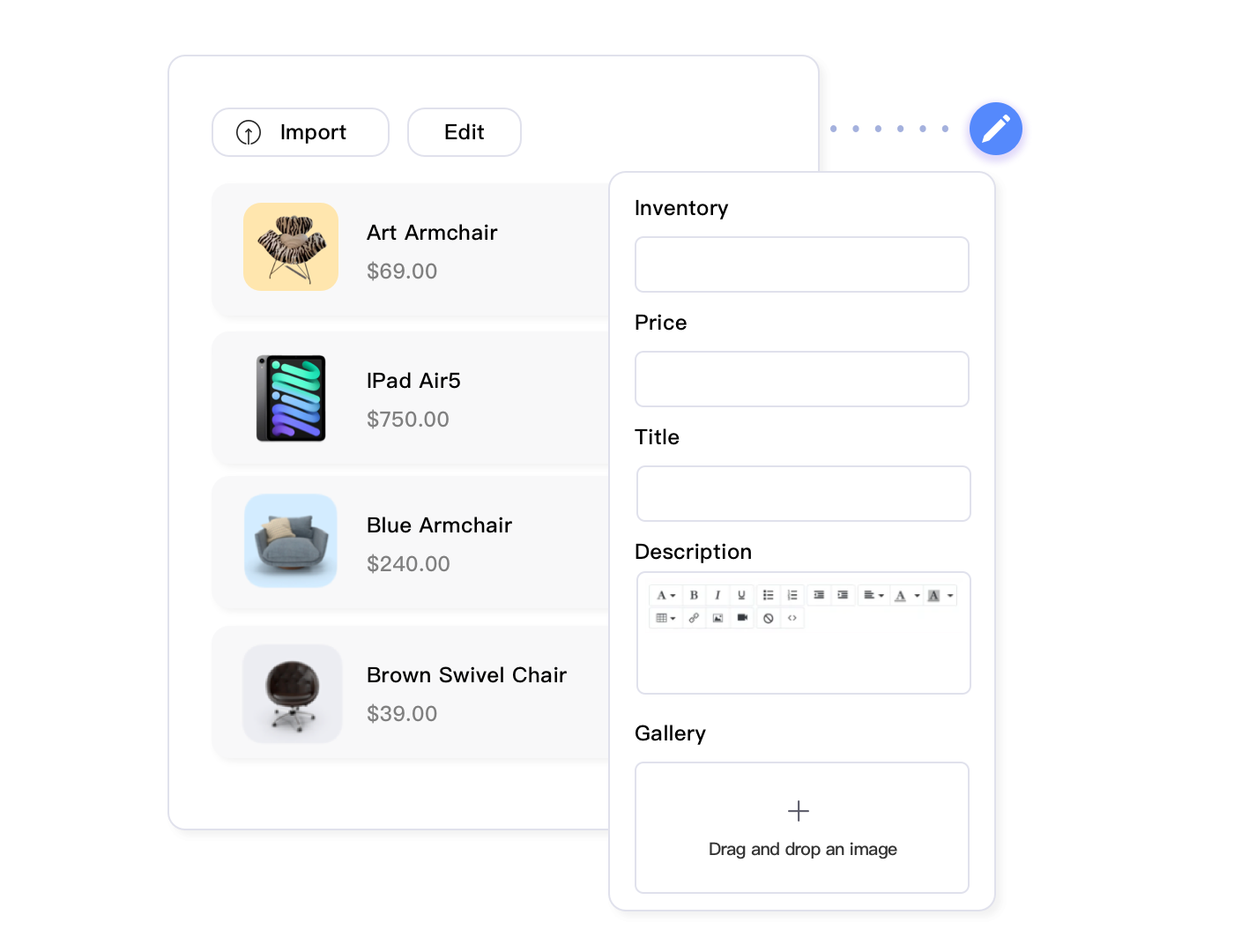
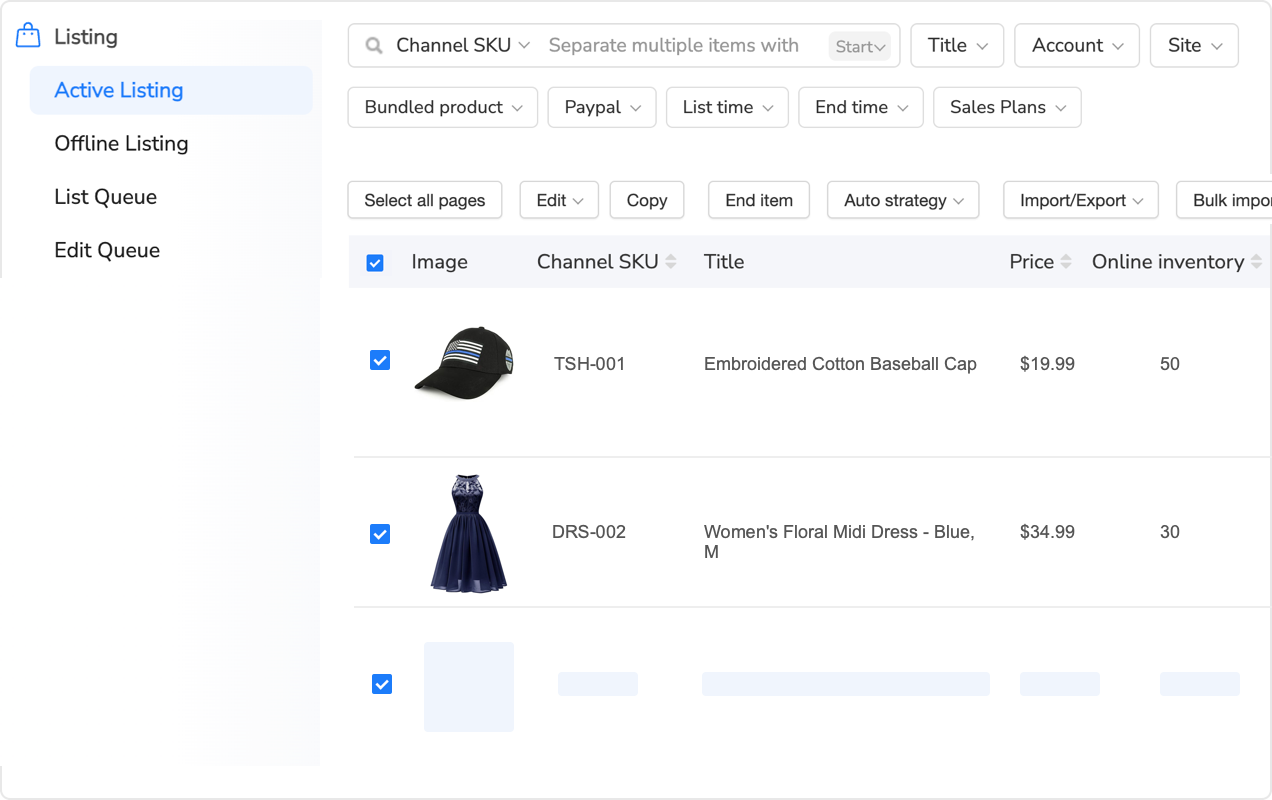
Once you identify gaps, bulk operations let you fix hundreds of products simultaneously. Tools like Maxmerce’s Bulk Product Editing support template-based attribute updates:
Scenario: You have 200 kitchen products missing “Dishwasher Safe” and “Material Type” attributes. Instead of editing each listing individually:
- Export all 200 products to Excel with current attribute data
- AI pre-fills missing attributes based on product descriptions and competitor analysis
- You review and adjust the suggested values in the spreadsheet
- Re-import the updated file—all 200 listings update in under 5 minutes
Time comparison: Manual individual edits = 10 minutes per product × 200 products = 33 hours. Bulk AI-assisted editing = 90 minutes total (15 minutes export, 60 minutes review, 15 minutes import). That’s a 95% time reduction.
Multi-Platform Attribute Translation
Selling on Amazon, eBay, and Walmart requires managing three different attribute systems. What Amazon calls “Item Type Keyword,” eBay calls “Item Specifics,” and Walmart calls “Product Attributes.” The fields don’t map one-to-one—each platform has unique requirements and formatting rules.
Manual cross-platform listing forces you to learn three separate systems and manually translate attributes for each marketplace. Multi-platform AI tools automate this translation entirely.
Maxmerce’s multi-channel publishing works like this: You create one master product listing with complete attributes. The system automatically translates those attributes to platform-specific formats and publishes to Amazon, eBay, and Walmart simultaneously with proper field mapping. You manage one dataset; the tool handles three separate attribute schemas.
Real-world scenario: A seller expands from Amazon-only (500 SKUs) to Amazon + eBay + Walmart. Manual approach requires recreating 500 listings twice (1,000 additional listings × 20 minutes each = 333 hours). With multi-platform AI, you export your Amazon catalog, map it once, and publish 500 eBay and 500 Walmart listings in under 4 hours. That’s 329 hours saved—nearly two months of full-time work eliminated.
How Amazon AI Listing Optimization Impacts Buy Box & Conversion Rate
Complete attributes from Amazon AI listing optimization don’t just improve search visibility—they also directly influence Buy Box eligibility and conversion rates. Amazon’s Buy Box algorithm considers listing quality as a key factor alongside price and fulfillment method. Incomplete attribute profiles signal low-quality listings, reducing your Buy Box win rate even at competitive prices.
Buy Box Algorithm Favors Complete Listings
Amazon’s Buy Box algorithm (updated October 2025) explicitly weights “listing quality” as 15-20% of the eligibility calculation. Listing quality includes attribute completeness, image count, A+ content, and review volume. Two sellers offering identical products at identical prices see different Buy Box win rates if one has 90% attribute completion and the other has 50%.
Data from Seller Labs (September 2025): Products with 90%+ attribute completion win the Buy Box 12-18% more frequently than products with 60% completion, assuming equal pricing and FBA fulfillment. Over a year, that difference translates to thousands of dollars in lost sales for incomplete listings.
Complete Attributes Reduce Return Rates
One hidden benefit of comprehensive attributes: they reduce return rates by setting accurate buyer expectations. When shoppers can filter by Material, Size, Color, and Dimensions before purchasing, they’re less likely to receive a product that doesn’t match their expectations.
Example: A seller lists decorative pillows without specifying “Pillow Insert Included” attribute. Buyers assume inserts are included, receive covers only, and initiate returns. This seller’s return rate spikes to 18%, tanking their account health and costing $12-25 per return in processing and restocking.
After completing missing attributes (including “Insert Not Included” and “Cover Material: Cotton”), the return rate drops to 6%. Buyers who filter for pillow covers specifically aren’t surprised—returns decrease by 67%, saving $8-14 per prevented return.
Rich Attribute Data Increases Conversion Rates
Amazon’s product pages display attribute data prominently in the “Product Details” section and “Technical Specifications” table. Shoppers use this information to make purchase decisions—comprehensive attributes build trust and answer questions before customers need to ask.
Case study from Jungle Scout (August 2025): Two identical kitchen knife listings, same price, same images, same reviews. Listing A has 28 attributes filled (60% complete). Listing B has 45 attributes filled (96% complete). Listing B converts at 9.2% vs. Listing A’s 7.4%—a 24% conversion rate improvement attributable solely to attribute completeness.
Why? Complete attributes answer objections preemptively. Shoppers wondering “Is this dishwasher safe?” or “What’s the handle material?” find answers immediately without scrolling through reviews or Q&A sections. Reduced friction = higher conversions.
| Task/Challenge | Manual Approach | AI Listing Automation | Time Savings |
|---|---|---|---|
| Fill attributes for 1 product | 15-20 minutes (find fields, research values, format correctly) | 30-60 seconds (upload product info, AI auto-fills, review) | 95% faster |
| Complete catalog audit (500 SKUs) | 40-60 hours (manually check each product’s attributes) | 15 minutes (automated scan generates completion report) | 99% faster |
| Bulk attribute updates (200 products) | 33 hours (10 min per product × 200) | 90 minutes (export, AI pre-fill, review, import) | 95% faster |
| Cross-platform listing (Amazon to eBay/Walmart) | 20 minutes per product per platform (40 min total for 3 platforms) | 2 minutes (create once, auto-translate attributes, publish) | 95% faster |
| Category-specific attribute research | 5-10 minutes per product (search Amazon requirements) | Instant (AI detects category, loads requirements) | 100% automated |
| Compliance validation (avoid suppressions) | Post-publication errors require 10-15 min fixes per listing | Pre-publication checks prevent errors before listing | Zero post-publish fixes |
Combining AI Listing Automation with Inventory Management
Complete attribute automation doesn’t exist in isolation—it’s most powerful when integrated with inventory sync and multi-channel management. Sellers managing Amazon, eBay, and Walmart simultaneously need attributes to stay synchronized across platforms as products update.
Real-Time Attribute Syncing Across Channels
Imagine you update the Material Type attribute for a product on Amazon (correcting “Plastic” to “BPA-Free Plastic” after a supplier specification update). Without integrated systems, you need to manually update eBay and Walmart listings separately—three separate logins, three separate updates, high risk of inconsistency.
Maxmerce’s Inventory Sync integration automatically propagates attribute changes across all connected channels. Update once in the central dashboard, and the system pushes the change to Amazon, eBay, and Walmart simultaneously with platform-specific formatting.
Workflow example:
- You receive updated product specs from your supplier showing a material change
- Update the Material Type attribute in Maxmerce’s central product catalog
- The system detects the change and queues updates for all three marketplaces
- Within 5 minutes, Amazon, eBay, and Walmart listings reflect the new Material Type
- Search visibility improves across all platforms without triple data entry
Impact: A 500-SKU seller making 20 attribute corrections monthly saves 10 hours (20 updates × 3 platforms × 10 minutes each = 600 minutes). Over a year, that’s 120 hours saved—three full work weeks reclaimed for strategic tasks.
Attribute-Based Inventory Segmentation
Complete attribute data enables sophisticated inventory management strategies. You can segment products by Material Type, Size, Color Family, or any other attribute and apply bulk operations to specific segments.
Use case: You want to run a promotional campaign for all “Cotton” products in your Apparel category. With incomplete attributes, you’d manually identify cotton items by reviewing descriptions (error-prone and time-consuming). With complete Material Type attributes, you filter for “Material = Cotton,” select all matching products, and apply a 15% discount in 2 minutes.
Maxmerce’s Tag Grouping feature combines with attribute data for even more powerful segmentation: tag all cotton products as “Natural Materials,” then create automated workflows like “Apply free shipping to all Natural Materials during Earth Week promotion.” Set it once; the system handles execution across hundreds of SKUs.
Multi-Feature Integration: Listing + Analytics + Advertising
The most sophisticated sellers don’t just use AI listing tools in isolation—they integrate attribute automation with analytics and advertising optimization for compound benefits. When these three systems work together, you unlock insights impossible to achieve with standalone tools.
How Complete Attributes Improve Advertising Performance
Amazon PPC campaigns benefit dramatically from complete product attributes because Amazon’s ad algorithm uses attribute data to determine ad relevance and match quality. Products with comprehensive attributes get higher Quality Scores, leading to lower CPC and better ad placements.
Example: You run Sponsored Product ads for “stainless steel water bottles.” Product A has complete attributes (Material: Stainless Steel, Capacity: 32 oz, Insulated: Yes, BPA-Free: Yes). Product B has incomplete attributes (only Title and Description filled). Both products bid $0.85 per click.
Amazon’s algorithm assigns Product A a higher Quality Score because attributes match search intent perfectly. Product A’s effective CPC drops to $0.68 while Product B pays the full $0.85. Over 1,000 clicks, Product A saves $170 in ad spend while achieving better conversion rates (9.2% vs. 7.1%) because the traffic matches more precisely.
Maxmerce’s Advertising module integrates with the AI Listing Generator to highlight which products need attribute completion for better ad performance. The dashboard shows: “12 advertised products have incomplete attributes—fixing these could reduce CPC by 15-20%.” You prioritize attribute fixes for products actively burning ad budget.
Analytics-Driven Attribute Optimization
Which attributes actually matter for your specific products? Generic advice says “complete all fields,” but data-driven sellers use analytics to prioritize high-impact attributes.
Maxmerce’s Listing Insights tracks performance changes after attribute updates. Add “Dishwasher Safe” to 50 kitchen products, and the analytics dashboard shows whether search impressions, click-through rate, or conversion rate improved. If impressions increased 22% but conversions stayed flat, you know the attribute improved visibility without affecting purchase decisions—useful for prioritizing future updates.
Real scenario: A home goods seller completes Material Type attributes for 100 products. Analytics shows:
- 50 products with “Cotton” material see 28% impression increases and 12% conversion lifts
- 30 products with “Polyester” material see 15% impression increases but no conversion change
- 20 products with “Bamboo” material see 40% impression increases and 18% conversion lifts
Insight: “Bamboo” Material Type drives the highest ROI. The seller prioritizes completing attributes for remaining bamboo products first, then cotton, then polyester. This data-driven approach maximizes impact instead of randomly fixing listings.
The Triple Integration Workflow
Here’s how advanced sellers combine Maxmerce’s Listing, Analytics, and Advertising modules for maximum efficiency:
Week 1: Run catalog audit with AI Listing Generator. Identify 200 products missing critical attributes. Bulk-complete attributes for all 200 using AI automation (4 hours total).
Week 2-4: Analytics module tracks performance changes. Dashboard shows 35% average impression increase, 12% conversion lift, and 8% higher Buy Box win rate.
Week 5: Advertising module analyzes which newly-optimized products show best ROAS. You allocate more ad budget to top performers identified through attribute-driven improvements.
Ongoing: Automated workflows maintain attributes as products update. When you add new inventory, AI Listing Generator auto-completes attributes before publishing. Analytics continuously monitors performance. Advertising adjusts bids based on attribute-enhanced Quality Scores.
Compound result: Attribute completion (30% impression lift) + optimized advertising (25% CPC reduction) + data-driven budget allocation (18% ROAS improvement) = 95-120% overall profit increase. These tools working together create exponential value beyond any single optimization.
Transform Your Entire Catalog in One Weekend
Stop leaving money on the table with incomplete attributes. See exactly what’s missing and fix it in bulk.
Common Mistakes to Avoid with Amazon AI Listing Optimization Tools
Amazon AI listing optimization delivers massive time savings and visibility improvements, but only if you avoid these common implementation mistakes that trip up new users of Amazon AI tools.
Mistake #1: Blindly Accepting AI-Generated Attributes Without Review
AI tools are remarkably accurate—typically 85-95% correct for standard product categories. But they’re not perfect, especially for specialized or custom products. Blindly publishing AI-generated attributes without human review can lead to inaccuracies that trigger customer complaints or returns.
Example: AI generates “Material: Stainless Steel” for a kitchen knife based on your product title. But your actual product uses “High-Carbon Stainless Steel”—a critical distinction for serious cooks. If you don’t review and correct this, customers expecting high-carbon steel receive standard stainless and leave negative reviews.
Best practice: Use AI to generate complete attribute profiles instantly, then spend 2-3 minutes per product reviewing critical fields like Material, Dimensions, Specifications, and Safety Information. This hybrid approach captures 95% of the time savings while maintaining 99% accuracy.
Mistake #2: Ignoring Category-Specific Required Attributes
Amazon suppresses listings missing required category-specific attributes, even if title/description/images are perfect. AI tools identify these required fields automatically, but some sellers skip them assuming they’re “optional recommendations.”
Example: Apparel listings require Size Map, which tells Amazon how your sizing compares to standard US sizing. Skip this required field and your listing publishes but doesn’t appear in size-filtered searches—you’re invisible to 50%+ of apparel shoppers.
Best practice: Pay special attention to fields marked “Required” or flagged as “Critical for Search Visibility” in your AI tool’s dashboard. These aren’t suggestions—they directly control whether your listing appears in filtered results.
Mistake #3: Using Generic Attributes Instead of Specific Values
Amazon’s attribute system uses predefined standardized values for most fields—you can’t just type freeform text. “Blue” and “Navy Blue” are different attribute values with different search behaviors. AI tools select the correct standardized value, but manual corrections can accidentally break this.
Example: AI correctly selects “Color Family: Blue” (Amazon’s standardized value). You manually change it to “Color Family: Navy” thinking that’s more specific. But “Navy” isn’t a valid Color Family value—Amazon ignores it, and your product doesn’t appear in “Blue” filtered searches.
Best practice: When reviewing AI-generated attributes, use dropdown menus or predefined value lists rather than typing freeform text. If you need to specify “Navy” instead of generic “Blue,” use the “Color” field (which accepts specific shades) while keeping “Color Family: Blue” (the standardized filter value).
Mistake #4: Failing to Update Attributes When Products Change
Supplier specifications change—materials, dimensions, packaging, country of origin. If your product attributes don’t reflect current specs, you risk inaccurate listings leading to returns, negative reviews, or policy violations.
Example: Your supplier switches from “Made in China” to “Made in Vietnam” for a product line. Your attributes still say “Country of Origin: China” because you filled them months ago and never updated. Customers concerned about country of origin feel misled, triggering complaints and potential policy violations if Amazon audits your listing.
Best practice: Schedule quarterly attribute audits for your entire catalog. Use AI tools to bulk-check current attributes against updated product specs. Tools like Maxmerce’s Bulk Product Editing make this fast—export catalog, verify specs, update changed attributes, re-import.
Mistake #5: Not Leveraging Attributes for Competitive Intelligence
Most sellers think of attributes purely as “required fields to fill.” Advanced sellers use attribute analysis for competitive intelligence and market positioning.
Strategy: Analyze your top competitors’ attribute completeness. If competitors in your niche average 65% attribute completion and you achieve 95%, you gain a sustained search visibility advantage. If competitors suddenly jump to 90% completion, you know they’ve adopted automation tools—you need to respond to maintain parity.
Tools like Maxmerce’s Competitor Tracking can monitor competitor attribute changes over time, alerting you when they improve their listings so you can maintain your edge.
Frequently Asked Questions
Take Action: Complete Your Attributes This Week with Amazon AI
Here’s the reality: while you’re reading this, your competitors with complete product attributes using Amazon AI listing optimization are capturing 40-60% more search traffic. Every day you delay fixing missing attributes is another day of lost sales to sellers who figured this out months ago.
The good news? You can close this gap in a single weekend using Amazon AI listing automation. No months-long optimization project. No hiring expensive consultants. No tedious manual data entry consuming weeks of your time.
Your 3-Step Action Plan
Step 1: Audit Your Current Attribute Completion (30 minutes) — Pick 10 random products from your catalog. Open each in Seller Central and count how many attribute fields are actually filled vs. total available fields. If you’re below 70% completion, you’re losing significant traffic.
Step 2: Prioritize High-Traffic Products First (1 hour) — Identify your top 50 products by search impression volume using Amazon’s Business Reports. These products benefit most from complete attributes—fixing them delivers immediate ROI. Use Amazon AI automation to complete attributes for these 50 products first.
Step 3: Bulk-Complete Remaining Catalog (Weekend project) — Export your entire product catalog, run it through Amazon AI attribute automation, review the results, and republish. For 500 SKUs, budget 8-12 hours including review time. Within 2-4 weeks, you’ll see measurable search impression increases and conversion improvements.
Tools like Maxmerce’s AI Listing Generator make this entire process dramatically faster with automated category detection, intelligent attribute population, bulk operations, and multi-platform support. The system handles technical complexity while you focus on reviewing accuracy.
See What You’re Missing—Get Your Free Attribute Audit
Complete your attributes in one weekend and watch your search traffic grow.
Final Thoughts: Amazon AI Listing Optimization Is the New Competitive Battleground
Five years ago, Amazon SEO meant keyword-stuffed titles and basic bullet points. In 2025, Amazon AI listing optimization and complete product attributes are the new competitive battleground. Amazon’s A9 algorithm has evolved beyond simple keyword matching—it prioritizes comprehensive product data that improves buyer experience through accurate filtering, better product matching, and detailed specifications.
Sellers who recognize this shift and invest in Amazon AI listing optimization automation gain sustained competitive advantages:
- Search visibility that competitors with incomplete data can’t match
- Higher Buy Box win rates because Amazon favors quality listings
- Better conversion rates from accurate product matching and detailed specs
- Lower return rates because buyers understand exactly what they’re purchasing
- Improved ad performance with lower CPCs and better Quality Scores
The manual sellers still filling attributes one-by-one in Seller Central’s clunky interface? They’re falling behind permanently. The sellers using basic AI tools that only generate titles? They’re missing 90% of the opportunity.
The sellers winning in 2025 and beyond are those using complete AI listing automation to fill dozens of attributes in seconds, maintain catalog-wide consistency, and scale across multiple marketplaces without tripling their workload.
Don’t spend another month losing sales to incomplete listings. Your competitors certainly aren’t waiting.