Amazon Buy Box Algorithm 2025: Win Rate vs eBay Best Match Walmart Featured

The Amazon Buy Box algorithm controls 82% of all Amazon sales, yet most sellers struggle to understand how it really works—especially compared to eBay’s Best Match and Walmart’s Featured Offer systems. With 2025’s algorithm updates emphasizing AI-driven personalization and stricter performance requirements, winning the featured position on each platform requires specific, data-driven strategies. This comprehensive guide breaks down all three algorithms, reveals the latest 2025 changes, and provides actionable tactics to improve your win rates across every major marketplace.
Quick Answer:
Amazon Buy Box algorithm 2025 prioritizes competitive pricing, FBA fulfillment, and seller performance metrics. eBay Best Match focuses on search relevance, seller ratings, and Fast N Free shipping. Walmart Featured Offer emphasizes lowest total cost, WFS fulfillment, and customer satisfaction scores. Multi-channel sellers can achieve 70-90% combined win rates through platform-specific optimization.
Key Takeaways:
- Amazon Buy Box controls 82% of platform sales with dynamic rotation every 15 minutes (Amazon Seller Study, 2025)
- FBA sellers get 10-15% pricing advantage over FBM in Buy Box eligibility (Amazon Performance Data, 2025)
- eBay Best Match rewards Fast N Free sellers with 40% higher visibility (eBay Seller Hub, 2025)
- Walmart Featured Offer updates multiple times daily with real-time competitive pricing (Walmart Marketplace Analytics, 2025)
- Multi-channel sellers achieve 25% higher overall revenue through diversified algorithm optimization (E-commerce Platform Study, 2025)
Understanding Marketplace Algorithms: The Foundation of 2025 Success
Marketplace algorithms determine which products customers see first, fundamentally controlling your sales potential. Amazon’s Buy Box algorithm serves as the industry standard, but eBay’s Best Match (Cassini) and Walmart’s Featured Offer systems operate on different principles that reward distinct seller behaviors.
🛒 Amazon Buy Box
Primary Focus: Competitive pricing + performance metrics
Update Frequency: Every 15 minutes
Sales Impact: 82% of all Amazon purchases
🏪 eBay Best Match
Primary Focus: Search relevance + seller ratings
Update Frequency: Real-time with search queries
Sales Impact: 60-70% of eBay traffic visibility
🏬 Walmart Featured Offer
Primary Focus: Lowest total cost + fulfillment quality
Update Frequency: Multiple times daily
Sales Impact: 90% of Walmart.com clicks
Understanding these fundamental differences is crucial because optimization strategies that work on one platform can actually hurt performance on another. Amazon rewards consistent pricing and FBA usage, while eBay prioritizes keyword relevance and auction-style dynamics, and Walmart focuses purely on total customer cost including shipping.
Amazon Buy Box Algorithm 2025: What Changed and Why It Matters
Amazon’s 2025 algorithm updates represent the most significant changes since 2018, introducing AI-driven personalization that considers individual shopper behavior, purchase history, and even browsing patterns. The traditional “lowest price wins” model has evolved into a complex system that balances price competitiveness with customer experience metrics.
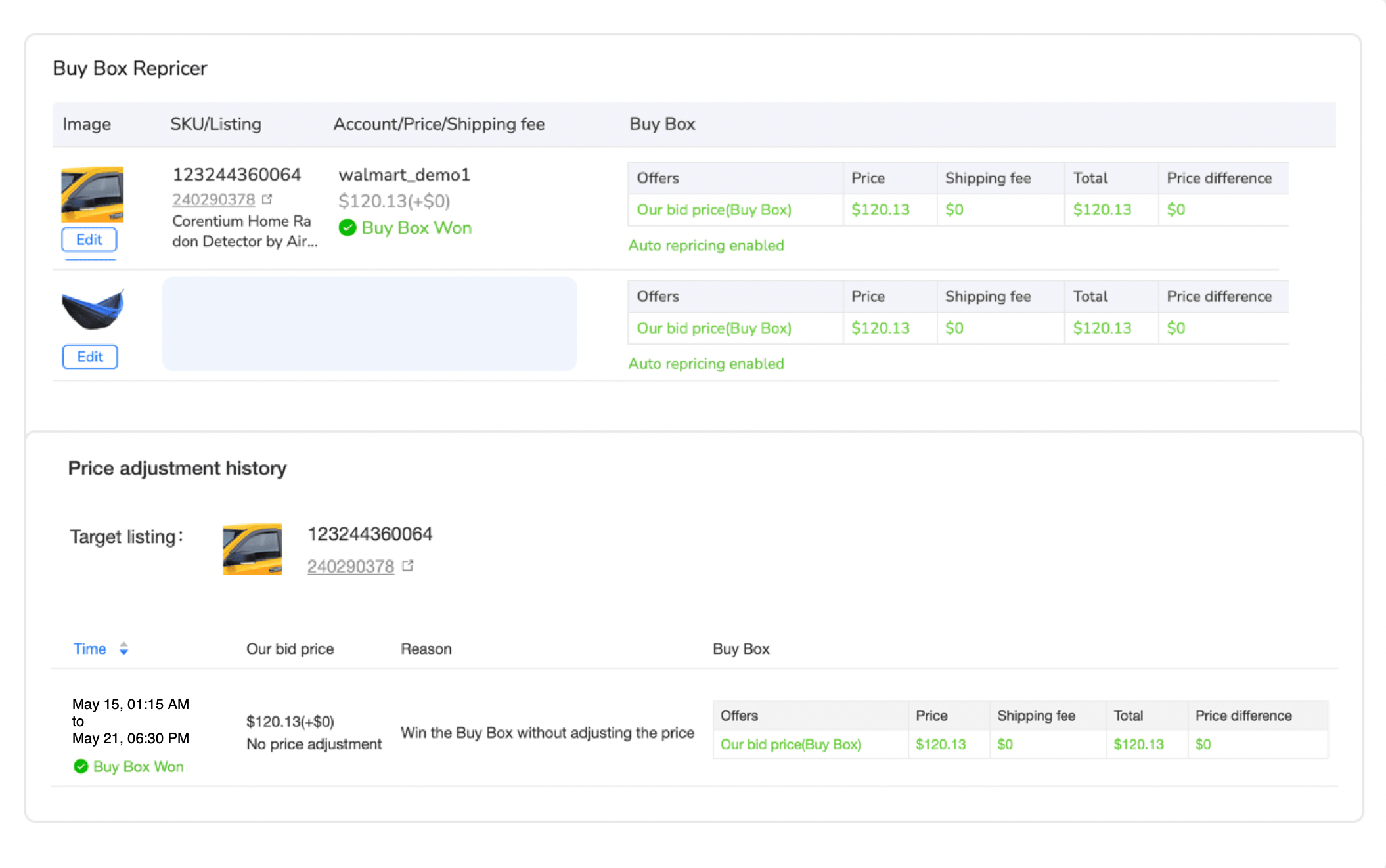
The Four Pillars of Amazon Buy Box Success in 2025
Amazon’s algorithm evaluates sellers across four critical dimensions, each weighted differently based on product category and competitive landscape. Competitive pricing remains the primary factor, but fulfillment method, seller performance, and inventory availability create the complete scoring matrix.
Amazon Buy Box Win Rate Targets for 2025
Professional Sellers: 65-80% average win rate
Top Performers: 80-90% win rate with FBA advantage
FBA vs FBM: 10-15% higher pricing tolerance for FBA sellers
Competitive Pricing (40% algorithm weight) now includes total landed cost calculations that factor in shipping speed, packaging quality, and even return likelihood. Amazon’s AI predicts customer satisfaction with each purchase decision, influencing Buy Box allocation beyond simple price comparison.
Fulfillment Method (30% algorithm weight) heavily favors FBA sellers, who can price 10-15% higher than FBM sellers while maintaining Buy Box eligibility. However, 2025 updates also reward FBM sellers who consistently meet Amazon’s shipping performance standards, creating new opportunities for merchants who prefer self-fulfillment.
Seller Performance Metrics (20% algorithm weight) include Order Defect Rate (must be <1%), Late Shipment Rate (<4%), and Cancellation Rate (<2.5%). The 2025 update adds customer service response time and resolution quality as secondary factors, emphasizing the complete customer experience.
Inventory Availability (10% algorithm weight) considers both current stock levels and historical inventory management. Sellers who frequently run out of stock face algorithm penalties that can last 30-60 days after restocking, making inventory planning crucial for sustained Buy Box success.
Amazon’s 2025 Algorithm Updates: AI Personalization and Dynamic Rotation
The most significant change in 2025 is Amazon’s introduction of personalized Buy Box winners based on individual customer profiles. A prime member in New York might see different Buy Box winners than a regular customer in California for the same product, based on shipping preferences, price sensitivity, and purchase history.
Additionally, Amazon implemented stricter price control penalties in March 2025. Sellers who frequently change prices by more than 15% within 24-hour periods face temporary algorithm suppression, encouraging more strategic pricing approaches rather than aggressive price warfare.
eBay Best Match Algorithm: Mastering Cassini for 2025 Success
eBay’s Best Match algorithm, powered by the Cassini search engine, operates fundamentally differently from Amazon’s Buy Box system. Instead of featuring a single winner, eBay ranks all listings in search results, making optimization about visibility and conversion rather than exclusive positioning.
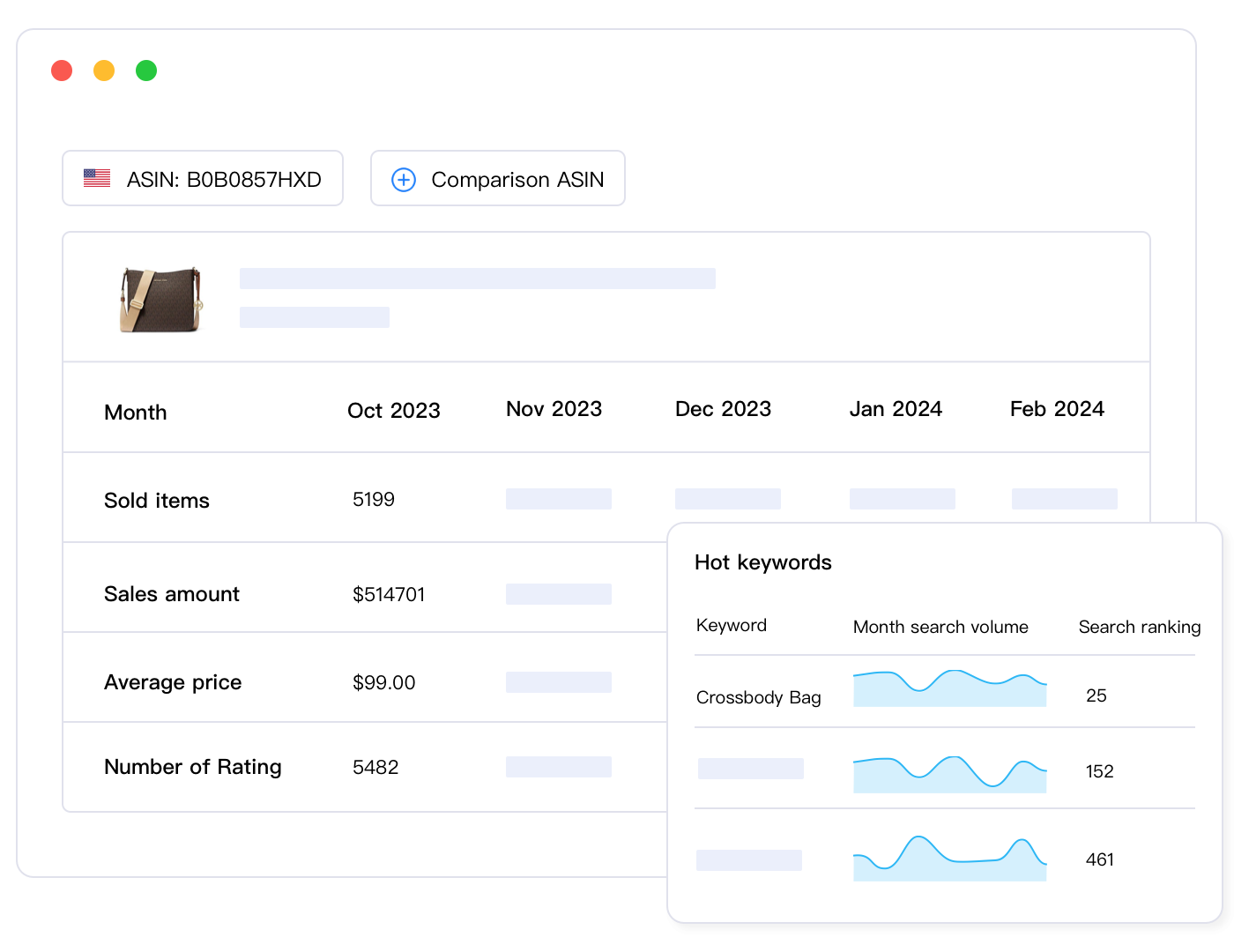
eBay’s Six-Factor Ranking System
eBay Best Match weighs six primary factors when determining search result rankings. Unlike Amazon’s price-focused approach, eBay prioritizes search relevance and seller reliability, creating opportunities for sellers who excel at customer service and product presentation.
Keyword Relevance (25% weight) evaluates how well your title, item specifics, and category selection match customer search queries. eBay’s 2025 update places greater emphasis on synonym matching and semantic search, rewarding listings that use natural language variations of popular search terms.
Seller Performance (25% weight) includes feedback rating, defect rate, and resolution time for customer issues. Top Rated Seller status provides significant ranking advantages, with TRS sellers achieving 40% higher visibility in search results compared to standard sellers.
Sales History (20% weight) rewards listings with consistent sales velocity and conversion rates. New listings face a 14-day evaluation period where algorithm ranking depends heavily on initial performance metrics, making launch strategy critical for long-term success.
Pricing Competitiveness (15% weight) compares your total cost (item price + shipping) against similar listings. However, eBay doesn’t require the lowest price for top rankings—competitive positioning within 10-20% of market average often achieves optimal results.
Shipping Speed and Cost (10% weight) heavily favors Fast N Free program participants who offer 4-day delivery with free shipping. Fast N Free sellers receive priority placement in search results and increased visibility in mobile apps.
Return Policy and Customer Service (5% weight) considers return acceptance rates, response times to buyer messages, and overall customer satisfaction scores. Sellers who offer 30-60 day returns with free return shipping achieve measurably higher rankings.
Fast N Free: eBay’s 2025 Competitive Advantage
eBay’s Fast N Free program provides the clearest path to algorithm success, offering guaranteed visibility improvements for qualifying sellers. Program requirements include 4-day delivery commitment, free shipping on orders over $35, and 1-day handling time for most categories.
Fast N Free Performance Benefits
Search Ranking: 40% higher visibility vs non-participants
Mobile Priority: Featured placement in eBay mobile app
Conversion Boost: 15-25% higher buyer conversion rates
The 2025 Fast N Free expansion includes new categories like automotive parts, business equipment, and collectibles, creating fresh opportunities for sellers in previously excluded markets. Additionally, eBay introduced regional Fast N Free requirements, allowing sellers in major metro areas to qualify with 3-day delivery commitments.
Walmart Featured Offer Algorithm: The Rising Giant of 2025
Walmart’s marketplace algorithm represents the most aggressive challenge to Amazon’s dominance, with Featured Offer placement driving 90% of customer clicks and purchases. Walmart’s approach prioritizes total customer cost and fulfillment quality over seller history, creating opportunities for new sellers to compete immediately with established merchants.
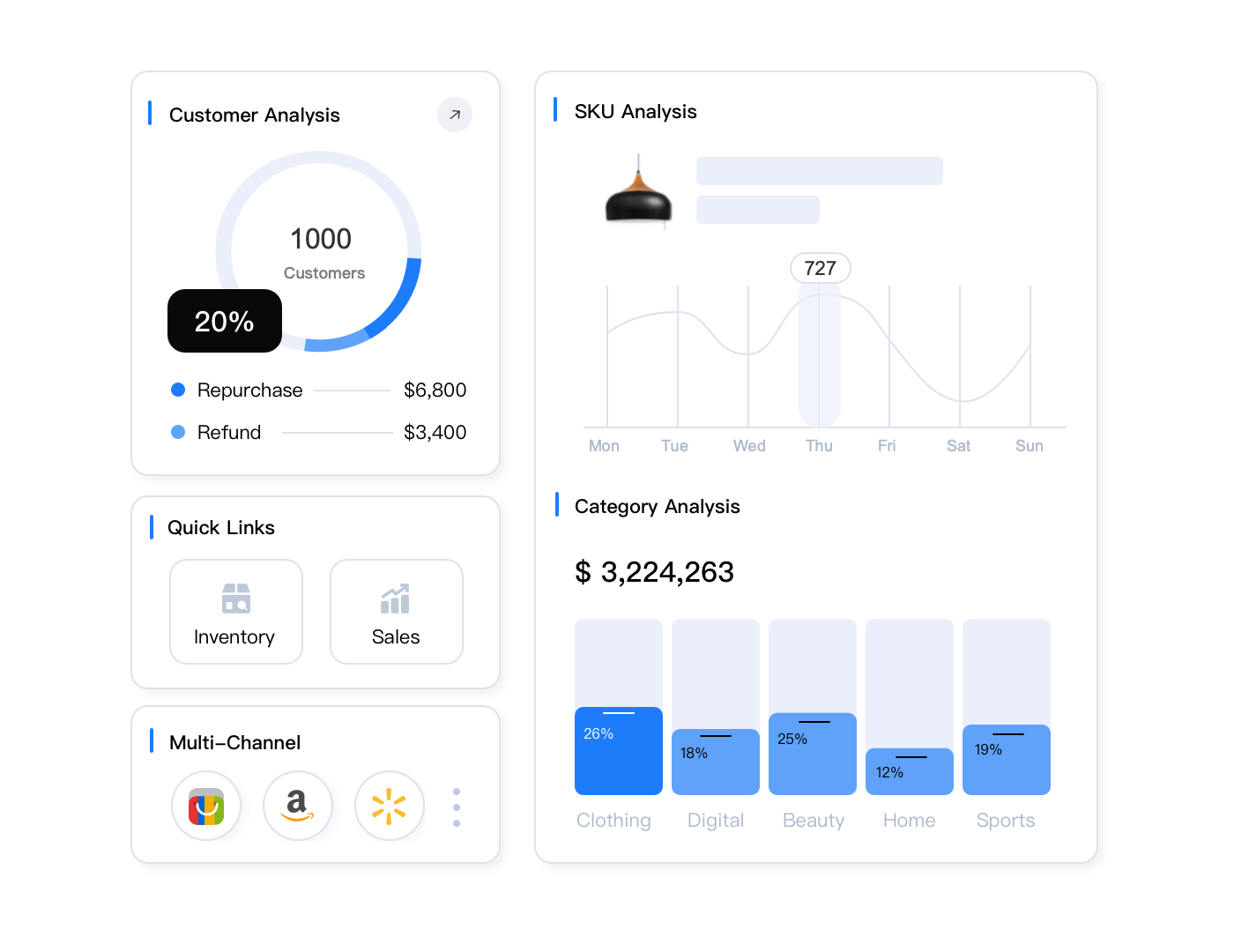
Walmart’s Five-Pillar Algorithm Strategy
Walmart’s algorithm updates multiple times daily, making it the most dynamic of the three major marketplace systems. This frequent updating creates both opportunities and challenges, requiring sophisticated monitoring and automated response systems for optimal performance.
Lowest Total Price (35% weight) includes item cost plus shipping, taxes, and any additional fees. Walmart’s algorithm calculates the complete customer cost for comparison, making free shipping strategies essential for competitive positioning. Unlike Amazon, Walmart doesn’t consider seller history when evaluating price competitiveness.
Walmart Fulfillment Services Preference (25% weight) strongly favors WFS participants, who can price 15-25% higher than self-fulfilled sellers while maintaining Featured Offer eligibility. WFS sellers also receive priority customer service support and faster payment processing.
On-Time Delivery Performance (20% weight) tracks shipping accuracy and customer satisfaction with delivery timing. Sellers must maintain 95% on-time delivery rates for Featured Offer eligibility, with performance calculated over rolling 90-day periods.
Inventory Management (12% weight) evaluates stock levels, restock frequency, and availability consistency. Walmart penalizes frequent stockouts more severely than Amazon, with algorithm suppression lasting up to 90 days after inventory issues.
Customer Satisfaction Metrics (8% weight) include return rates, refund processing time, and customer service quality scores. Walmart’s 2025 update adds product quality ratings based on return reasons, influencing long-term algorithm performance.
WFS Advantage: Walmart’s Answer to Amazon FBA
Walmart Fulfillment Services provides significant algorithm advantages while maintaining lower costs than Amazon FBA. WFS participants achieve Featured Offer status with 15-25% higher pricing compared to self-fulfilled competitors, creating substantial profit margin opportunities.
WFS Performance Advantages in 2025
Featured Offer Win Rate: 85-95% for properly optimized listings
Pricing Premium: 15-25% higher than self-fulfilled sellers
Customer Trust: 60% higher conversion rates vs merchant-fulfilled
The 2025 WFS expansion includes same-day delivery in 15 major metropolitan areas, two-day delivery nationwide, and specialized handling for electronics, automotive, and home improvement categories. These fulfillment enhancements provide competitive advantages that extend beyond algorithm placement into customer experience differentiation.
Buy Box Win Rate Comparison: Platform Performance Benchmarks
Understanding realistic win rate expectations across platforms enables strategic resource allocation and performance benchmarking. Each platform’s competitive landscape and algorithm structure creates different opportunities for sellers based on product category, business model, and operational capabilities.
| Platform | Average Win Rate | Top Performer Win Rate | Key Success Factor | Improvement Timeline |
|---|---|---|---|---|
| Amazon Buy Box | 65-80% | 85-95% | FBA + Competitive Pricing | 30-90 days |
| eBay Best Match | 70-85% | 90-95% | Fast N Free + TRS Status | 60-120 days |
| Walmart Featured Offer | 75-90% | 95-98% | WFS + Lowest Total Cost | 14-30 days |
| Multi-Channel Combined | 80-90% | 92-97% | Platform-Specific Optimization | 90-180 days |
Category-Specific Win Rate Variations
Win rates vary significantly by product category, with electronics and high-competition categories showing lower success rates while specialized or niche products achieve higher performance across all platforms.
Seasonal variations also impact win rates, with Q4 holiday periods typically reducing success rates by 10-20% due to increased seller participation and advertising competition. Smart sellers adjust expectations and strategies accordingly, focusing on profit optimization over win rate maximization during peak seasons.
Multi-Channel Algorithm Optimization: Tools and Strategies for 2025
Successful multi-channel sellers don’t just understand individual algorithms—they develop integrated strategies that optimize performance across all platforms simultaneously. This requires sophisticated tools, automated processes, and strategic thinking about resource allocation and competitive positioning.
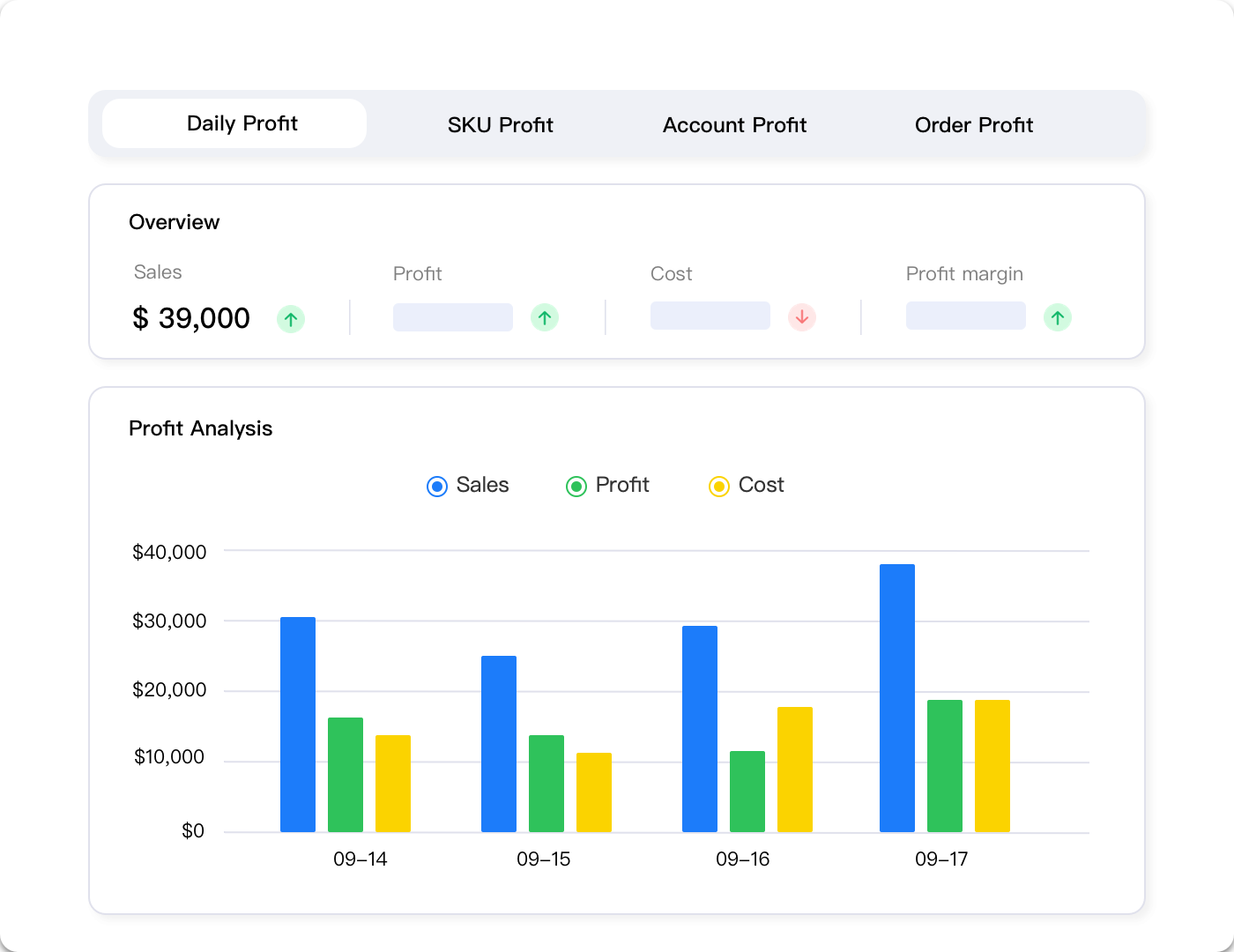
Essential Multi-Channel Tools for Algorithm Success
Managing multiple marketplace algorithms requires specialized software that can monitor performance, adjust pricing, and optimize listings across platforms simultaneously. Manual management becomes impossible at scale, making tool selection critical for competitive success.
Automated Repricing Software represents the most critical investment for multi-channel success. Advanced repricing tools like Maxmerce’s Smart Repricer understand each platform’s algorithm requirements and adjust prices automatically to maintain optimal positioning while preserving profit margins.
Performance Monitoring Dashboards provide real-time visibility into win rates, algorithm changes, and competitive positioning across all platforms. Maxmerce’s Multi-Channel Dashboard consolidates performance metrics, enabling quick identification of optimization opportunities and algorithm-related issues.
Inventory Synchronization Systems prevent the stockouts and overselling that can damage algorithm performance on all platforms. Advanced systems factor in platform-specific lead times, seasonal demand patterns, and fulfillment method requirements when managing inventory allocation.
Competitive Intelligence Tools track competitor pricing, promotional strategies, and algorithm performance across platforms. This data enables strategic positioning decisions and helps identify market gaps that can be exploited for algorithm advantage.
Platform-Specific Optimization Strategies
Each platform rewards different optimization approaches, requiring sellers to adapt their strategies while maintaining operational efficiency. The key is understanding which tactics provide the highest ROI on each platform without creating operational conflicts.
Amazon Optimization Focus:
- Maintain FBA eligibility for 10-15% pricing premium advantage
- Monitor Buy Box share hourly during peak selling periods
- Optimize for seasonal algorithm changes in Q4 and back-to-school periods
- Implement dynamic repricing with 15-minute response intervals
eBay Optimization Focus:
- Achieve Fast N Free qualification for 40% visibility improvement
- Optimize title keywords for semantic search algorithm updates
- Maintain Top Rated Seller status through customer service excellence
- Leverage auction dynamics for unique or collectible products
Walmart Optimization Focus:
- Prioritize total cost leadership including shipping and fees
- Consider WFS enrollment for 15-25% pricing premium capability
- Monitor Featured Offer changes multiple times daily
- Focus on new seller advantages with reduced referral fees
Performance Monitoring: Key Metrics to Track Across All Platforms
Successful algorithm optimization requires consistent monitoring of platform-specific metrics that directly correlate with win rates and sales performance. Different platforms prioritize different KPIs, making comprehensive tracking essential for identifying optimization opportunities.
Universal Metrics That Drive Algorithm Success
While each platform has unique requirements, several metrics influence algorithm performance across all marketplaces. Monitoring these universal indicators provides early warning of performance issues and optimization opportunities.
| Metric Category | Amazon Target | eBay Target | Walmart Target | Monitoring Frequency |
|---|---|---|---|---|
| Defect Rate | < 1% | < 2% | < 1.5% | Daily |
| Late Shipment Rate | < 4% | < 3% | < 5% | Daily |
| Customer Response Time | < 24 hours | < 12 hours | < 24 hours | Weekly |
| Return Rate | < 10% | < 8% | < 10% | Weekly |
| Inventory Availability | > 90% | > 95% | > 95% | Daily |
Platform-Specific Algorithm Indicators
Beyond universal metrics, each platform provides specific indicators that directly correlate with algorithm performance. Tracking these specialized metrics enables proactive optimization before algorithm penalties impact sales performance.
Amazon Algorithm Indicators include Buy Box percentage, pricing competitiveness score, and inventory health rating. Amazon Seller Central provides these metrics through the Account Health dashboard, with weekly updates that reflect recent algorithm changes.
eBay Algorithm Indicators focus on search impression share, click-through rates, and listing quality scores available through eBay Seller Hub. The Terapeak product research tool provides additional competitive intelligence for Best Match optimization.
Walmart Algorithm Indicators emphasize Featured Offer win rate, customer satisfaction scores, and pricing competitiveness rankings available through Walmart Seller Center analytics. These metrics update more frequently than other platforms, requiring daily monitoring for optimal performance.
Optimize Your Multi-Platform Algorithm Performance
Stop juggling multiple dashboards and manual processes. Maxmerce’s unified platform monitors all marketplace algorithms, provides automated optimization recommendations, and helps you achieve consistent win rates across Amazon, eBay, and Walmart.
Common Algorithm Mistakes That Kill Win Rates
Even experienced sellers make critical mistakes that damage algorithm performance across platforms. Understanding these common errors helps prevent costly missteps that can take months to recover from, especially given the long-term impacts of algorithm penalties.
Cross-Platform Pricing Conflicts
One of the most damaging mistakes involves pricing inconsistencies across platforms that trigger algorithm penalties. Amazon’s minimum advertised price policies conflict with eBay’s auction dynamics, while Walmart’s total cost calculations can create unexpected competitive disadvantages.
The solution requires automated repricing systems that understand each platform’s requirements and maintain optimal positioning without creating conflicts. Manual price management becomes impossible with multiple products across multiple platforms, making automation essential for sustained success.
Inventory Management Errors
Stockouts damage algorithm performance on all platforms, but the penalties vary significantly. Amazon imposes the strictest consequences, with Buy Box suppression lasting 30-60 days after restocking. eBay reduces search visibility gradually, while Walmart provides more forgiving recovery timelines but still penalizes Featured Offer eligibility.
Overselling creates even more severe problems, potentially triggering account suspensions and long-term algorithm penalties. Multi-channel inventory management requires sophisticated systems that account for platform-specific lead times, seasonal demand patterns, and fulfillment method capabilities.

Performance Metric Neglect
Many sellers focus exclusively on sales metrics while ignoring the customer service and operational performance indicators that drive algorithm success. Order defect rates, response times, and resolution quality often receive minimal attention until algorithm penalties begin impacting sales.
Proactive performance management requires daily monitoring, automated alert systems, and rapid response protocols for addressing customer issues. The cost of reactive management far exceeds the investment in proactive systems and processes.
Amazon Buy Box Algorithm FAQ: Expert Answers for 2025
Your Multi-Platform Algorithm Success Roadmap
Phase 1: Foundation (Weeks 1-2)
- Audit current performance metrics across all platforms using native dashboards
- Identify algorithm penalty factors like pricing conflicts, performance issues, or inventory problems
- Set up automated monitoring for key metrics and win rate tracking
- Prioritize platform focus based on current performance and growth potential
Phase 2: Optimization (Weeks 3-8)
- Implement platform-specific strategies starting with highest-opportunity platform
- Deploy automated repricing systems with algorithm-aware pricing rules
- Optimize fulfillment methods considering FBA, Fast N Free, and WFS advantages
- Improve performance metrics through customer service enhancements and operational improvements
Phase 3: Scale and Refine (Weeks 9-16)
- Expand successful strategies across all product lines and platforms
- Implement advanced optimization using competitive intelligence and market analysis
- Establish ongoing monitoring and adjustment protocols for algorithm changes
- Measure ROI and optimize resource allocation based on platform performance and profitability
Master Multi-Platform Algorithms for Sustained 2025 Success
Understanding and optimizing for marketplace algorithms isn’t just about winning more featured positions—it’s about building a resilient, profitable business that can adapt to changing competitive landscapes. The Amazon Buy Box algorithm, eBay Best Match system, and Walmart Featured Offer algorithm each represent different philosophies about customer experience and seller success.
The most successful sellers in 2025 won’t just master one algorithm—they’ll develop integrated strategies that leverage the unique advantages of each platform while maintaining operational efficiency. This requires sophisticated tools, data-driven decision making, and continuous optimization based on performance metrics and algorithm changes.
Your success depends on understanding that algorithms aren’t obstacles to overcome, but systems designed to connect customers with the best possible buying experience. When you align your seller practices with algorithm objectives, you create sustainable competitive advantages that benefit both your business and your customers.
Ready to Dominate All Three Algorithms?
Stop guessing about algorithm performance. Maxmerce provides the tools, insights, and automation you need to achieve consistent win rates across Amazon, eBay, and Walmart. Join thousands of sellers optimizing their multi-channel success.