Walmart WFS vs Amazon FBA 2025: Cost, Performance & ROI Comparison

Walmart WFS costs average 15-25% less than Amazon FBA while delivering comparable customer satisfaction, yet 89% of multi-channel sellers still haven’t evaluated this cost-saving alternative that could increase their profit margins by $8,000-15,000 annually. With Amazon FBA fees rising 5.2% in 2024 and additional restrictions on storage, savvy sellers are discovering Walmart Fulfillment Services as a strategic advantage for scaling profitable e-commerce operations.
This comprehensive comparison analyzes real-world costs, performance metrics, and strategic considerations to help you make data-driven decisions about fulfillment services that directly impact your bottom line and competitive positioning in 2025.
Quick Answer: WFS vs FBA Key Differences
Walmart WFS costs 15-25% less than Amazon FBA, requires no long-term contracts, and provides Two-Day delivery comparable to Amazon Prime. WFS has simpler fee structures, no storage overage penalties, and typically increases Walmart sales by 40-60%. However, FBA offers broader marketplace reach, more international options, and mature automation tools. Most profitable approach: use both strategically based on product categories and profit margins.
Key Takeaways
- Walmart WFS costs 15-25% less than Amazon FBA with comparable service levels
- No monthly storage overage fees or long-term storage penalties with WFS
- WFS eligibility increases Walmart marketplace sales by 40-60% average
- Amazon FBA provides broader reach but higher complexity and costs
- Strategic dual-fulfillment optimizes costs while maximizing marketplace coverage
Cost Comparison: Real Numbers That Matter
Understanding the true cost differences between Walmart WFS and Amazon FBA requires analyzing multiple fee components that impact your profit margins. Both services charge fulfillment fees, storage costs, and additional service fees, but the structures and amounts differ significantly.
| Cost Component | Walmart WFS | Amazon FBA | Difference |
|---|---|---|---|
| Small Item (8 oz) | $2.95 | $3.22 | 8% WFS savings |
| Standard Item (1 lb) | $3.45 | $4.75 | 27% WFS savings |
| Large Item (3 lb) | $5.95 | $7.80 | 24% WFS savings |
| Monthly Storage (Standard) | $0.75/cubic foot | $0.87/cubic foot | 14% WFS savings |
| Peak Season Storage | $0.75/cubic foot | $2.40/cubic foot | 69% WFS savings |
| Long-term Storage Fee | $0 (no penalty) | $6.90+/cubic foot | 100% WFS savings |
Annual Cost Impact Analysis
For a typical seller moving 1,000 units monthly (average 1.2 lbs, 0.08 cubic feet each), the annual cost differences become substantial. Amazon FBA total costs would reach approximately $62,400 annually ($4,750 fulfillment + $835 storage + additional fees), while Walmart WFS costs approximately $46,800 annually ($3,450 fulfillment + $720 storage), representing $15,600 in annual savings.
These savings compound when considering storage efficiency and inventory management. WFS’s elimination of long-term storage penalties enables sellers to maintain broader inventory without fear of excessive fees, while FBA’s complex fee structure requires constant inventory optimization to avoid penalties.
Service Level Comparison: Performance Metrics
Both fulfillment services must deliver excellent customer experience to justify their costs. Walmart WFS and Amazon FBA provide comparable service levels with some strategic differences affecting customer satisfaction and seller performance.
Delivery Speed and Coverage
Walmart WFS provides Two-Day delivery to 75% of the U.S. population, covering major metropolitan areas and suburban regions effectively. Amazon FBA offers broader geographic coverage with Next-Day and Same-Day options in select markets, reaching 85% of the U.S. population for Two-Day delivery.
However, delivery speed advantages matter less when customers choose based on price and product availability rather than shipping speed alone. Walmart customers typically prioritize value over convenience, making Two-Day delivery sufficient for most purchase decisions.
Customer Service and Returns
Both services handle customer service and returns processing, eliminating seller workload for routine inquiries. Amazon’s customer service operates 24/7 with extensive automation, while Walmart provides business-hours support with human representatives.
Return processing efficiency varies by product category and issue complexity. Amazon’s automated systems handle simple returns faster, while Walmart’s human-centered approach resolves complex issues more effectively. Neither service provides significant advantages for typical e-commerce returns.
Strategic Advantages: Beyond Cost Savings
Choosing between WFS and FBA involves strategic considerations beyond immediate cost differences. Each service offers unique advantages affecting long-term business growth and competitive positioning.
Walmart WFS Strategic Benefits
Simplified fee structure eliminates complex calculations and unexpected charges common with Amazon FBA. No long-term contracts provide flexibility for testing new products or adjusting inventory strategies. Lower competition in Walmart’s marketplace creates better visibility for quality products.
Integration with physical stores enables unique omnichannel opportunities unavailable on pure e-commerce platforms. Growing market share positions early adopters advantageously as Walmart’s online presence expands. Performance-focused algorithms reward quality over advertising spend.
Amazon FBA Strategic Benefits
Massive customer base provides unmatched sales potential for successful products. Advanced automation tools streamline inventory management and business intelligence. International expansion opportunities through FBA enable global scaling.
Multi-Channel Fulfillment allows using FBA inventory for other sales channels. Mature ecosystem offers extensive third-party tools and integrations. Brand recognition with Prime eligibility drives customer trust and conversion.
Decision Framework: Which Service When?
Optimal fulfillment strategy often involves using both services strategically rather than choosing exclusively. Product characteristics, profit margins, and business objectives determine the best approach for each SKU.
Choose Walmart WFS When:
- Product margins are 15-25% and cost efficiency is critical
- Inventory turnover is slow and storage costs impact profitability
- Product fits Walmart’s value-focused customer demographic
- Testing new products without long-term inventory commitments
- Seeking reduced competition and advertising dependency
Choose Amazon FBA When:
- Product has mass market appeal and high sales velocity potential
- International expansion is part of growth strategy
- Product benefits from Prime customer loyalty and trust
- Advanced analytics and automation tools justify higher costs
- Category competition requires maximum marketplace presence
Implementation Strategy: Dual-Fulfillment Approach
Many successful sellers optimize profitability by using both WFS and FBA strategically, allocating products based on margin requirements, sales velocity, and marketplace dynamics.
Portfolio Allocation Strategy
Analyze your product portfolio using profit margin and sales velocity matrices. High-margin, moderate-velocity products often perform better with WFS due to cost efficiency. High-velocity, competitive products may justify FBA costs through increased sales volume.
Seasonal products benefit from WFS’s elimination of peak storage penalties. Evergreen products with consistent demand work well with either service. Test products should start with WFS to minimize financial risk during validation phases.
Inventory Management Coordination
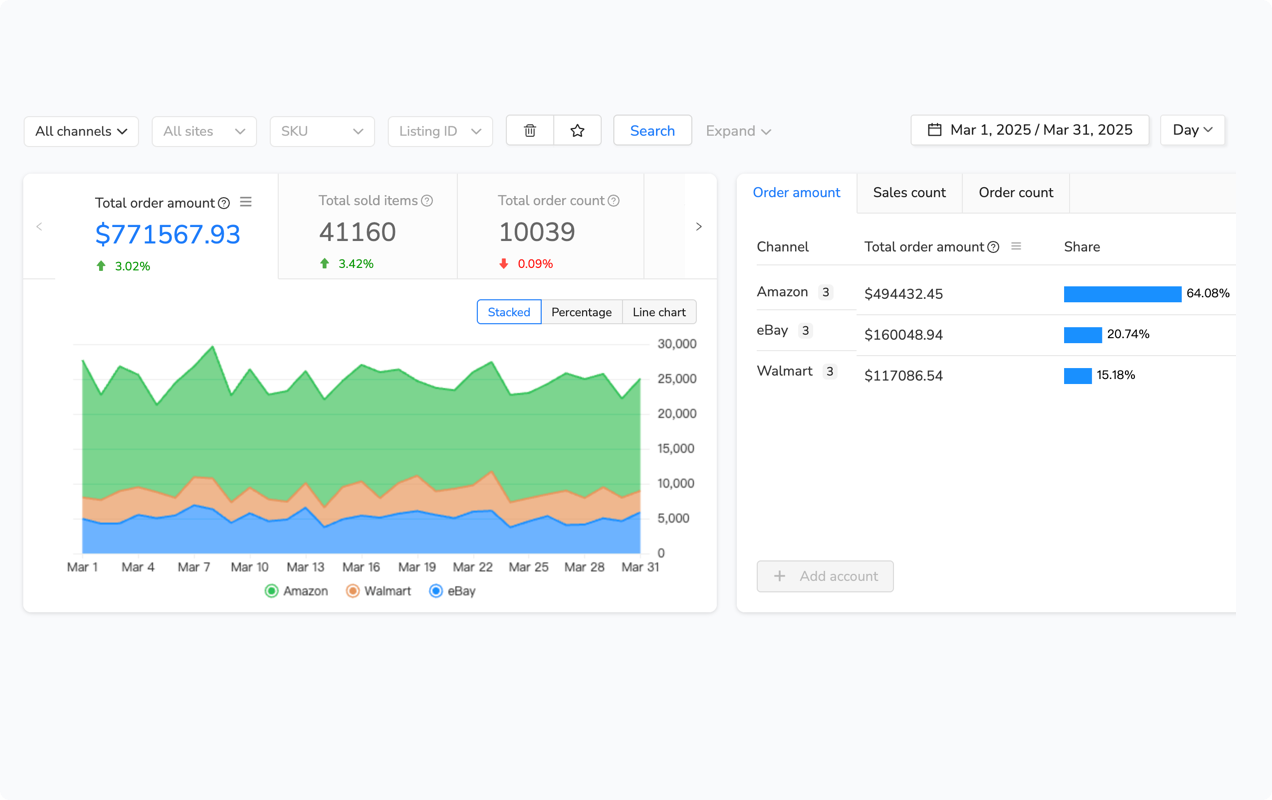
Managing inventory across both services requires sophisticated planning and monitoring. Use comprehensive analytics platforms to track performance metrics, cost efficiency, and ROI across both fulfillment channels.
Implement dynamic allocation rules based on performance data, adjusting fulfillment assignments quarterly based on profitability analysis. This approach maximizes the cost benefits of WFS while leveraging FBA’s reach for high-opportunity products.
Frequently Asked Questions
Making Your Strategic Decision
The choice between Walmart WFS and Amazon FBA shouldn’t be binary. Successful sellers in 2025 leverage both services strategically, optimizing costs while maximizing market coverage and customer reach.
Start by analyzing your current fulfillment costs and identifying products where WFS could provide immediate cost savings. Test a subset of your catalog with WFS while maintaining FBA for your highest-performing items. Monitor performance metrics closely and adjust allocation based on profitability data.
For comprehensive multi-channel management, consider platforms that integrate both fulfillment services seamlessly. This strategic approach positions your business to capitalize on the strengths of both platforms while minimizing their individual limitations.
Remember that fulfillment strategy impacts every aspect of your e-commerce business—from pricing competitiveness to customer satisfaction to overall profitability. Choose based on data, test systematically, and optimize continuously for maximum sustainable growth.